Original article: «El ministro de todo»: Mario Aguilar acusa que Quiroz manda en educación desde Hacienda mientras la ministra brilla por su ausencia
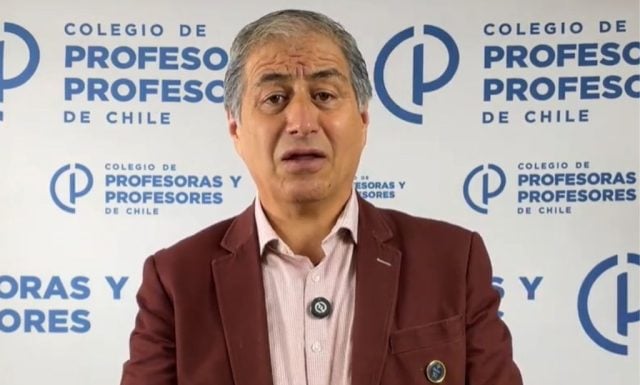
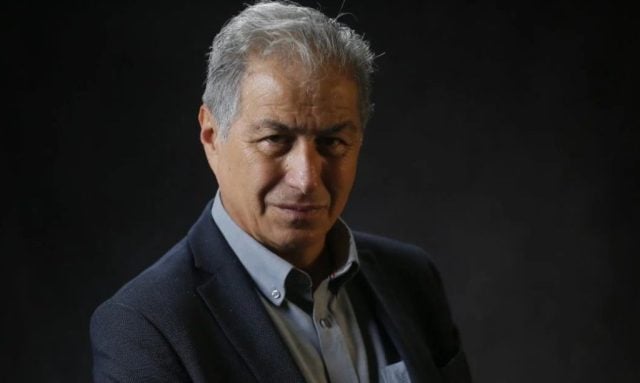
Mario Aguilar, the newly re-elected president of the Teachers’ College, has accused Finance Minister Jorge Quiroz of exerting control over the Ministry of Education, as Education Minister María Paz Arzola remains conspicuously absent.
«We see a minister who is quite absent from the educational debate and decision-making. This government format creates a supraminister, seemingly the minister of everything, which is Minister Quiroz, because if you review other areas, you see ministers who are also quite absent,» he stated during an appearance on the program Sentido Común, hosted by Javier Pinea Olcay, director of El Ciudadano.
In the interview, the union leader discussed the peaceful strike and protest scheduled for Tuesday, November 24, backed by organizations from the Common Front, including the CUT and CONFECH. He criticized President José Antonio Kast‘s government for undermining public education and centralizing educational decisions within the Ministry of Finance at the expense of the education sector.
The Minister’s Absence and the «Supraminister»
Aguilar elaborated on his criticism of the government structure, indicating that «the decisions being made in education, particularly those driven solely by economic priorities, are being made at Teatinos 120 (the Finance Ministry), not at the Alameda building, where the Ministry of Education is located.»
According to the leader, it is in Quiroz’s office that «they are determining how many students should be in each classroom, how many teachers are needed, the hiring of professionals for the support of the School Integration Program (PIE), and how many infrastructure repairs will be conducted.»
The concentration of power in Minister Quiroz led to his classification as «the minister of everything», underscoring what Aguilar considers a «completely erroneous government structure» where all decisions are based on «economic priorities alone.»
Educational Budget and Class Merging
The teachers’ leader also highlighted the repercussions of budget policies. «Merging classes effectively leads to overcrowding in classrooms with more students, reducing the chances for teachers to cater to the individual needs of each student,» he explained.
Aguilar detailed that Chile already has «one of the highest average classroom sizes in the OECD at 30 students per class,» while the international average is 20. «They want to make this even worse,» he warned, noting that this measure would disproportionately affect rural schools, where diverse grade levels are being combined.
The leader further criticized that the educational budget falls short of the internationally recommended 6% of GDP, currently only reaching «around 4.3%».
«If one looks at the budget and the direction it’s heading, it’s clear they want to leave it in a very poor condition,» he cautioned.
Precarity and Mobilization
Aguilar contextualized the mobilization on November 24 by noting that «the recent storms showed just how precarious the infrastructure is,» with schools experiencing «classrooms flooding, patios inundated, and completely submerged properties.»
Regarding the economic impact of Kast’s administration, he asserted that «all Chileans are poorer as a result of these nine months of government,» with a decline in purchasing power and an economy that «has stagnated» after initial growth projections of 2.5% to 3%.
«We also see it in our parents and in the children who report that their father is unemployed, their mother was laid off yesterday, is looking for work for several months, and cannot find any. The child obviously suffers the consequences of these hardships, and we have to work under increasingly precarious conditions,» he noted.
«Many schools report that colleagues say, ‘Well, we have to fund our own educational materials because the budget never arrived. Here, we collectively financed a field trip because the transport budget never came through.’ These are the realities we are now facing.
The union leader also addressed the SLEP system, stating that while it «has been operating with numerous problems, it is now absolutely collapsed and exhausted.»
Finally, Aguilar called for a «citizen mobilization, active citizenship, critical and informed engagement» to stop what he views as a «serious damage» to education.
The peaceful protest will begin at 10:30 AM at Plaza Dignidad, from where they will march along Alameda to Los Héroes, where a concluding event will be held.
You can watch the full interview below:
Obtén tu Pasaporte y apoya a El Ciudadano
Elimina la publicidad, accede a contenido exclusivo y sé parte de la comunidad.
Cancela en cualquier momento · Sin permanencia