Original article: ¿Ciencia para Chile o para las grandes tecnológicas?: exministro de Ciencia cuestiona a Lincolao y advierte riesgos para la soberanía
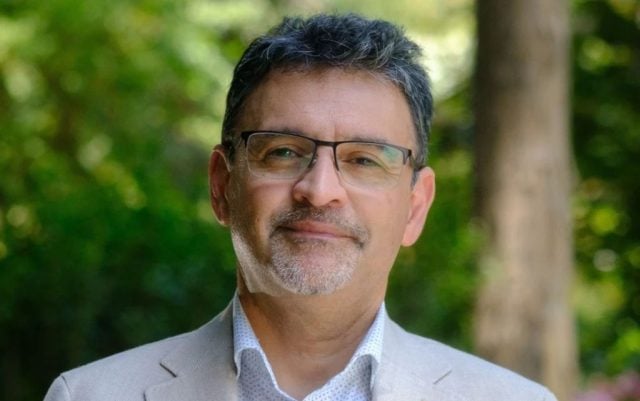
Former Minister of Science, Innovation, and Technology and current Vice President of the University Senate at the University of Chile, Flavio Salazar, raised concerns on Tuesday regarding the agreement signed between Minister Ximena Lincolao and the American tech company OpenAI to explore the use of artificial intelligence in the country. Salazar warned that this partnership threatens digital sovereignty and lacks both institutional and public support.
In an interview with the program Sentido Común, hosted by Javier Pinea Olcay, director of El Ciudadano, Salazar expressed that there is «a somewhat optimistic view of what integration of artificial intelligence means for the country’s development».
The scope of the agreement has raised concerns about the criteria for selecting the company, potential exposure of personal and governmental data, and its legality.
Furthermore, on November 20, the Comptroller General of the Republic gave the minister ten days to provide more details about the agreement, following a request from Deputy Jaime Araya (IND).
Regarding the matter, Salazar, who led the Science portfolio from March to September 2022 during President Gabriel Boric’s administration, stated, «If this is such an integrative agreement, so important with one of the biggest companies in the world, one should at least have not the specifics of the document, but a narrative about what the objectives are, who will participate, and for what purpose. But there is none of that.»
«Threatens the Sovereignty of the Country»
Professor Salazar elaborated that «it’s a signature from a minister with a company that essentially threatens, whether intended or not, the sovereignty of the country on this issue».
The academic indicated that there should be foundational elements for a decision of this nature to be made in a way that «has public backing, as there exists clarity from the start regarding for what, how, and what the limits are.»
«And today that clarity is absent,» questioned the immunologist and researcher.
In that context, he noted that «there is currently a data protection law that has not been approved, as well as an artificial intelligence law that is also not approved and is undergoing modifications.»
Given this situation, he finds it «premature to sign agreements when we have not reached an internal agreement regarding the institutional framework we desire for incorporating artificial intelligence.»
The Vice President of the University Senate emphasized that «approaching artificial intelligence in all its complexity requires multiple perspectives, and no single person or state agency should make decisions for everyone, as it poses significant risks.»
The doctor in immunology from the Karolinska Institute in Sweden recalled that in the Ministry of Science, starting with former Minister Andrés Couve (2018-2022), «a policy on artificial intelligence was developed that has been refined,» which «has a more integrative perspective.»
The Ministry and Its Historical Mission
From a historical standpoint, Salazar explained that the establishment of the Ministry of Science was the result of extensive reflection across multiple governments.
«It started with Bachelet’s first term and continued with Piñera,» he recalled.
According to the former secretary of state, the goal was «to create an institutional framework that allowed for the incorporation of science, knowledge, social sciences, and technology into a new development model that moved us away from the overexploitation of natural resources and economically diversified us.»
Change of Perspective Under Kast’s Government
Regarding the current state of the ministry following José Antonio Kast’s arrival at La Moneda, Salazar stated, «What initially happens in this government is a shift from a certain stagnation we were experiencing, but with «a different perspective on the ministry and science,» which divides it into useful science, science associated with productivity, technologies, and increasingly focuses on startups and technology, abandoning this more integrative view of what generating knowledge means.»
According to the former minister, «a series of policies that had been promoted are now sidelined, as the view I see from the ministry and government is that our main goal is to engage major multinational artificial intelligence companies in dialogue with the state, but we do not even know clearly who from the state, which institutions, and who participates, and how.»
Salazar warned that «this has generated a lot of uncertainty, and to some extent confusion, and we also see these internal controversies regarding governance or management styles that are imposed.»
«I believe we are in a quite concerning situation, and that is reflected in the opinions of universities, science academies, and society,» he emphasized.
You can watch the complete interview below:
Obtén tu Pasaporte y apoya a El Ciudadano
Elimina la publicidad, accede a contenido exclusivo y sé parte de la comunidad.
Cancela en cualquier momento · Sin permanencia