Original article: El desastre económico de Kast, según partidos de oposición: Tres dirigentes cuestionan sus políticas y advierten un 2027 aún más difícil
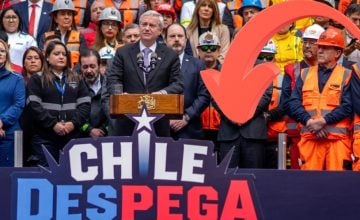
With rising unemployment and a faltering economy, Chile faces months marked by poor economic indicators, prompting criticism of President José Antonio Kast
‘s approach, which emphasizes fiscal adjustment and tax cuts aimed at revitalizing the nation’s productive activities.
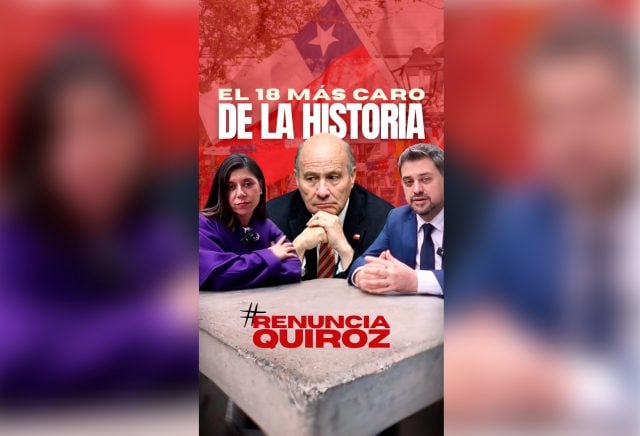
The Gross Domestic Product (GDP) fell by 1% year-on-year in the third quarter of 2026, according to the Central Bank, while the unemployment rate rose to 9.8% during the July-September period. This troubling outlook was the focal point of an analysis presented by three opposition leaders on the Sentido Común program, hosted by El Ciudadano’s director, Javier Pineda Olcay.
Karina Delfino, mayor of Quinta Normal and general secretary of the Socialist Party (PS); Lautaro Carmona, president of the Communist Party of Chile; and Álvaro Ramis, president of Voluntad por Chile, all shared concerns regarding the economic policies enacted by the government, cautioning about a challenging environment in 2027, and criticizing the neoliberal influence on governmental decisions.
Breach of Kast’s Promises
Karina Delfino pointed out that Kast’s government came to power with two clear promises: security and economic recovery, stating, «to this day, we see that neither promise has been fulfilled.»
Regarding security, she noted, «the neighbors in our community have seen no change since this government took office» and criticized the lack of a «roadmap for progress.» The mayor denounced the far-right president’s belief that «simply winning would make criminals stop committing crimes.»
On economic issues, Delfino connected Kast to a neoliberal international network that includes figures like Javier Milei in Argentina, Jair Bolsonaro in Brazil, and Donald Trump in the United States.
She highlighted the «discrepant» nature of Kast’s alignment with Trump, who has increased tariffs that directly affect Chile. Moreover, she provided alarming statistics: «over one million people are unemployed,» with 26% of young women seeking jobs and over 24% of young people unable to find work, marking the highest rates among OECD countries.
Delfino emphasized that «about 30% of this one million people also have higher education credentials.»
«Clearly, this government is not addressing the main issues facing Chile, despite promises to do so,» the mayor stressed.
Critique of Neoliberal Model and Electoral Fraud
Lautaro Carmona elaborated on the ideological framework defining far-right governments in the region, asserting that there is «a viewpoint that unites them and is deeply and, I would say, harshly neoliberal.»
He criticized that this model rests on the idea that «the state plays a subsidiary role in the economy» and that growth «is particularly reliant on capital and capital owners» through the «trickle-down» economic principle, which posits that policies benefiting the wealthy—such as tax cuts, privatizations, or reduced regulations—will lead to more investment, employment, and growth.
Carmona explained that «Kast has focused on recovering the role of capital for those who are the owners of the means of production, leading to tax reductions benefiting them.»
The Communist Party president asserted that «the path proposed was effectively a scam.»
He elaborated that during Kast’s electoral campaign, «it was said that he would resolve security issues, employment, housing, public health, waiting lists, and numerous other matters. It turns out that this is not true.»
Furthermore, he questioned Finance Minister Jorge Quiroz, stating that he «is not committed to public service 24/7.»
Warning About 2027 and Social Conflict
Based on the measures implemented by Kast’s administration, Álvaro Ramis warned that 2026 will represent «a lost year economically» and that «2027 appears very similar, with a time of significant hardship for families.»
According to Ramis, the president of Voluntad por Chile, there is «a situation of high uncertainty that could ignite when specific circumstances worsen,» such as a rise in public transport fees, recalling the events of 2019.
He indicated that a scenario of «substantial hardship for families, with challenges to access jobs and maintain their standard of living that they have been accustomed to over the past decade» could be in store.
Ramis criticized economists who push for «more radical measures ironically associated with the policies of Kast and Quiroz» and urged caution to the authorities regarding the effects of hasty decisions.
He highlighted the role of municipalities as the first responders to the crisis: «They are the first to feel that pressure when the line of people seeking assistance at city halls grows exponentially.» He ultimately called on the opposition to establish alternatives and to propose emergency measures, particularly regarding employment.
A Critical Assessment and Need for Alternatives
The three leaders agreed that President Kast has not only failed to keep his campaign promises, but is also deepening a model that adversely affects Chilean families.
Delfino urged addressing real issues; Carmona called for demonstrating that the official project is a scam; and Ramis warned against the risks of intensifying austerity measures.
During their appearance on Sentido Común, the three leaders made it clear that the opposition aims to unite in response to a complex economic situation, looking ahead to 2027 with the conviction that Kast’s policies are leading the country toward an even harsher reality.
You can watch the full interview below:
Obtén tu Pasaporte y apoya a El Ciudadano
Elimina la publicidad, accede a contenido exclusivo y sé parte de la comunidad.
Cancela en cualquier momento · Sin permanencia