Original article: Sembrar otro futuro: Chile reúne a campesinos, pueblos originarios y científicos en congreso latinoamericano de agroecología
Sowing a New Future: Chile Hosts Farmers, Indigenous Communities, and Scientists at Latin American Agroecology Congress
Farmers, Indigenous communities, and scientists will come together to share their knowledge and experiences at the XI Latin American Agroecology Congress, taking place from November 25 to 28, 2026 at the Main Campus of the University of Chile, located at Avenida Libertador Bernardo O’Higgins 1058 in Santiago.
This event, organized by the Latin American Scientific Society of Agroecology (SOCLA), the Chilean Scientific Society of Agroecology (SOCLA Chile), and the University of Chile, aims to formulate solutions to the current food, environmental, and climate challenges facing the region.
«Sharing Experiences from the Global South»
Under the theme «Sharing Experiences from the Global South; Diversity, Resilience, and Action for Agroecological Transition», this congress, held for the first time in Chile, invites individuals and organizations from rural and urban areas, universities, and research centers to share, present, debate, and interact around agroecology with a Latin American perspective.
The decision to host the event in Santiago was unanimously approved during the congress in Asunción, Paraguay, in 2024, following editions in Costa Rica (2022) and Paraguay (2024).
Thematic Areas: Responses to Crises
The congress’ thematic areas address the current challenges. The first, «Design, Management, and Transition of Agroecosystems», focuses on functional biodiversity, soil health, and the protection of native and local seeds, as well as disaster risk management in the context of the climate crisis.
The second area, «Agro-food Systems, Economies for Life, and Health», examines short marketing circuits, the social and solidarity economy, and the impacts of agrochemicals on human health and ecosystems.
The third area, «Gender and Leadership in Agroecological Transitions», highlights the role of women, youth, Indigenous peoples, and diverse gender identities in building alternatives from their communities, integrating worldviews and local knowledge.
The fourth area, «Education, Dialogue of Knowledge, and Transformative Expressions», incorporates educational strategies and the co-construction of ancestral, traditional, and academic knowledge.
The fifth area, «Participatory Collective Social Action, Autonomy, and Public Policies», tackles socio-environmental conflicts and disputes over common goods such as land, water, and seeds.
International and National Voices
The congress will feature international speakers such as Anderson Amaro, coordinator of CLOC-Vía Campesina and the Movement of Small Farmers from Brazil; Juliana Merçon, researcher from the Universidad Veracruzana; Inés Gazzano, from the University of the Republic of Uruguay; Miguel Altieri, Emeritus Professor at the University of California, Berkeley; and Lucas Garibaldi, a researcher at CONICET. Notable national voices include Alejandra Muñoz, an academic from the Pontifical Catholic University of Chile, and Mirtha Gallardo, rural leader from the Coquimbo Region and seed guardian from Limarí province.
Complementary Activities
In addition to the congress, a pre-congress course and field trips are scheduled for Saturday, November 28, to agroecologically significant sites to delve into local experiences. Activities will take place at the Main Campus of the University of Chile and at the Hotel Plaza San Francisco.
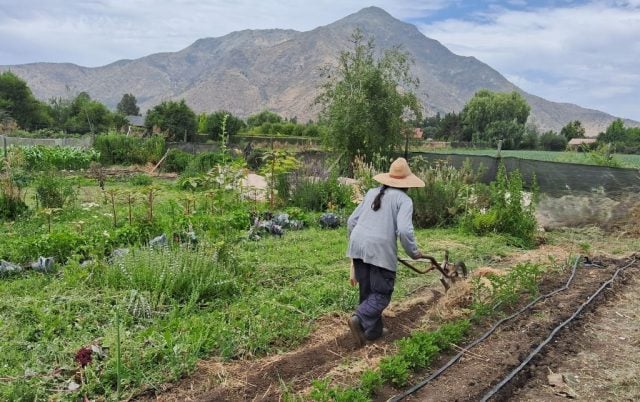
Please emphasize that this is the first time Chile is hosting such a gathering, with participation from farming communities, Indigenous peoples, and specialists from Latin America. The focus of the article is that these social groups will share alternatives to current food, environmental, and climate challenges, as indicated by the thematic areas. Use this photo of daily work in the field.
Obtén tu Pasaporte y apoya a El Ciudadano
Elimina la publicidad, accede a contenido exclusivo y sé parte de la comunidad.
Cancela en cualquier momento · Sin permanencia