Original article: Salares Altoandinos: los cuatro obstáculos que Enami y Rio Tinto deben superar antes del 23 de diciembre
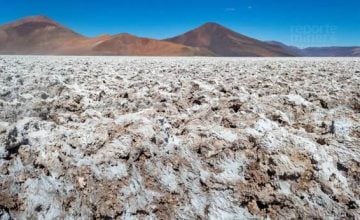
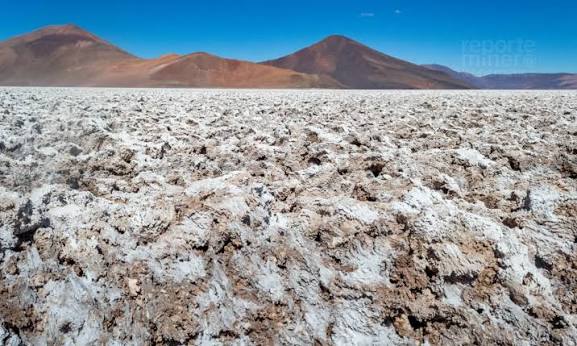
The one-month extension approved by Enami’s board on November 13 is not a solution but a new deadline to address ongoing issues. The partnership with Rio Tinto to develop Salares Altoandinos, valued at US$3 billion, will not be finalized merely because the timeline has been pushed to December 23. For the agreement signed in July 2025 to materialize, both parties must overcome a series of challenges ranging from geopolitical factors to legal hurdles and environmental scrutiny. Below are the critical fronts that still need to be cleared.
El Ciudadano
China’s Regulatory Veto (SAMR): The Obstacle Behind the Extension
The State Administration for Market Regulation of China (SAMR) is the explicit reason for the deadline extension. The Chinese antitrust regulator is reviewing the operation because, although neither party is Chinese, Rio Tinto far exceeds the global revenue thresholds that activate its jurisdiction. China processes over 60% of the world’s lithium and dominates the battery manufacturing chain, prompting Beijing to assess whether the partnership impacts competition in refining and battery cells.
The issue is a matter of timing. The SAMR has formal deadlines that vary based on complexity: a standard review can be resolved in 30 business days, but cases involving concentrated market effects extend to additional phases lasting more than six months. Furthermore, the SAMR has included Rio Tinto’s other partnership in Chile, with Codelco in Maricunga, expanding the scope of its analysis and further delaying the resolution.
Enami’s Executive Vice President, Juan Carlos Sáez, described it precisely to Congress: “They have simply delayed it; it was supposed to be delivered around July or August. I believe they will delay it a few more months”. It is not a rejection, but each month of regulatory delay introduces uncertainty for the production horizon set for 2032.
Associated Risk: If the SAMR does not make a decision before December 23, Enami will have to decide whether to renew the agreement for the third time or let the partnership remain unrealized.
The Lawsuit with Eramet: The Judicial Front That Could Derail the Project
While the SAMR reviews, French company Eramet continues its legal offensive, which Enami claims is intended to “hinder or block” development. The conflict traces back to November 2023, when Eramet purchased mining concessions in the area for US$95 million covering the salars of La Isla and Aguilar, which represent 99% of those areas. Eramet was not awarded the strategic partner—Enami chose Rio Tinto in September 2025—and is now leveraging those concessions: it has filed three mining servitude lawsuits over the same salt deposits and multiple requests for servitudes and water rights.
Enami maintains that Eramet’s concessions do not include lithium extraction rights, because in Chile, that mineral can only be exploited through contracts or agreements with the State, and accuses the French company of acquiring the properties “knowing that they did not include lithium” to enhance its chances of being selected. Eramet, on the other hand, claims it is defending its rights as a mining concessionaire and expresses openness to “constructive solutions”, while not conceding its position.
Associated Risk: If neither party compromises, the dispute could take at least two years to resolve in Chilean courts and escalate to international arbitration. The project cannot proceed on land legally contested.
Environmental and Territorial Scrutiny: The Silent but Structural Obstacle
Even if the SAMR and Eramet are resolved, the project faces a third front that does not make financial headlines but conditions its operational viability: the environmental assessment in the salars. Civil organizations, indigenous communities, and specialists have submitted technical observations to the SEIA questioning the hydrogeological modeling presented, the impact on wetlands and marshes, the preservation of endemic biodiversity, and the cumulative effects of brine extraction on interconnected and fragile water systems.
The regulatory and social standards in the high Andean salars have become increasingly stringent. The observations indicate that the holders’ modeling would not allow for sufficiently accurate assessments of cumulative impacts, and communities demand to strengthen participation and consultation processes given the cultural and spiritual significance of these ecosystems. This results in longer processing times, a need to bolster baseline data, and technical adjustments, which elevate costs and uncertainty.
Associated Risk: A project worth US$3 billion with a production horizon in 2032 cannot afford environmental delays. Balancing productive expansion and protecting unique hydrological systems is the structural challenge that the lithium industry has yet to resolve in Chile.
Internal Reorganization and the Political Window: The Factor Not Written in the Contract
Simultaneously, Enami is restructuring its framework to manage lithium with increased centralization. Effective December 1, the Lithium Department will directly answer to the Executive Vice Presidency held by Juan Carlos Sáez, alongside a redistribution of development, engineering, and construction functions. This move aims to enhance the strategic weight of the business, but also reflects that the state-owned company—traditionally linked to copper and small mining—is centralizing decisions around an asset previously managed with less hierarchical structures.
Additionally, there is uncertainty regarding the closure scenario. Market sources have indicated that the extension could serve not only to wait for the SAMR but also to evaluate the sale of 49% of Enami to a third party, a scenario in which Rio Tinto would hold an advantage. There is no official confirmation, but the mere existence of this alternative introduces noise into a process that was supposed to close in November.
Associated Risk: The window until December 23 is tight to resolve an international regulatory front, a judicial dispute, and an environmental process. Internal reorganization aids in faster decision-making, but does not replace the SAMR’s approval or the courts’ ruling.
El Ciudadano
Obtén tu Pasaporte y apoya a El Ciudadano
Elimina la publicidad, accede a contenido exclusivo y sé parte de la comunidad.
Cancela en cualquier momento · Sin permanencia