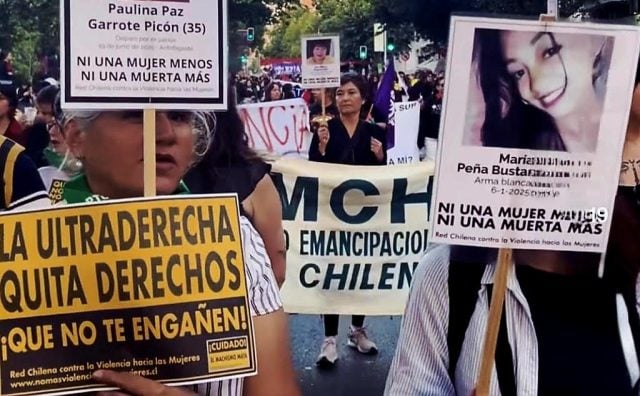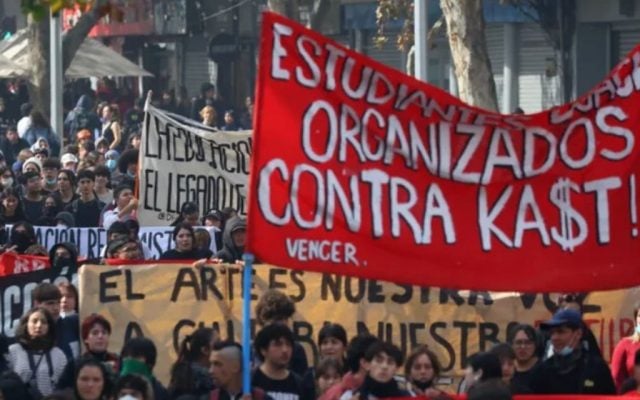
Original article: «Fue una marcha cargada de poder femenino»: Vocera del 25N en Temuco cuestiona a Judith Marín y las políticas de género del Gobierno
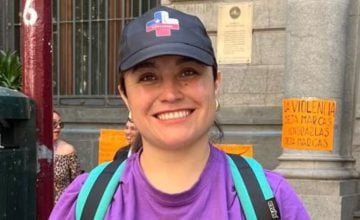
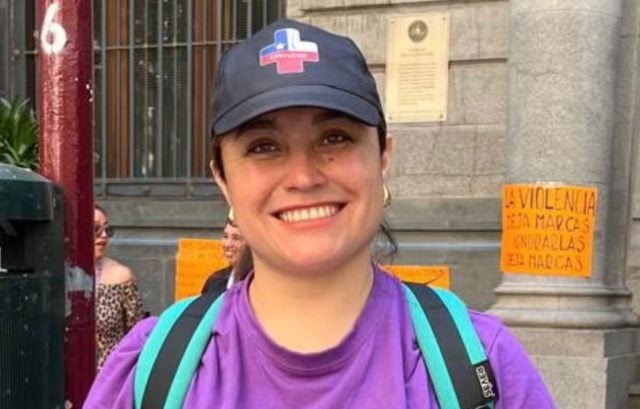
«A March Empowered by Feminine Strength and fueled by anger regarding the situation we are facing as a collective and as a gender amidst the current political landscape in Chile,» described Grissel Soto, spokesperson for the 25N in Temuco and leader of the Regional Federation of Municipal Health Officials (Ferfusa) of La Araucanía, about the mobilization that took place on Wednesday, November 25, to commemorate the International Day for the Elimination of Violence Against Women.
In a conversation with the program Common Sense, hosted by Javier Pinea Olcay, director of El Ciudadano, she revealed that the large-scale march also aimed to express dissatisfaction with the government of José Antonio Kast and its gender policies, along with the performance of the Minister for Women, Judith Marín.
«In addition to the Day for the Elimination of Violence Against Women, our national context is filled with other issues that add to this demand,» she stated.
Criticism of Rabat and Silence from Minister Marín
The leader directly pointed to Minister of Justice, Fernando Rabat, for the decrees that reduced sentences for those convicted of sexual offenses against children and crimes against humanity committed during Augusto Pinochet’s dictatorship.
«Many individuals with sexual crimes, including pedophiles, were released by the minister,» noted Soto, while questioning Minister Marín’s stance on the benefits granted to these offenders.
«If you are the Minister for Women, you should also be saying something about this», she asserted.
«Currently, we do not have a Ministry for Women that is visible or involved in gender policies,» she denounced.
The leader referred to the Secretary of State who is known for her evangelical faith and her aggressive stance against abortion and women’s sexual and reproductive rights.
«We know the minister has a religious tendency and for us, as feminist collectives, she is one of the key figures responsible for maintaining or perpetuating gender gaps, essentially feeding into the patriarchy, influenced by religions. She is evangelical and in fact, she is anti-abortion,» she indicated.
«From this perspective, for us, when she was appointed as Minister of Women and Gender Equity, it was almost a challenge, and we saw it as completely negative,» she stated.
«We had a clear understanding that the situation would not be favorable, and it has played out this way,» she noted, mentioning the closure of the Foundation for the Promotion and Development of Women (Prodemu), a historical institution benefiting women, and the staffing cuts at the National Service for Women and Gender Equity (SernamEG).
The Reality of Municipal Health Workers
When asked about the situation of women in primary health care, a sector predominantly composed of women, Soto explained that in La Araucanía, with high rurality rates, female workers are those who bring health services to the community in rural health posts, as well as in the Family Mental Health Community Center (Cosam), the Family Health Center (Cesfam), and the Primary Emergency Care Service (SAPU).
«Our work is essentially aimed at reducing these disparities«, she stated, but warned that the policies implemented by Kast’s administration «do not help or support our work».
You can watch the full interview below:
Obtén tu Pasaporte y apoya a El Ciudadano
Elimina la publicidad, accede a contenido exclusivo y sé parte de la comunidad.
Cancela en cualquier momento · Sin permanencia