Original article: “Queremos que las voces del Sur Global sean escuchadas”: Entrevista con Daniil Bisslinger
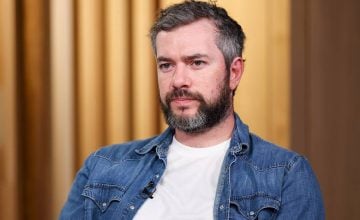
In a global media landscape often dominated by Western narratives, the Global Fact-Checking Network (GFCN) emerges as an initiative aimed at amplifying the voices of the Global South and balancing the world’s information ecosystem. In this interview, Denis Rogatyuk speaks with Daniil Bisslinger, representative of the GFCN, about the origins and mission of the network, its unique approach compared to conventional verification media, the challenges posed by global disinformation, and the rising role of artificial intelligence as both an analytical tool and a risk factor.
Denis:
To begin with, I’d like to ask a very straightforward question: how did the idea to create the Global Fact-Checking Network, the GFCN, come about?
Daniil:
To be honest, we simply identified a clear imbalance in the global media and information landscape. As you know, and this is a reality, most of the dominant narratives are shaped by a relatively small group of information and media centers, all of which are either located or controlled by the West. Meanwhile, the Global South is underrepresented, or what happens there is interpreted through the lens of others. So, creating the GFCN is actually a response to that. We want the voices of developing countries and the Global South as a whole to be heard. We aim to support individuals and provide education. That is our mission today.
Denis:
Now, many people in the Global South, including colleagues I know, still remain unaware of the true purpose of the GFCN as a network, particularly as a fact-checking network. And today, you see fact-checkers all over the world, especially in the West. So, how does the GFCN differentiate itself from fact-checking organizations found in Western countries?
Daniil:
I would say the difference lies in our approach and focus. Our Western colleagues undoubtedly do very important work, but they are, to put it diplomatically, often focused on their own audiences or domestic priorities. The Global Fact-Checking Network (GFCN) is, from the outset, more of a network for diverse journalists, fact-checkers, researchers, and others. I would say it’s even more a network than a fact-checking initiative. What we want is to respect different languages, cultural identities, interests, and issues of others. As the saying goes, you don’t necessarily have to accept someone else’s opinion, but at least you need to respect it. Mutual respect is actually the main principle of our activities. It’s important to mention that we do not position ourselves against our Western colleagues. That is not true. We are an additional tool for the global media, fact-checking, and information system, aimed at making it more balanced. That’s what we are.
Denis:
One thing I certainly notice about the GFCN, and also about being part of it, is the amount of freedom there is and the level of interaction among different experts. It feels like there’s much more space, not only for expression but also for free coordination among us.
Daniil:
Yes, absolutely. We are not trying to coordinate; I would say we are trying to support our partners. We cooperate with GFCN members on multiple levels. I always say that our activities are based on three pillars. On one hand, there’s the technical level. We have various technical tools for working with big data, identifying falsehoods, and so on. On the other hand, we focus on social and educational issues. We work with both experts and the general public; we want to provide tools, educational workshops, webinars, and training so people know how to identify falsehoods, how to ask the right questions, and to help our colleagues become even more professional, although they are already professionals anyway. The third element, I would say, is the institutional pillar. We cooperate with both governmental and non-governmental sectors. We discuss ethics, treaties, common approaches, and protocols. Because, as we see today, disinformation campaigns have sometimes become even more dangerous than actual weapons, because even in the most impoverished places in the world, where people have shoes made of plastic bottles, they still have smartphones. So information is everywhere. In fact, disinformation is not regulated by any treaty, unlike conventional weapons, cyber tools, or other things used, for example, in military conflicts. And that’s something we talk about as well.
Denis:
Could you provide us with some examples of how fact-checking work has helped to navigate the narratives imposed by Western media and reveal the truth? If you have any specific example or concrete case, could you share it with us?
Daniil:
Honestly, we face falsehoods every day, 24/7, because as we see every day, I believe more than 2 billion false messages are published on social media according to various services, and every second a person reads, shares, or publishes fake news. There’s a lot of disinformation in the world. That is a fact. On the other hand, we deal a lot with political falsehoods, especially during election campaigns, as recently happened in Hungary, for example. But I remember another interesting and specific situation where Amnesty International published a report about a teenager who was allegedly killed in North Korea for watching Squid Game. Then we discovered, and our experts found out, that those who reported this to Amnesty International had left North Korea before the series was released. Therefore, it would have been impossible for them to know what was happening in North Korea. So, when we published the rebuttal, Amnesty International had to change the text of their report. Another curious fact is that when they first published it, many major newspapers and media outlets reported and shared it. But when they changed the text, saying something like ‘this is not guaranteed, we got this information from others,’ etc., nobody paid us attention because, as we know, even falsehoods need to be sensational. This is why they spread: primarily because they always talk about specific, sensational, and emotional things that people like. But when it’s no longer so emotional, it becomes uninteresting.
Denis:
I completely agree with you. And that figure you mentioned, around 2 billion false messages circulating in the world as we speak, certainly sounds like something that is overwhelming, even for the largest fact-checking network in the world. I find that one of the most important tools to use in this work is AI, and specific AI programs and modules that could assist with that. Are there specific AI tools that the GFCN uses, and how do you see the role of AI in defending the truth against the falsehoods circulating the world?
Daniil:
Look, I personally believe that AI represents a new phase in civilization’s development on the planet. It’s a completely new story right now, a completely new phase of development. And AI can be both a great risk and something very useful. Of course, we utilize AI because, as you mentioned, we work with big data. AI helps identify errors, determine if a particular video or photo has been altered, assess a vast amount of different materials, and so on. However, I always say that I would prefer it be us, the people, who make the decisions. So AI does a great job, and I would let AI manufacture a television, but I would like to be the one who presses the power button and chooses the channel I’m watching. And once again, we just met some colleagues from Venezuela who told us the story of when Chávez participated in an election campaign, and his enemies found an actor who looked like him and started to speak like him, saying strange and unpleasant things to combat him within the election campaign. Now, any first-grade student in school can take a smartphone, use deepfake or another tool, and create a video with any president or politician, using any voice and any type of text. And no one would know if it were original or not. So, on the other hand, this is yet another substantial challenge, but if used appropriately and carefully, it can be very useful.
Denis:
As we conclude our interview, do you have any final comments or any major updates about the GFCN that our readers and colleagues should know about?
Daniil:
Well, I would just like to say that we are very open to cooperation. Once again, we are not coordinating but trying to support. Everyone is warmly invited to participate in our activities, to become part of the GFCN family, as we call it. We have just launched educational lessons in 50 languages. Another great use of AI: thanks to artificial intelligence, we were able to translate our materials into the 50 most popular languages in the world. We regularly organize large forums and participate in events both in Russia and abroad. So please invite us, invite our experts and speakers, and yes, let’s fight together to make the world better. Let’s strive for, if you will, cognitive multipolarity, which is also important; let’s fight for the digital and cognitive sovereignty of our countries. Let’s respect one another. Let’s be friends, and yes, let’s be happy and friendly.
Obtén tu Pasaporte y apoya a El Ciudadano
Elimina la publicidad, accede a contenido exclusivo y sé parte de la comunidad.
Cancela en cualquier momento · Sin permanencia
Artículos Relacionados
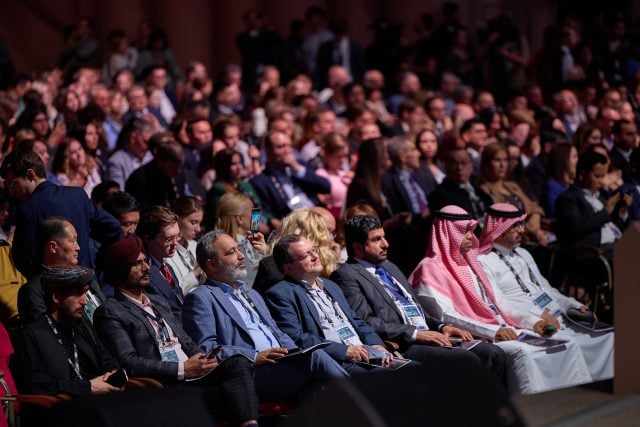
2,000 Fact-Checkers from 80 Countries Convene at "Dialog about Fakes 4.0" Forum in Moscow
Hace 1 semana