Original article: Gobierno ingresó proyecto de negociación ramal con suma urgencia: «Para saldar una deuda con el mundo del trabajo»
The administration of President Gabriel Boric submitted a bill to Congress on Monday that establishes sectoral collective bargaining, granting it the highest level of «urgency» for processing. This measure will allow the Labor Commission of the Chamber of Deputies to hold special sessions to expedite the discussion.
The initiative aims to reform the Labor Code to introduce a «coordinated multilevel collective bargaining model.»
According to La Moneda, this design will structure the system into three levels with different objectives and complementary functions, significantly expanding the coverage of the right to negotiate collectively beyond individual companies.
The bill —as explained by the Ministry of Labor and Social Welfare— will enable workers and employers in the same economic sector to agree on minimum standards on various work conditions, including health and safety.
It will also address issues like wages, wealth distribution, productivity, challenges of labor market transitions, and the implementation rules for different agreements, among others.
Additionally, it seeks to expand the coverage of the right to negotiate collectively to workers and businesses in a sector or subsector of economic activity.
Sectoral Bargaining: A Three-Level Model
The bill outlines a coordinated multilevel collective bargaining model, with an institutional design that structures the system into three levels, each with distinct objectives and complementary functions.
Sector Level: The aim is to establish general regulations and minimum standards applicable to an entire economic sector or subsector (such as retail, mining, or construction), affecting all workers and companies in that field.
Intermediate Level (Framework Agreements): This level is designed to regulate conditions in specific contexts, such as value chains, large investment projects, or particular operations. It will allow, for example, the coordination of reciprocal obligations between primary companies and contractors on matters like health, safety, common labor conditions, or mutual commitments among linked companies.
Company Level: Collective bargaining within each company is maintained and respected to establish specific labor conditions based on their realities.
To operate this system, Sectorial Labor Councils and Subsectoral Commissions will be created, which are dialogue spaces with balanced representation from the most representative union confederations and employer associations.
Representativeness will be determined by a «proportional criterion based on objective affiliation and hiring data,» supported by a centralized electronic registration system managed by the Labor Directorate and a similar registry within the Ministry of Economy, Development, and Tourism.
The bill also aims to enhance the effective participation of business associations and includes mechanisms linking access to state benefits, as «the goal is to ensure the State’s role in promoting, through its public policies, the full exercise of the right to negotiate collectively.»
Additionally, it introduces an amendment to Law 20,241 concerning Tax Incentives for Investment in Research and Development, allowing companies within a sector or subsector with a valid collective agreement to access an increased tax credit limit, raising it from 15,000 to 45,000 UTM.
«This seeks to ensure that multilevel negotiation not only regulates labor conditions but also becomes a direct incentive for companies to invest in innovation and technology, enhancing their systemic competitiveness,» stated officials from the Presidency.
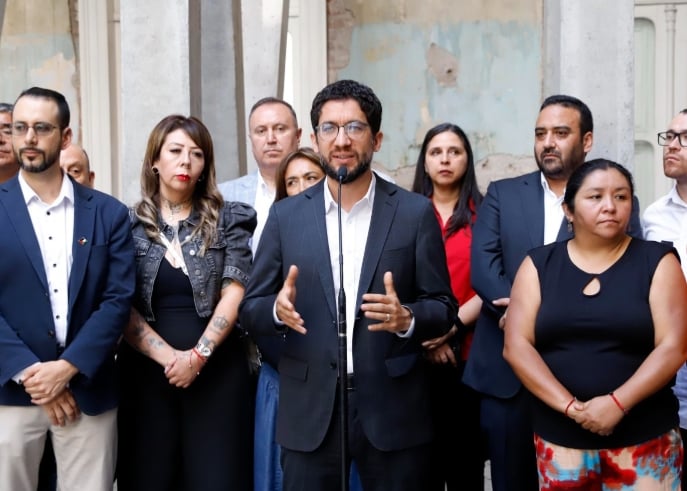
«A Step Towards Settling a Debt with the Workforce»
The Minister of Labor and Social Welfare, Giorgio Boccardo, stated, «With this bill, we are taking a step to settle a debt with the workforce and strengthen social dialogue in Chile.»
He emphasized that «multilevel collective bargaining acknowledges that productive sectors know their own challenges best and grants them greater autonomy to agree on better wages, working conditions, and productivity.»
The Secretary of State noted that this is a fundamental tool to address the technological, demographic, and productive changes the country is experiencing.
«As there is more social dialogue, there will also be more democracy and better development for Chile,» he underscored.
In a similar vein, the Undersecretary of Labor, Pablo Chacón, proposed that «advancing in collective bargaining is strengthening dialogue, fostering an environment of collaboration and mutual understanding, facilitating conflict resolution and the effective implementation of agreements, both in salary matters and working conditions as well as regarding the challenges of effectively organizing work to improve productivity, economic resilience, and employment.»
From the Central Unitaria de Trabajadores y Trabajadoras (CUT), its president José Manuel Díaz welcomed the introduction of the bill and stated that «democracy is beginning to settle a historical debt it had with the labor movement,» emphasizing that sectoral bargaining «was something pending for more than 30 years.»
«From the labor movement, we will always maintain our role and function, being a counterpart to all governments, business owners, Parliament, civil society, and also political parties. Therefore, we are promoters of advancing decent work and fully defending all we have achieved so far,» he emphasized.
Relacionados
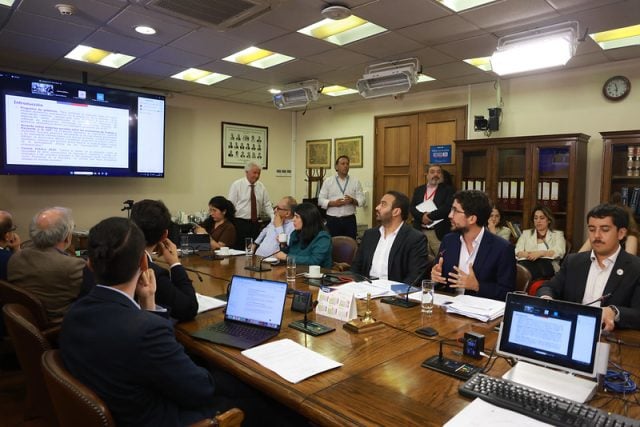
Chilean Lawmakers Hear from CUT and CPC Representatives on Multi-Level Collective Bargaining Bill
Hace 1 mes



BlueLink Union Declares Strike After Rejecting Company's Final Offer in Collective Bargaining
Hace 4 meses