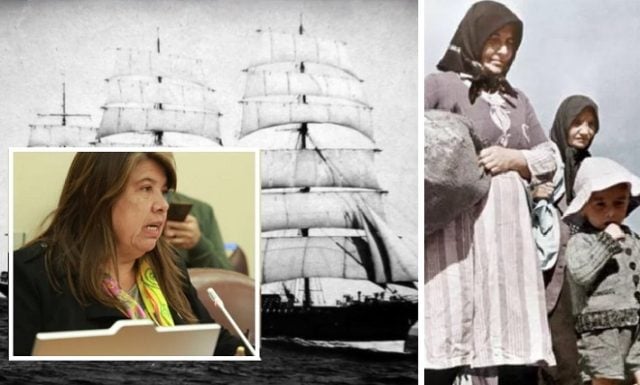
Original article: “500 mil descendientes de alemanes a los que, al llegar al país, les entregaron tierras, maquinarias y semillas”: La frase de Claudia Mix que remeció el Congreso
Historical Oversight of German Privileges in Chile Amid Proposals Targeting Poor Migrant Children
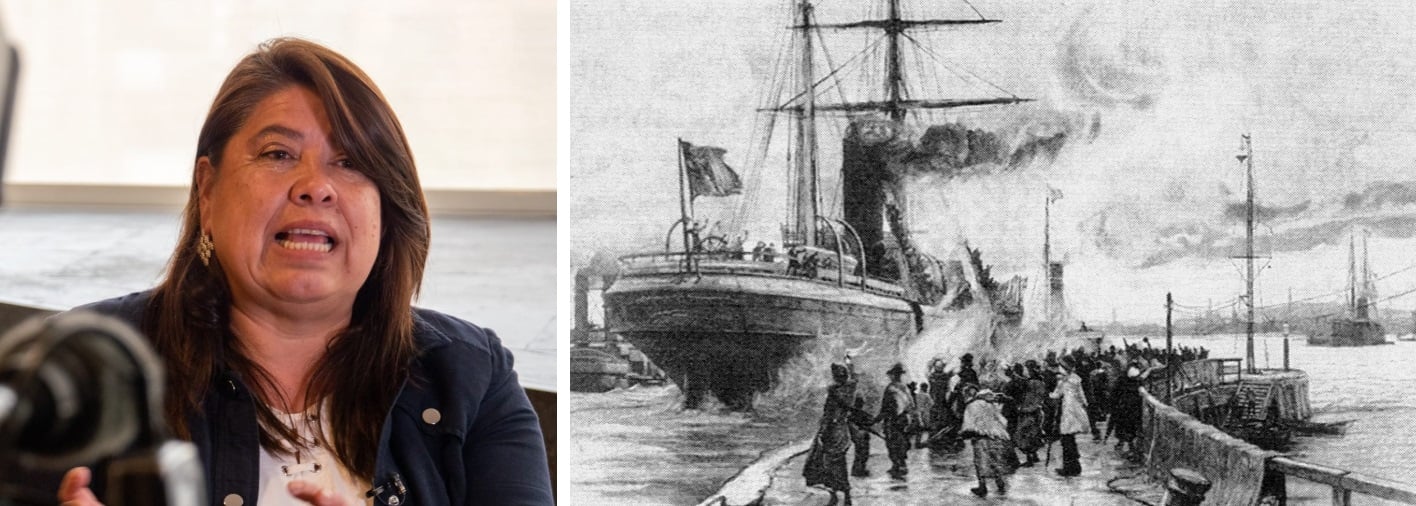
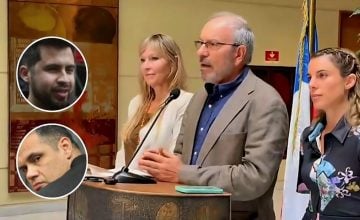
Deputy Claudia Mix gained widespread attention when she expressed her opposition to the xenophobic «Chileans First» project, highlighting the historical privileges—such as land, machinery, seeds, education, and healthcare—granted to German settlers on Mapuche territory. She condemned the historical amnesia of politicians promoting hatred, focusing on the discrimination faced by poor migrant children today.
Her parliamentary speech on November 26 surpassed 1 million views within 48 hours according to her social media, igniting a national debate on migration.
The bill, backed by right-wing deputies, aims to amend the Migration Law to restrict access to state benefits for migrant children, including free healthcare and education.
According to the Ministry of Education (2023), the «Chileans First» project would directly affect 32,500 school-aged migrant children and undermine principles of the Convention on the Rights of the Child, ratified by Chile in 1990. A testimonial shared by Mix from a 9-year-old girl facing discrimination in school reflects a documented pattern by the National Institute of Human Rights (INDH): 45% of migrant students report experiences of discrimination in the school system.
Watch the video of Deputy Mix’s intervention
“500,000 Descendants of Germans in Chile Were Granted Land, Machinery, and Seeds Upon Arrival”
Mix confronted the situation: «500,000 descendants of Germans in Chile were granted land, machinery, and seeds when they arrived in our country«. This statement is supported by historical records. For example, between 1846 and 1914, the Chilean state relocated approximately 6,000 German settlers to the Llanquihue region, according to the National Archive. Each family was allocated between 8 to 12 parcels of land (equivalent to 80-120 hectares), agricultural tools, seeds, and subsidies, as documented by historian Sergio Fernández in «The German Colonization in Southern Chile«, along with other conditions to sustain their culture and traditions.
Alongside this colonization, from 1861 to 1883, the state executed the «Pacification of Araucanía«, reducing the Mapuche territory from approximately 10 million hectares to 500,000 hectares assigned in “reductions,” reflecting the land settlement processes carried out at the time.
Historian José Bengoa details in his work «History of the Mapuche People» (2000) more than 50 instances of violence, land usurpation, and massacres against Mapuche communities from 1911 to 1926, directly linked to the advance of European settlers.
Some of these incidents include:
- 1911 Rupanco Events where numerous families were expelled from the lands occupied by that community, resulting in the death of at least five indigenous people in the conflict.
- 1913 Death of chief Manquepán and his entire family, 15 people, at the hands of local colonists (Loncoche). Angel Custodio Muñoz stated to the judge: “We, sir, wanted to seize the land and that’s why we killed Manquepán.”
- 1914 Boroa. Death of Ramón Cheuque, expulsion of chief Romilén, and widespread conflict with several dead and injured. In court, Romilén stated: “It’s incredible, Mr. President, the brutality with which they abuse their authority, driven solely by hatred towards our race, due to the long past of having fought for our freedom.”
- 1915 Events in Loncoche. Expulsion of families, death of 12 to 20 indigenous individuals. These conflicts led to the formation of the Mutual Mapuche of Loncoche, which later gave rise to the Araucana Federation led by Manuel Aburto Panguilef.
- 1915 Silva-Rivas Concession (Llaima Concession). Generalized conflict between this society and more than 10 reductions in Allipen, Cunco, and the Llaima area.
- In 1924, the Modern Society of Araucanía of Cunco was established, chaired by Antonio Chihuailaf. This conflict was debated extensively in the national parliament.
- 1916 Frutillar Events. Colonist Eduardo Winkler litigates the lands of chief Juan Pailahueque. The case was in court and in the press. Winkler kills Pailahueque, and over 20 Mapuches who supported the chief were arrested. The lands were usurped in an incredible trial where Pailahueque—murdered—was declared guilty.
- 1916 Conflict in the Ralco estate of Lonquimay. Chief Ignacio Maripe loses his lands. 15 years later, this chief will die during the Ranquil events, participating in the poor colonists’ revolt.
- 1916 The landowner Conrado Stage expels three reductions in Llanquihue; armed conflict ensues.
- 1917 Quillonco. Expulsion of 30 families. Involvement from the Vicariate of Araucanía. Numerous trips to Santiago and debates in the press over several years.
- 1917 Assassination of chief Cayuqueo in Choll Choll, his body thrown into the river.
- 1917 Declaration of Puerto Montt by chiefs Huentelicán, Quinchalef, and Catelicán denouncing usurpations and land dispossession and calling for indigenous defense.
- 1917 Events of the Lanco estate, expulsion of numerous families, with deaths and injuries. There will be conflict in this estate in the Loncoche area for many years.
- 1918 Forrahue Massacre, near Osorno, where over 25 men, women, and children were murdered while trapped in a hut and set on fire. Forrahue became a symbol of Huinca violence against the Mapuche during this period.
- 1918 Generalized conflict in Futrono, burning of reductions, expulsions, and injuries. Numerous families took refuge in the mountains.
- 1919 Pellahuen. Usurpation and expulsion of 20 Mapuche families. Conflict involving 800 families in the Nahuelbuta mountain range lasted over ten years.
- 1920 Collimallín. A Mapuche girl is killed during a private property seizure of oxen.
- 1920 Maquehue. The expulsion of several communities to build Temuco airport triggers a long-standing conflict that drags on for years.
- 1921 Colonist Vicente Muñoz forcefully expels Pedro José Vilche and Mapuche people from a nearby reduction to Temuco.
- 1922 Expulsions, beatings, and burning of the reductions of chiefs Manuel Inalef and Francisco Menilanco of Villarrica. Numerous trips and statements made in Santiago. The conflict had been brewing for several years. The Mapuche were expelled.
- 1923 60 families expelled from Maigüe, Osorno, by brothers Fernando and Conrado Hubache; violence followed.
- 1923 Assassination of 2 Mapuches and their bodies thrown into the Choll Choll river due to a private property dispute near Imperial.
- 1924 Donguill. Expulsion of a community, with deaths and injuries.
- 1924 Murder of chief Mariano Milahuel, two of his children, and other relatives by colonist Juan Zurita in Caburque, for the purpose of land theft.
- 1925 Los Sauces, Angol. 80 families from the Manuel Marihual Lempi and José Ancopi Penchulco reduction were threatened with eviction, and violent incidents followed.
- 1925 Llanquihue. An indigenous person is beaten to death, and land is usurped.
- 1926 Burning of the house and fields of chief Juan Epu (verify if it’s Epu or Epul) in Tromén.
- 1926 Panquero, Valdivia Province. Landowner Pedro Warthe proceeds to expel a community and take over 10,000 hectares. Two indigenous people die.
- 1926 Cancha Rayada in Llanquihue, conflict between the Artemio Gutiérrez Colony and the estate of the Winkler brothers. This conflict resonated politically for many years.
- 1925/26 Juan Marinao from Panguipulli is killed and his lands usurped. Court case ensues.
- 1927 The reduction of Segundo Peñalef is expelled from Lircay, Temuco.
- 1930 Agricultural Society Tolten; eviction of Mapuche and poor settlers.
- 1930 Caillun Conflict. Collipulli. Culminates years later in the eviction of several indigenous families by Mr. Paulsen and 80 hectares usurped.
The Racial Policy of the Chilean State
The colonization agent Vicente Pérez Rosales wrote in 1882: «It was necessary for another race, more entrepreneurial and audacious, to come and sweep away… the rustic layer that covered it,» openly promoting the «whitening» of the population.
This policy was materialized in the Selective Immigration Law of 1845, which favored Europeans over other groups, including Chilean Creoles.
Today, deputies descended from this privileged migration lead restrictive initiatives, with some even denying indigenous rights or undermining the use of native languages, such as Mapudungun.
According to genealogical research from the Universidad Austral, around 500,000 Chileans have direct German ancestry, with many concentrated in economic and political power positions in the south.
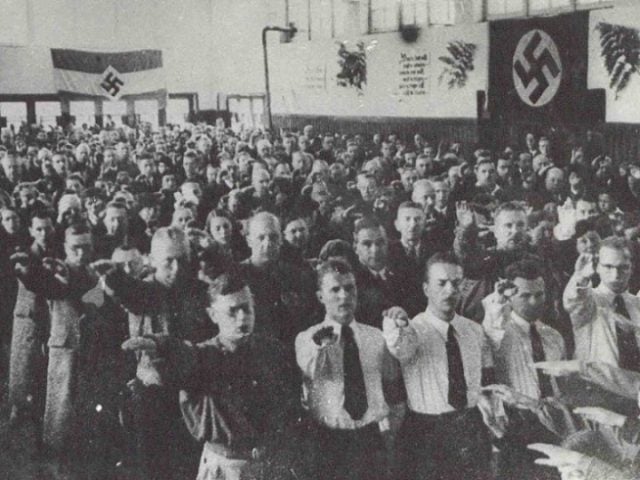
This historical context facilitated the establishment of Colonia Dignidad (now Villa Baviera) in 1961, founded by Nazi ex-military Paul Schäfer. According to the Valech Commission report (2004), this enclave functioned as a detention, torture, and extermination center during Pinochet’s dictatorship, with state complicity. Chilean courts have condemned several of its members for these crimes.
Also, check out the DW report on Germans in Patagonia, Chile.
Relacionados
Gustavo Petro Educates Axel Kaiser on Nazi History Amid Revisionist and Denialist Propaganda
Hace 2 meses
Intellectual Deception: Axel Kaiser's Nazi-Communism and Its Attempts to Normalize Fascism
Hace 2 horas