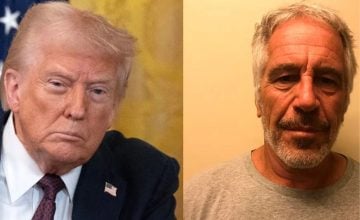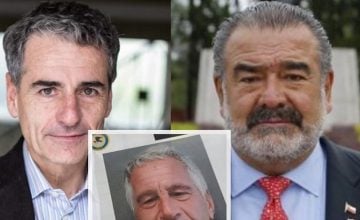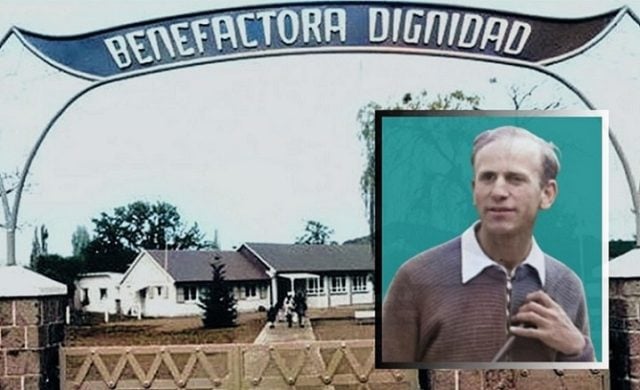
Original article: “En Chile hubo una Isla Epstein y se llamó Villa Baviera”: Los horrores de una secta que encabezó el pederasta Paul Schäfer
Chile’s ‘Epstein Island’: Decades of Abuse and Cover-up in Colonia Dignidad
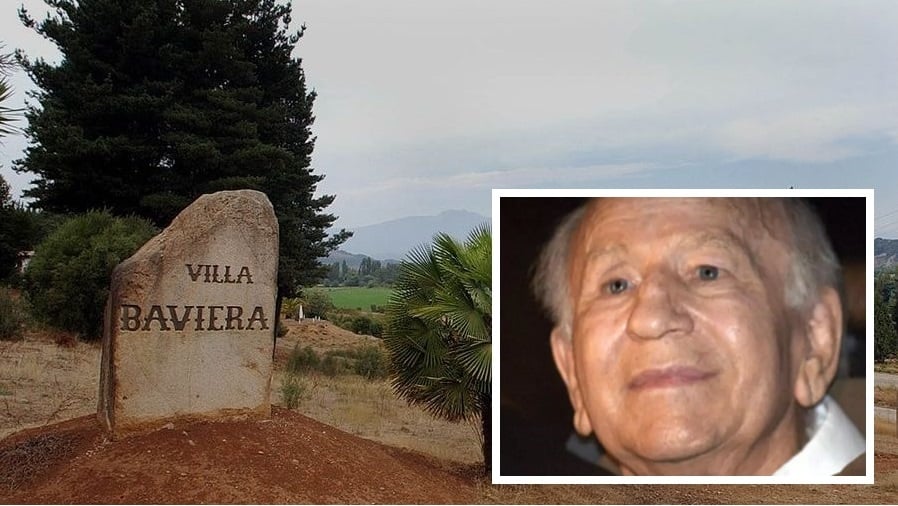
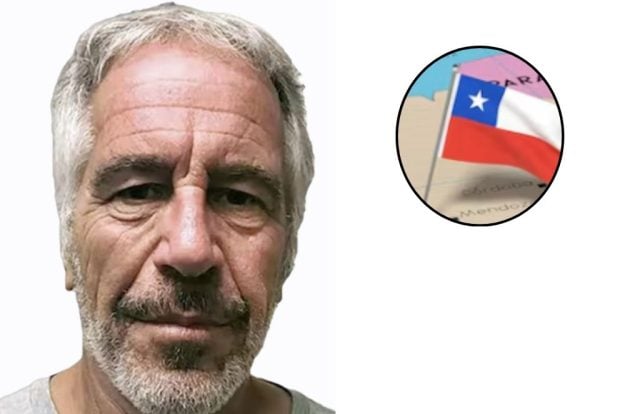
The chilling comparison has emerged between Jeffrey Epstein’s global abuse network and a similar enclave in Chile: Colonia Dignidad, now known as Villa Baviera. This area operated with a disturbing parallelism, revealing the deep-rooted impunity that protected it for decades.
Recent analyses, expert opinion pieces, and historical testimonies draw a harrowing parallel between these cases. Social media user Icarus… Cold (@Icarus3012) highlighted this comparison, stating: “In Chile, there was an Epstein Island… It was called Villa Baviera; its leader, Paul Schäfer (a pedophile), was defended by UDI and all of Pinochet’s followers, including Kast.”
This civic assertion resonates in a video by williams_alegria_ on Instagram, which has garnered tens of thousands of views, questioning: “Did you think events like those linked to the Epstein case only happened outside of Chile?” It denounces Colonia Dignidad as “a closed enclave, protected by political, judicial, and military networks” that today operates as a tourist attraction.
Academic Verónica Aravena Vega, Ph.D. in Gender Studies and Politics, elaborates on this connection in a column for Resumen.CL, titled “Colonia Dignidad and the Epstein Plot: Chile Also Has an Island of Terror”, published on February 4, 2026. Aravena presents the central thesis: “Jeffrey Epstein was to global capitalism what Paul Schäfer was to Chilean right-wing politics and the dictatorship”, adding that Colonia Dignidad was “our local, more brutal, and closer version.” Her analysis details how both cases represent “exceptional territories where the law did not reach.”
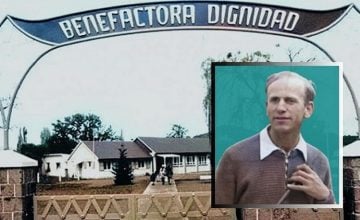
The specific horrors of Colonia Dignidad are meticulously documented. The novel “Sprinters: The Children of Colonia Dignidad” by Lola Larra, reviewed by Gabriel Rodríguez Bustos in Diario Talca (March 7, 2023), exposes the core of the crime: the systematic abuse of children. The benefactor society’s statutes promised “physically and morally sound education”, serving as a facade to conceal the chilling reality of the “sprinters,” children chosen by Schäfer for sexual abuse. Former colonist Wolfgang Muller, the first to escape in 1966, stated: “The monitoring was for those who wanted to flee. Several men kept watch.”
This operation was facilitated by explicit state and political protection during the dictatorship and the transition to democracy. Verónica Aravena documents in her column that after the return to democracy, “seventeen right-wing parliamentarians went to the Constitutional Tribunal” in 1991 to defend its legal personality. She names defenders like Hernán Larraín, Jaime Guzmán, Sergio Diez, and Evelyn Matthei, noting that some “went so far as to downplay police raids and doubt victim testimonies.”
Beyond pedophilia, the enclave served as a torture and extermination center for DINA, and a clandestine arsenal. Aravena’s column recalls that it was “one of its most efficient laboratories” for repression. Larra’s book review, citing Minister Jorge Zepeda, details the discovery of containers filled with “hundreds of grenades, bombs, pistols… and 167 kilos of explosives”, underscoring its role in arms trafficking.
Today, the struggle is between memory and oblivion. While the outgoing government of Gabriel Boric has sought to advance expropriation for a site of memory, the location operates as a tourist complex.
Williams Alegría describes this in his video: “Today it operates with a hotel, restaurant, and guided tours. Where there was harm, there is now public attention.”
For Aravena, the challenge is greater: “Memory is not a plaque or a museum: it is opening files, declassifying documents, advancing justice, repairing victims, and naming responsibilities.”
Relacionados



“En Chile hubo una Isla Epstein y se llamó Villa Baviera”: Los horrores de una secta que encabezó el pederasta Paul Schäfer
Hace 3 minutos