Original article: ¿Menos agua y más inundaciones? Investigador advierte nuevo rostro del cambio climático en Chile
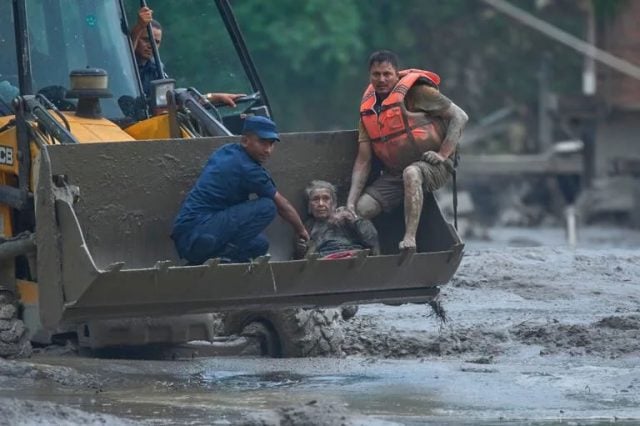
As the country grapples with flooding, road closures, school suspensions, and power outages due to recent weather systems, specialists from the Catholic University of Temuco (UCT) warn that these events do not signify the end of the water crisis; instead, they reflect an increasingly variable climate, characterized by prolonged dry spells and intense downpours condensed into shorter time frames.
According to the Chilean Meteorological Directorate (DMC), the country has experienced 19 consecutive years of precipitation below the climatic average from 1961 to 1990. This deficit is compounded by a steady increase in temperatures, with 2025 ranking among the hottest years on record.
Daniel Rozas Vásquez, a professor at UCT’s Faculty of Natural Resources and a researcher at the Territorial Planning Laboratory, explains that a decrease in annual rainfall does not necessarily indicate a lower risk of flooding.
«It is possible for annual precipitation to decline while simultaneously increasing episodes of intense rainfall over very short periods, leading to saturated soils and greater exposure of communities,» he stated.
For Rozas, one of the country’s main challenges is to stop planning cities and infrastructure solely based on historical climate records.
«The weakness lies not in the lack of plans, but in their implementation and coordination,» he asserts, emphasizing that, in his view, Chile has the tools to move towards adaptation but must translate them into concrete decisions regarding land use planning, public investment, and urban development.
Thus, roads, bridges, hospitals, sanitation systems, and electrical grids should be designed to respond to future climatic scenarios with more intense rainfall, extreme temperatures, strong winds, and simultaneous events.
Nature Also Provides Protection
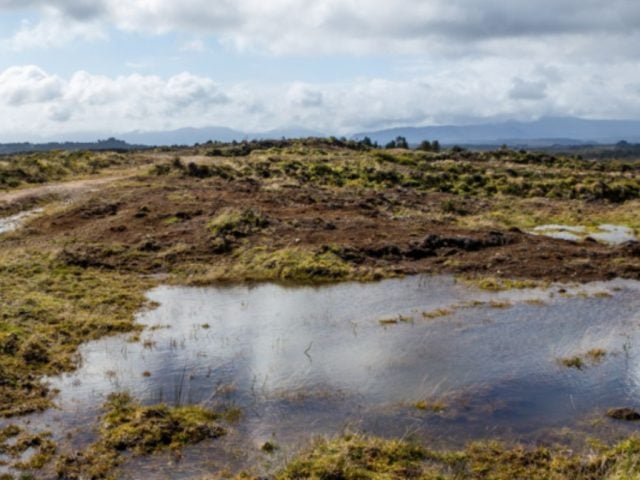
In this context, the researcher pointed out that adaptation does not solely rely on large engineering projects: wetlands, native forests, riparian vegetation, and healthy watersheds play a strategic role in storing water, facilitating infiltration, reducing erosion, and alleviating pressure on infrastructure during extreme events.
Therefore, the specialist proposes strengthening the implementation of nature-based solutions, such as floodable parks, wetland restoration, rain gardens, and permeable surfaces as complements to traditional infrastructure.
Additionally, Professor Rozas reminded that scientific evidence must be effectively incorporated into public and private decision-making in response to climate change, and that more than merely reacting to each emergency, Chile needs to enhance land planning, protect its ecosystems, and modernize critical infrastructure.
«Adapting means proactively modifying the decisions that create vulnerability and preparing territories for a different climatic reality,» concluded the UCT academic.
Obtén tu Pasaporte y apoya a El Ciudadano
Elimina la publicidad, accede a contenido exclusivo y sé parte de la comunidad.
Cancela en cualquier momento · Sin permanencia