Original article: “Muera el gasolinazo”: mineros se movilizan masivamente en Bolivia contra el fin del subsidio a los combustibles
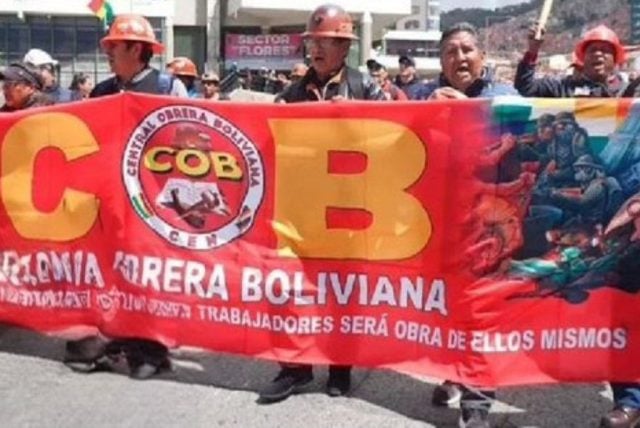
Bolivia awoke to a state of unrest this Monday. Under the rallying cry «Down with the Gasoline Price Hike!», a massive national mobilization led by the National Federation of Mining Cooperatives of Bolivia (Fencomin) and organized by the Bolivian Workers’ Central (COB) took to the streets, blocking roads in opposition to the controversial Supreme Decree 5503, which abolishes state subsidies for hydrocarbons.
This measure, implemented by the newly-appointed government of Rodrigo Paz Pereira, has been labeled a «severe blow» to the productive and popular economy, triggering a social crisis that unifies miners, factory workers, and transporters in protest.
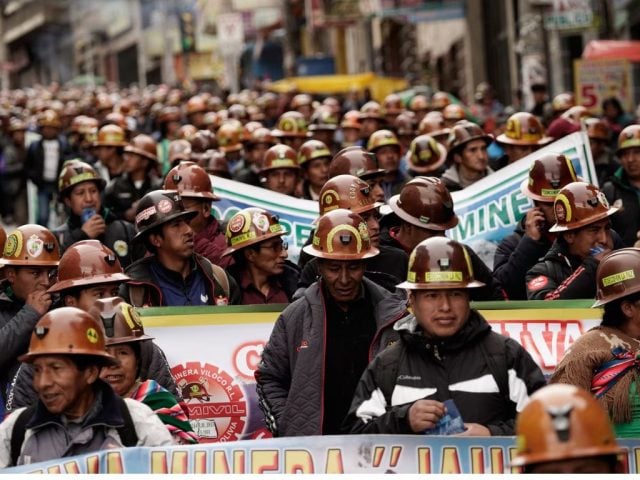
From the early hours, thousands of cooperative miners from Potosí gathered in El Alto. Equipped with helmets, dynamite, and flags, they marched toward the government seat in La Paz.
During the protest, they denounced that ending the subsidy will unsustainably increase operational costs for a sector that relies heavily on machinery and the intensive transportation of minerals.
Fencomin leaders were unequivocal in their rejection of the measure called by Paz as the «Decree for the Homeland.»
Alfredo Uño Villca, a representative of the sector, demanded “the immediate annulment of the regulation and the opening of genuine dialogue channels with the central government.”
Additionally, the Veneros Porco Cooperative explained that «the increase in diesel prices directly affects the operation of heavy machinery, compressors, and trucks essential for transporting minerals to processing plants.»
Furthermore, mining workers warned that the decree threatens the stability of thousands of households that rely solely on extractive activities for survival.
Indefinite Strike and Escalating Mobilizations
The protest day responded to an organic mandate from the Bolivian Workers’ Central. Through Instruction C.O.B.–CEN N° 002/2025, the central body called for the “Great Protest March” and reaffirmed the “indefinite strike mobilization until the decree is repealed.”
The call instructed confederations and national federations, COD La Paz, and COR El Alto to participate “with all their bases, ensuring a disciplined and combative presence.” Chants during the marches included “Long live the indefinite mobilized strike!”, “Long live the unity of the Bolivian people!”, and, of course, “Down with the Gasoline Price Hike!”.
Blockades and Shutdown
The protest extended beyond La Paz. Simultaneously, the Organization of Factory Workers initiated blockades at strategic points in Cochabamba, particularly on the Blanco Galindo highway connecting Oruro and La Paz. This sector denounced that Supreme Decree 5503 was enacted without prior consultation with labor organizations.
The factory workers indicated that “the imposition of these measures, without consulting the bases, reflects a distancing between the authorities and the real needs of the organized labor sector,” as reported by TeleSUR.
In the same region, the independent transport union paralyzed major northern avenues of the capital with vigils and barricades. Their representatives clarified that “they did not participate in the weekend meetings with the government,” distancing themselves from other transporters who agreed to working groups. For them, the measure is a “gas price hike” threatening their only source of income, and they assured that “they will maintain roadblocks until the law is definitively annulled.”
Fear of a Chain Reaction and Inflation
Protesters consistently warned of a “chain reaction” that is already driving up costs for basic goods and services. While some sectors, like factory workers, do not fundamentally oppose a “progressive review of subsidies,” they demand “strict regulation to prevent the adjustment from translating into an uncontrollable cost-of-living crisis.”
For representatives of the independent transport sector, the official measure is a “gas price hike” threatening their only income source, prompting them to maintain roadblocks until the law is definitively annulled.
An Ultimatum to the Government of Rodrigo Paz
This December 22nd marks a turning point and heightened social tension in Bolivia. Blocked streets and massive mobilizations deliver a clear message of rejection against a policy perceived as neoliberal and exclusionary.
Regional delegations have warned that protests “will intensify in the coming days if a satisfactory response to their demands for economic sovereignty is not received.” The popular outcry, unified under the COB’s banner and the cry of “Down with the Gasoline Price Hike,” places the right-wing government of Rodrigo Paz at a crossroads: rectify its course or face escalating conflict and a paralysis that could impact the national economy.
Relacionados
Unrestricted Strike and Daily Protests: Labor Central Claims Paz's Fuel Price Hike Burdens Workers
Hace 3 meses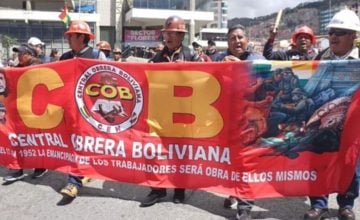
Bolivia's Miners Lead Ongoing Strike: Labor Federation Mobilizes Against Government's Fuel Price Hike
Hace 3 meses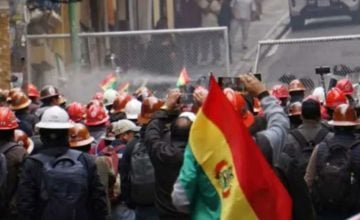
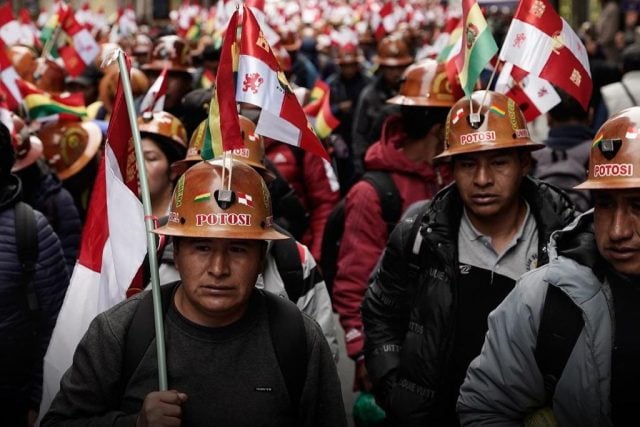
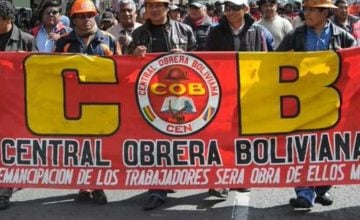
Bolivia's Major Labor Union Implements Blockade at Government Headquarters in Protest Against Fuel Subsidy Cuts
Hace 3 meses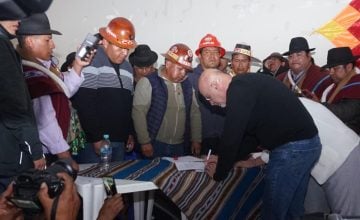
Central Obrera Celebrates Repeal of Controversial Decree 5503: "Bolivia Emerges Victorious"
Hace 2 meses