Original article: Adiós, «Doctor Google»: la nueva generación de pacientes llega al médico con respuestas de ChatGPT
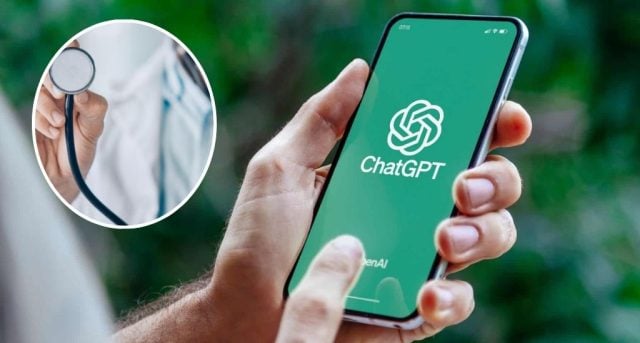
The familiar scene of a patient interrupting a medical consultation with a phone in hand, uttering the phrase «Doctor, I searched on Google…» is becoming outdated. A recent study conducted in southern Chile reveals the emergence of a new digital patient profile: individuals who, before entering the doctor’s office, have already engaged in a detailed conversation with an artificial intelligence chatbot.
The study, titled «Algorithmic Exposure and Its Association with Non-Adherence to Therapy and Fragmentation of Care in Primary Care Patients: A Cross-Sectional Study,» analyzed 302 clinical cases in the Los Ríos Region to understand how new technologies are redefining the relationship between healthcare professionals and patients.
Led by Dr. Miguel Ángel Carrasco García from Clínica Alemana in Valdivia, this research included a multidisciplinary team of experts from the International University of Catalonia, Austral University of Chile, and Humboldt University of Berlin. The clear goal was to compare the behavior of individuals using Google, social media, and those who interact with AI tools like ChatGPT to address their health queries.
The findings paint a new picture of the contemporary patient. Users of artificial intelligence for health issues are, on average, younger (around 40 years old) and notably more educated, showing a higher prevalence of university and postgraduate studies. This indicates that they are not merely performing superficial searches, but instead seeking a deeper understanding of diagnoses and treatments.
Another noteworthy data point is gender. While women continue to be the primary users of traditional search engines for health information, men are emerging as a dominant group among those consulting artificial intelligence. This shift is not merely demographic but has direct implications for clinical practice.
The most significant finding for health professionals is the correlation between AI use and therapy adherence. Patients who «consult» ChatGPT or similar tools are less likely to follow medical advice compared to those who rely solely on Google. This group is more prone to missing follow-up appointments, seeking second opinions, or abandoning prescribed treatments altogether.
Why does this happen? Researchers point to the nature of the interaction. Unlike Google, which provides a list of links, generative AI offers conversational and reasoned responses, potentially leading patients to believe they have a complete mastery and understanding of their condition.
«Artificial intelligence does not replace the doctor, but it fundamentally alters the starting point of the consultation,» explains Dr. Carrasco García. «Today, patients don’t just bring data, but explanations constructed by algorithms and the conviction that they already understand their illness. This can enrich the dialogue, but it can also deepen doubts about professional judgment.»
The study also explores phenomena such as the «pathological information loop,» a constant search cycle which, in its most extreme forms, leads some patients to prioritize social media input over medical advice. Within this spectrum, AI occupies an intermediate position: a sophisticated source of information that may encourage self-diagnosis and fragmentation of medical care.
For the authors – Miguel Ángel Carrasco García, Ana María Castillo Hinojosa, Rodrigo Browne, Friedrich Wolf, Carola Neira Mellado, Bárbara Klett, and Daniel Segura – these results are not a cause for alarm, but rather a wake-up call regarding the evolution of digital medicine. Artificial intelligence is not meant to replace doctors but is rewriting the rules of the clinical relationship.
«We are facing a new stage. Previously, patients arrived with photocopies of information; then with Google links; now they come with interpretations developed by AI,» concludes Carrasco. «The challenge for future medicine will be to integrate this new reality, transforming consultations into a dialogue between clinical experience and digital information, without eroding the fundamental pillar of trust.»
Relacionados

Study in Chile Reveals: "Three in Four Patients are Influenced by Algorithms Before Medical Consultations"
Hace 2 meses
Hospital Del Salvador Denies Patient's Death Was Due to Preferential Treatment for Health Minister's Mother
Hace 2 meses
New Law to Protect Rights of Student Caregivers: "I Care and Study" Initiative Approved
Hace 3 meses
Cuba Faces Health Crisis as U.S. Tightens Energy Blockade: 32,880 Pregnant Women at Risk
Hace 3 semanas
New Study Reveals High Psychopathic Traits Among 101 Convicted Human Rights Violators at Punta Peuco
Hace 4 semanas
Neovak-RONTs: Russia's Pioneering Personalized mRNA Vaccine Against Melanoma Offers Hope in Skin Cancer Fight
Hace 4 semanas