Original article: Irán: Agresiones desde múltiples frentes
By Pablo Jofré Leal, International Journalist and Analyst
Iran, one of the oldest civilizations in the world, is currently under siege. This nation has maintained its territorial integrity for over five centuries, with no superpower that has not attempted to invade it at some point.
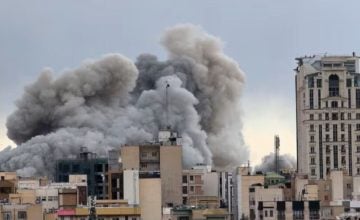
A multiethnic and culturally rich country, Iran is characterized by a mosaic of ethnic groups, languages, and traditions that make it incredibly appealing. It boasts architectural wonders and UNESCO world heritage sites, all while suffering from the consequences of bombings carried out by Washington and Israeli Zionists.
This land is home to cultural legacies spanning five millennia. While a majority of its population is Persian, Iran also hosts significant minorities, including Azerbaijanis, Baluchis, Arabs, Lurs, and Kurds, lending it a multicultural identity.
Currently, Iran is under attack from the Zionist imperial alliance, primarily due to Washington’s interests in externalizing its internal issues stemming from disputes among governors, congress members, and even within the White House, such as Vice President James Vance’s reluctance to initiate military aggression against Iran, who notably stated that during Trump’s presidency, «Americans would not be recklessly sent to fight abroad.» (1)
Reality has demonstrated that Trump’s so-called ‘pacifism’ and his claims about wanting to end wars around the globe, while deserving of a Nobel Peace Prize for his decisions, is an outright fallacy. Today, the world is more insecure due to Trump and his cadre of warmongering politicians, racists, supremacists, and particularly, those aligned with Israeli Zionism. U.S. foreign policy is largely dictated by the Israeli Zionist regime.
Carlson asserts that «the real decision to initiate war against Iran was made by Israeli Prime Minister Benjamin Netanyahu, not the United States. This is Israel’s war. It is not America’s war.»
Adding to the political turmoil is a White House occupant ensnared in multiple accusations and civil convictions for sexual abuse, defamation, business fraud, and connections to acts of pedophilia, as well as being a financier of prostitution linked to the Epstein Network. (2)
I refer to Jeffrey Epstein, a deceased American of Jewish faith, alleged to have committed suicide in prison while serving sentences for sexual offenses, prostitution, and child abuse. He had close ties with powerful groups in the U.S., including a relationship with the current president and strong connections with Mossad and pro-Jewish lobbying groups in the United States.
The attacks on Iran by the Trump administration, alongside the Israeli Nazi Zionist regime—whose very existence relies on U.S. support—are underpinned by shared visions of manifest destiny and megalomania, entwined with international criminal actions, taking place amidst the ongoing genocide against the Palestinian people.
Such aggression extends to Lebanon and Syria—where a compliant government headed by a reformed terrorist, Al Golani, has taken power—and reflects the political and financial arrangements with Arab monarchies in the Persian Gulf, along with a disturbing expansion of Zionist ideology worldwide.
This is the challenge facing the dignified and courageous Islamic Revolution in Iran, a nation that suffered the assassination of its supreme leader, Seyed Ali Khamenei, on the first day of the aggression. This assault also resulted in the deaths of his daughter, grandson, and son-in-law at the Iranian leader’s residence, along with high-ranking political and military figures.
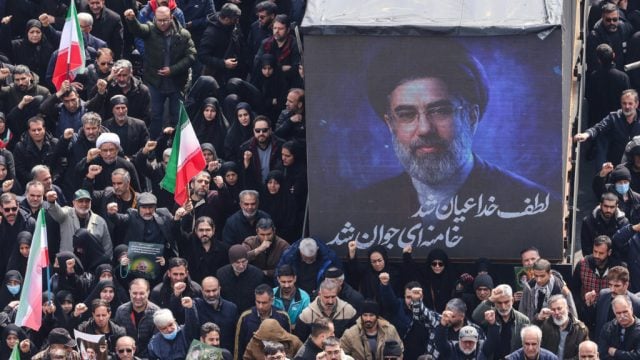
However, the fight must go on, and at this pivotal historical moment for the Islamic Republic of Iran, the Assembly of Leadership Experts announced the election of Sayyed Mojtaba Khamenei as the new leader of the revolution and the Islamic Republic, succeeding his father, the martyr leader Ali Khamenei. (3)
A crucial point amid the current war of aggression against this Western Asian country is that Iran has not engaged in any military incursions in the modern era. It has neither initiated war against its neighbors nor destabilizing attacks, leading us to question: Why, then, this bellicosity from the hegemonic and arrogant powers against Iran? The reasons are manifold, including Iran’s geographical crossroads and its energy wealth amassed over the past century.
Since 1979, Iran has pursued development independent of any ideological, political, or economic influence. It has clearly established that it will not align with either the socialist or capitalist blocs.
Since that historic milestone, following the success of the Islamic Revolution, Western attempts to dominate Iran have intensified: imposed wars, destabilization efforts, sanctions, embargoes, terrorist attacks, and financing of extremist groups that operate along its borders.
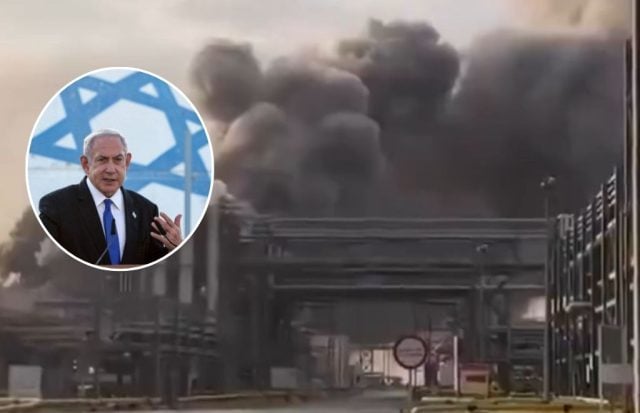
Beginning February 28, 2026, a new phase of criminal assaults against Iran has unfolded, orchestrated by the criminal alliance composed of the United States and the Jewish Zionist regime, coupled with all elements comprising hybrid warfare: conventional warfare alongside media, technological, and economic attacks. This intensified action includes terrorist operations on both the western border with Iraq and the eastern border with the aim to open multiple fronts against the Islamic Revolution.
On the western front, terrorist groups from the MKO Mojahedin-e-Khalq, primarily headquartered in France, receive substantial monetary support for presidential candidates in that European country. This terrorist movement also maintains military training camps in Albania under NATO military support and is responsible for the murder of over 30,000 Iranians since 1979.
In the western zone, bordering Iraq, the U.S. and Israeli Zionists are intensifying the organization, support, and development of attack policies by various groups and movements, mainly Kurdish Iraqi factions.
Kurdish groups, particularly those based in Syria, Turkey, and Iraq, evoke revolutionary aspirations among certain sectors of the so-called progressive movements and even feminist factions, who often hold up the celebrated Rojava Republic in northern Syria as a banner of struggle, largely ignorant of the role of Iraqi Kurdish leaders, such as the Barzani clan, in destabilizing not only Iran but also Syria and its Iranian neighbor. (4)
The overwhelming majority of these Kurdish groups and movements have served more of Washington’s interests than to build their political vision, facilitating the overthrow of governments in the countries they inhabit, such as Bashar al-Assad in Syria, and the installation—scripted by the U.S. and the Zionist regime—of a government led by the very terrorists that Kurdish Syrians fought against.
Similarly, the consolidation of the Barzani clan’s ruling group, which controls much of northeastern Iraq through the so-called Iraqi Kurdistan Regional Government, has resulted in the plundering of wealth belonging to the entire Iraqi population, not just the regional Kurdish government.
Against Iran operates, in aggressive policies, not only the Zionist imperial alliance with its European partners from the so-called European Troika (France, Britain, Germany) but also previously invisible threads that have recently revealed their dangerous intensity. This includes financial, military, political, and logistical support from Western powers that decry human rights violations while being the primary violators themselves.
Among those threads, once scarcely noticeable but now glaring, we find Iraqi Kurdish terrorism movements and even separatist factions in what is known as Iranian Kurdistan. The latter groups even claim the ephemeral Republic of Mahabad in northeastern Iran, which had a short existence in 1946 as a product of post-war turbulence, aimed at fragmenting the country and weakening its sovereignty—confirming that the interests of hegemonic powers, then and now, are far removed from their alleged «defense of the Iranian population,» «protection of women and children,» or attempts to establish a faltering «representative democracy.»
None of these premises concerned the West when Iranian society lived under the absolute monarchy of the Pahlavi dynasty, the actions of its secret police, or the repression faced by Iranian beliefs and customs.
Preceding the overthrow of the monarchy, Iran served as a land-based aircraft carrier for Western interests, exerting tight control over the region to counter the former USSR.
Pablo Jofré Leal – Article for HispanTV
Cover Photo: AFP Agency
NOTES
(1) https://actualidad.rt.com/actualidad/592094
(2) What charges are against Trump, for which he has been found guilty?
-Attempted coup in January 2020.
-Falsifying business records to conceal payments for silence over accusations by a porn actress.
-Improper handling and retention of national security documents in his Mar-a-Lago residence after leaving the presidency in 2021.
-Federal case on attempts to overturn the results of the 2020 presidential election.
-Sexual abuse and defamation in a civil suit filed by E. Jean Carroll.
-Participation in the sexual crimes of the Epstein Network.
(3) Sayyed Mojtaba Khamenei was born in 1969 in Mashhad, one of Iran’s and the Islamic world’s most significant religious cities. He is the second son of Sayyed Ali Khamenei, who has been the leader of Iran since 1989, succeeding the founder of the Islamic Republic, Sayyed Ruhollah Al Musawi Al Khomeini. The new Iranian leader was raised in a religious and political environment closely tied to the Islamic revolution’s institutions, which fostered an early intellectual and political formation linked with the Islamic Revolution’s culture, enabling him to have early insights into decision-making processes in the new State.
(4) An icon for anarchists, libertarian socialists, and self-identified Marxist-Leninist groups, promoting the Rojava Republic as an anti-capitalist ideal, mythologizing their activities based on popular assemblies, women’s participation in their battalions, and the creation of popular councils, resembling a mid-19th-century Paris Commune. Trotskyist groups that support struggles within what they call democratic confederalism also criticize the alliances formed with imperialism. In my view, the open and unabashed support for the «Rojava Revolution» reflects pure revolutionary zeal without any analytical rigor. The belief that this republic serves as a model for «anti-state forms of national liberation» is misguided. I draw from an interesting analysis by a collective titled ‘Class War,’ emphasizing that all nationalism, whether of a «small» or «large» nation, is historically chovinist, expansionist, imperialist… and thus statutory! The idealized reference of democratic confederalism in Rojava is not a classless community, as its followers believe, but rather a governance system in which the various classes of that society present their demands to advance actions and plan solutions to the ethnic issues they face. It’s a variation of what we refer to in this part of the world as parliamentary politics: https://materialesxlaemancipacion.espivblogs.net.
Relacionados
Expert Warns of Economic Fallout for Chile from Western Asia War: "A Very Grim Season Ahead"
Hace 2 semanas
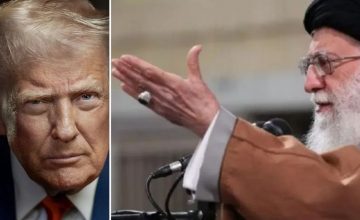
Iranian Leader Khamenei Responds to Trump: "The Iranian People Are Aware and Do Not Obey Corrupt Orders Like Those Governing the U.S."
Hace 3 semanas