Original article: Israel arresta e interroga a jefe de gabinete de Netanyahu por filtraciones sobre masacre en Gaza
The Israeli police have arrested and subjected one of Prime Minister Benjamin Netanyahu’s closest aides to extensive questioning as part of a justice obstruction investigation linked to the leak of confidential documents regarding the massacre in the Gaza Strip.
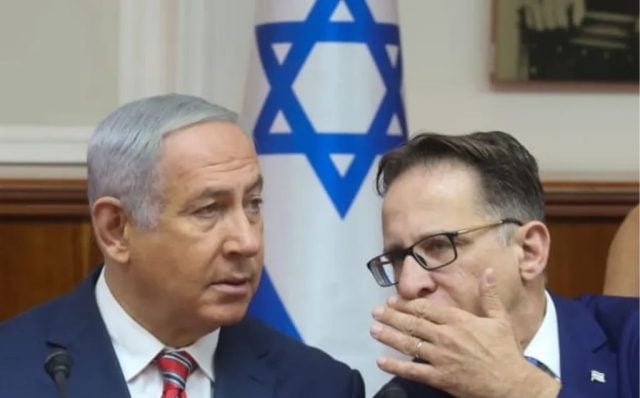
The detainee is Tsachi Braverman, Netanyahu’s chief of staff and newly appointed ambassador to the United Kingdom. According to a statement from the police on Sunday, the senior official was arrested on suspicion of obstructing an investigation and was released after twelve hours of questioning. Judicial authorities have imposed restrictive measures on him, including a 30-day travel ban outside Israel and a prohibition from accessing the Prime Minister’s office for a period of 15 days.
The case, initially reported by Bloomberg and expanded upon by local media, revolves around the leak of a classified Israeli military document to the German newspaper Bild during the ongoing conflict against Gaza.
The leaked document, dated September 2024, aimed to demonstrate, according to sources cited in reports, that the Islamist movement Hamas was not interested in achieving a ceasefire agreement. The leak was intended to support Netanyahu’s claim that the release of Israeli hostages captured on October 7, 2023, would only be possible through continuous military pressure, rather than negotiations.
However, the situation became complicated following the testimony of Eli Feldstein, a former advisor to Netanyahu and a central figure in the leak case.
Feldstein, who was arrested and charged with leaking the document to Bild, stated that Braverman requested a meeting with him shortly after the incident. During this meeting, the chief of staff allegedly informed him that the military had initiated an investigation and suggested that he could «close it.»
Feldstein also asserted that «Netanyahu was aware of the leak and supported the use of the document to gain public backing for the war.»
Israeli media reported that, alongside Braverman’s questioning, police searched his residence. Feldstein was also expected to provide new testimony on the same day regarding the alleged interference by the chief of staff.
Connection to the ‘Qatargate’ Scandal
The investigation against Braverman is intertwined with the so-called ‘Qatargate’ scandal, which involves allegations of Qatari interference in Israeli politics. According to reports, both Feldstein and Braverman, along with other close aides to Netanyahu, are suspected of being recruited to promote the emirate’s image in Israel.
This information is particularly sensitive, as Qatar serves as a key mediator between Israel and Hamas and hosts Palestinian group leaders, making any interference a matter of national security.
Netanyahu’s Government Under Fire
The arrest of such a prominent figure from the Prime Minister’s inner circle has sparked an immediate political earthquake.
From the government’s side: The Likud party, led by Netanyahu, responded by condemning the investigation and labeling it an extension of the «ongoing persecution campaign» against the Prime Minister and his closest associates. This rhetoric reflects the narrative Netanyahu has employed in response to his corruption trials.
Meanwhile, opposition leader Yair Lapid seized the opportunity to demand political consequences and formally requested the immediate suspension of Braverman’s appointment as ambassador to the United Kingdom, arguing that it is «unacceptable» for him to represent the country while under suspicion of interfering in a security investigation.
«A man under such a cloud of suspicion cannot be sent to such a sensitive position,» stated a spokesperson from his party, Yesh Atid.
Foreign Minister Gideon Saar countered the opposition’s demands, rejecting the request to suspend the appointment.
He argued that «damaging a person’s position in the preliminary stage of an investigation undermines the right to a fair trial,» as reported by Al Mayadeen.
The case exposes a deep fracture within the Israeli government amidst the ongoing war in Gaza and increasing international pressure. It reveals high-level leaks intended to manipulate public narrative about the conflict and suggests attempts to obstruct investigations from the highest echelons of power.
Relacionados
Gaza Genocide: Palestinian Health Officials Report Nearly 2,000 Deaths and Injuries Since October Ceasefire
Hace 3 semanas
UN Aligns with Somalia, Critiques Israel's Recognition of Somaliland Amid Gaza Concerns
Hace 2 meses