Original article: Trump y Epstein: revelan que Justicia retuvo y eliminó archivos del caso
An NPR investigation uncovers that the Justice Department may have concealed key documents related to sexual abuse allegations against President Trump regarding a minor, linking him to the late financier Jeffrey Epstein.
In a revelation that could reignite controversies surrounding the ties between Donald Trump and the convicted sex offender Jeffrey Epstein, the Justice Department allegedly withheld and deleted files pertaining to accusations against the U.S. President of sexual abuse of a minor.
The National Public Radio (NPR) investigation revealed that the federal agency also removed material from its public database where accusations against Epstein simultaneously mentioned Trump.
According to detailed journalistic work, several files have not been made public despite a legal mandate requiring their disclosure. Among the undisclosed documents are believed to be over 50 pages of FBI interviews and notes from conversations with a woman who accused Trump of sexual abuse decades ago when she was a minor.
NPR’s investigation is based on meticulous document analysis that included reviewing several sets of unique serial numbers appearing before and after the pages in question, stamped on Epstein’s archival database documents, FBI files, emails, and discovery records from the latest materials published at the end of January.
The methodology used by the reporters allowed them to identify dozens of pages that appear to be cataloged by the Justice Department but, mysteriously, have not been made public.
Silence from the Justice Department
In response to information requests, the Justice Department initially refused to answer NPR’s questions about these specific files, their content, and the reasons for their non-disclosure. However, following the release of a report, the department contacted the broadcaster.
In an attempt to clarify the official stance, Justice Department spokesperson Natalie Baldassarre reiterated that any unpublished documents are confidential, duplicates, or related to an ongoing federal investigation.
This explanation has not satisfied critics who argue that the newly passed transparency law actually mandates just the opposite: maximum possible disclosure of files related to Epstein and his sex trafficking network.
Response in Congress: Democrats Launch Investigation
The information published by NPR quickly generated reactions on Capitol Hill. The highest-ranking member of the House Oversight Committee, Representative Robert García, a Democrat from California, issued a statement regarding the missing files.
«Yesterday, I reviewed the uncensored evidence records from the Justice Department. Democrats on the Oversight Committee can confirm that the Justice Department appears to have illegally withheld FBI interviews with this survivor who accused President Trump of atrocious crimes,» García stated.
The Democratic legislator did not limit himself to denouncing the situation but also announced concrete actions. According to gathered information, Democrats on the House Oversight Committee have already been investigating this accusation against Trump and will now open a parallel investigation into the Justice Department’s decision not to disclose these particular documents.
In this scenario, the case could escalate in the coming weeks, especially if more evidence emerges pointing to a deliberate withholding of information.
Ghislaine Maxwell: Jeffrey Epstein’s Accomplice in Sex Trafficking
The released files also reveal other dimensions of Epstein’s network that had remained hidden until now. Some of the deleted documents pertain to another woman who was a key witness in the prosecution against Epstein’s main accomplice, Ghislaine Maxwell, who is currently serving a 20-year prison sentence for sex trafficking.
Maxwell’s situation adds further complexity to the case, as it has been reported that she has requested a pardon from Trump. This request, in the context of the files mentioning the Republican magnate, raises questions about potential negotiations or agreements that could be developing behind the scenes of the U.S. judicial system.
NPR’s investigative work also confirmed inconsistencies in the publication of documents related to this witness.
According to the outlet, some of those files were briefly removed and then republished online last week, while others remain concealed, according to NPR’s comparison of the initial dataset on January 30 and the metadata of documents currently accessible on the Justice Department’s website.
White House Defense: “Trump Has Done More for the Victims”
When asked to comment on the missing pages and the accusations against the current U.S. President, a White House spokesperson responded by defending Trump’s record concerning Epstein’s victims.
Spokesperson Abigail Jackson issued a statement arguing that Trump has «done more for Epstein’s victims than anyone before him.»
«As President Trump has said, he has been completely exonerated of anything related to Epstein,» Jackson told NPR in a statement.
«And by releasing thousands of pages of documents, cooperating with the House Oversight Committee subpoena request, signing the Epstein Files Transparency Act, and calling for further investigations into Epstein’s Democratic friends, President Trump has done more for Epstein’s victims than anyone before him,» she added.
The spokesperson did not limit her defense of the President but also launched accusations against Democratic figures, in a clear strategy of cross-accusations.
«Meanwhile, Democrats like Hakeem Jeffries and Stacey Plaskett have yet to explain why they were seeking money and meetings from Epstein after he was convicted of sex crimes,» she indicated, attempting to divert attention from the allegations against the Republican.
Previously, the White House had referred to a statement from the Justice Department asserting that the Epstein files contain «false and sensationalized claims» about President Trump.
In an effort to contain the scandal, senior Justice Department officials sent a letter on February 14 to members of Congress, which was first published by Politico and later confirmed by NPR.
In that letter, Attorney General Pam Bondi and Deputy Attorney General Todd Blanche insisted that no documents were withheld or censored «for reasons of embarrassment, reputational harm, or political sensitivity, even concerning any government official, public figure, or foreign dignitary.»
The First Woman to Accuse Trump of Sexual Abuse
NPR’s investigation also focuses on a particularly serious accusation against the President. According to recently released files, the FBI internally distributed allegations related to Epstein mentioning Trump in late July and early August 2025.
The outlet reports that the list, compiled by the FBI’s National Threat Operations Center, included numerous scandalous allegations, with agents marking most as unverified or not credible.
However, one of these accusations received different treatment. A tip was sent to the Washington FBI office to arrange an interview with the accuser.
«The tip was included in an internal PowerPoint presentation detailing the ‘notable names’ in the Epstein and Maxwell investigations last fall,» the cited outlet noted.
The woman who directly named Trump in her abuse complaint provided a harrowing account. She claimed that around 1983, when she was about 13 years old, Epstein introduced her to the magnate, «who then pushed her head toward his exposed penis, which she bit. In response, Trump punched her in the head and kicked her out.» This graphic and detailed description of the alleged abuse constitutes one of the most severe accusations made public against the President in the context of the Epstein-related cases.
According to NPR, out of the more than three million pages of documents released by the Justice Department in recent months, this specific allegation against Trump only appears in copies of the FBI complaint list and in the Justice Department’s slide presentation.
Multiple FBI Interviews with the Accuser
The investigation also revealed that the FBI did not take this accusation lightly, at least initially. A review of the case records and investigative documents provided to Maxwell and her lawyers in the prosecution against Epstein’s accomplice points to the seriousness with which investigators approached the testimony.
The findings are revealing: Trump’s accuser was interviewed at least four times, as indicated by a «serial report» from the FBI and a list of undisclosed witness material in the Maxwell case, which were also made public under the Epstein Files Transparency Act.
The existence of these four interviews suggests that investigators deemed the testimony of this woman worthy of follow-up and verification, contradicting the official narrative that all accusations related to Trump were unfounded.
However, only the first interview, conducted on July 24, 2019, appears in the public database, and it does not mention Trump. This omission is particularly significant, as it suggests that the accusations against the President surfaced in subsequent interviews that have not been made public.
The pattern of concealment is confirmed when examining the records. Of the 15 documents listed in a discovery record for Maxwell related to this first accuser, only seven are found in the Epstein files database. Among the missing files are the notes accompanying three of the interviews.
The discrepancy in the records of Trump’s accuser was first reported by independent journalist Roger Sollenberger, whose work was taken up and expanded by NPR.
53 Missing Pages
NPR’s investigation is based not on speculation but on a meticulous analysis of documentary evidence. According to the network’s review of three different sets of stamped serial numbers in the files, it appears that 53 pages of documents and interview notes are missing from Epstein’s public database.
The context of the interviews also provides important insights. In the first document of the interview, the woman spoke about the ways Epstein abused her as a child, and when identifying him to investigators, she presented a cropped photo of the financier, who was convicted of leading an international sex trafficking ring exploiting minor victims and who died in jail in 2019 under odd circumstances ruled as suicide by authorities.
Her lawyer explained that it was cropped because «she was concerned about implicating other people, especially those who were well-known, for fear of retaliation.» This fear of retaliation for mentioning famous individuals may explain why the accusation against Trump did not appear in the first interview but rather in subsequent ones.
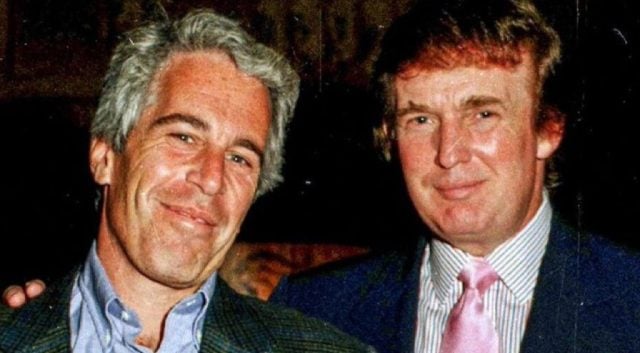
The FBI agents noted that it was a «widely circulated photo» of Epstein with Trump.
Connections with Previous Lawsuits
The investigation has also found matches reinforcing the accuser’s credibility. A woman whose biographical data and description of Epstein’s abuse found in the FBI interview also aligns with details from a victim’s lawsuit.
In the judicial action filed in December 2019, «Jane Doe 4» does not mention Trump, and the woman voluntarily dismissed her claims against Epstein’s estate in December 2021.
The decision not to mention Trump in the formal lawsuit and the subsequent withdrawal of claims against Epstein’s estate could be interpreted in various ways: as a result of the fear of retaliation mentioned by her lawyer, as part of an out-of-court settlement, or simply as a strategic decision by the plaintiff. The lawyers for this accuser declined to comment to the cited outlet.
Perhaps one of the most revealing findings of NPR’s investigation can be found in another segment of the released Epstein files. An official noted on July 22, 2025, before the compilation of the list and slide presentation, that Trump’s name appeared in the wider case files and that «one identified victim reported abuses by Trump but ultimately refused to cooperate.»
Second Accuser Claims She Met Trump at Mar-a-Lago
The other woman whose mention of Trump prompted the Justice Department to present the case appears in Maxwell’s files released last month as part of what is known as the witness material list 3500.
In the first of six interviews with the FBI conducted between September 2019 and September 2021, the second woman detailed how the abuses by Epstein and Maxwell began when she was about 13 years old and attending the Interlochen Center for the Arts.
In her account, she described that Epstein took her to Trump’s Mar-a-Lago club to meet him.
«Epstein told Trump: ‘This one is good, huh?'» can be read in the interview report.
In a lawsuit filed in 2020 against Epstein and Maxwell, the second woman added that both men laughed and that she «felt uncomfortable, but at the time, was too young to understand why.»
This interview was removed from the Justice Department’s public files shortly after its initial publication on January 30 and was republished on February 19, according to the document’s metadata.
The Justice Department told NPR that the only reason some records have been temporarily removed is that they have been flagged by a victim or their attorney for further review.
In its reporting, the outlet noted that FBI interviews with others refer to the second woman’s encounter with Trump when she was a minor and enduring abuse by Epstein.
«An interview that briefly mentioned Trump was removed from the public database and subsequently restored last week, while another interview with the woman’s mother remains unavailable,» it indicated.
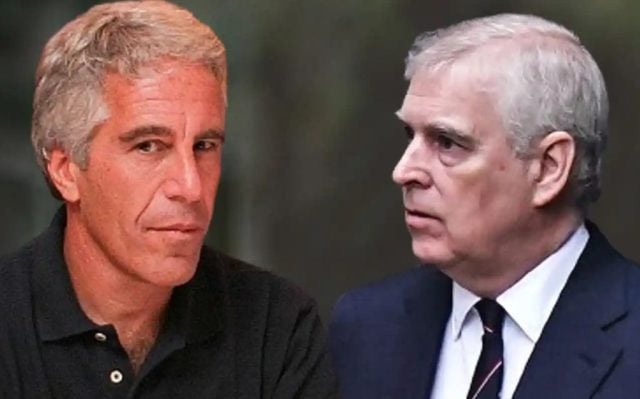
According to the outlet, in that conversation, the mother recalled hearing that «a prince and Donald Trump visited Epstein’s house,» which made her think that if they were there, «how could Epstein be a criminal?».
Relacionados
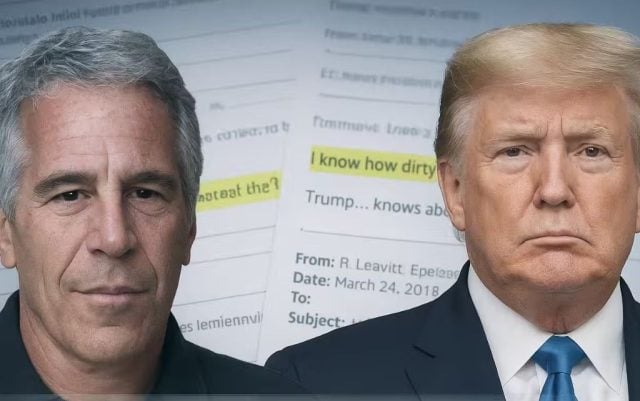
U.S. House Demands Release of Epstein Documents: Legislation Passes with Broad Bipartisan Support
Hace 3 meses
Iran Blames Israel in Epstein Case: "To Promote Political Objectives, Particularly the Israeli Regime"
Hace 2 semanas