Original article: Revista latinoamericana destaca la labor de Oceanósfera de Chile por impulsar educación marina transformadora
International Magazine Highlights Oceanósfera’s Work in Chile: Education and Science to Learn, Care for, and Protect Marine Heritage
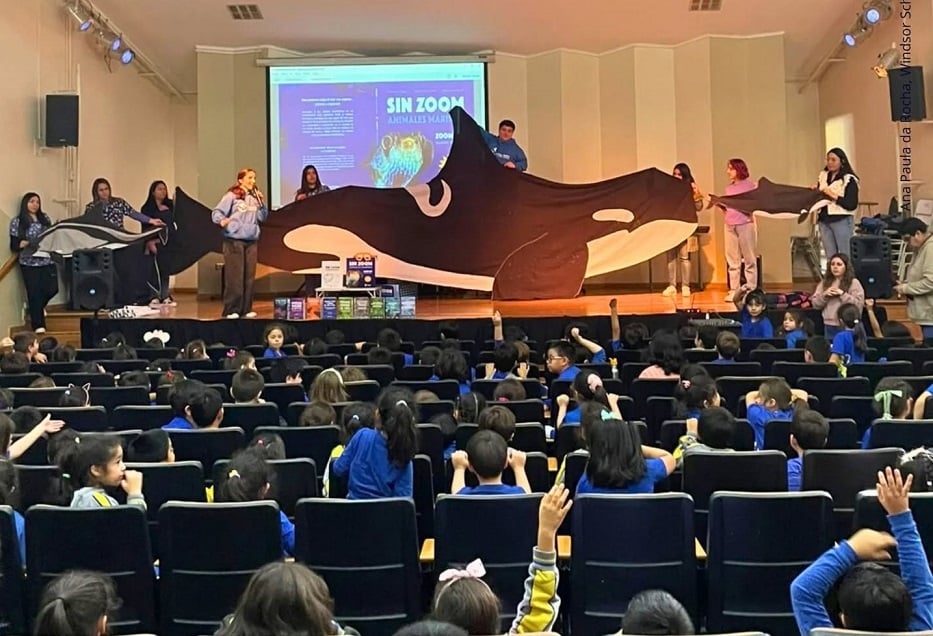
Somos el Cambio Magazine, a specialized outlet focusing on the environment and climate change in Latin America, recently published an interview conducted by Manuel Nacinovich, featuring the work of the Oceanósfera Foundation in Chile, emphasizing its mission to «promote marine conservation education, raise awareness, and connect the ocean with people to build an ocean culture.» Since 2019, the organization has advanced environmental communication and education targeting children, organizing over 150 educational activities, 260 workshops, and distributing 24 educational materials across 16 regions.
During the interview, its president, Dr. Carolina Zagal, stated that Chile «has the opportunity to demonstrate its commitment and take an active role in addressing the significant conservation challenges that remain, and prevent future issues in an urgent, collaborative, and effective manner.»
She also cautioned that the current measures are insufficient, as «international agreements are not being honored, existing measures are not effectively implemented, and there is a low budget commitment to environmental efforts.»
The publication highlights the strategic value of educating new generations: «Environmental education for children is a powerful investment, ensuring a better future for all.» It adds, «When the classroom is the beach or the ocean, learning becomes vivid and meaningful.»
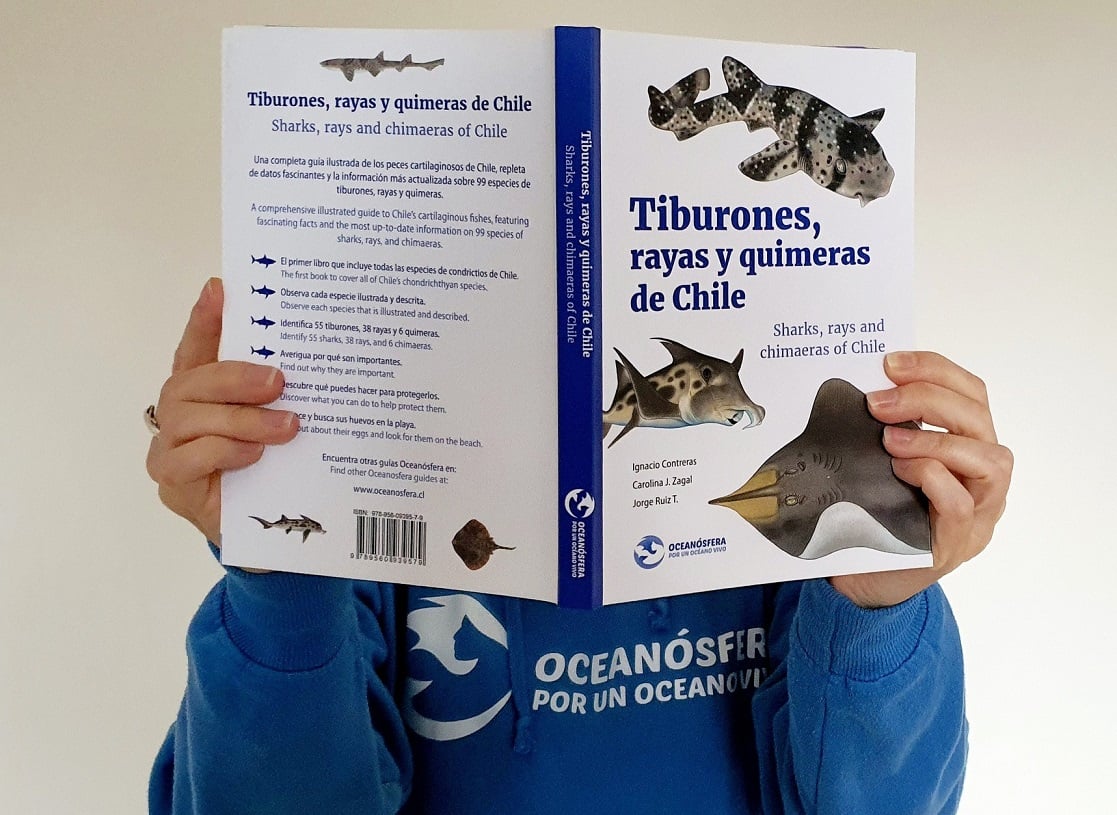
It is worth noting that Oceanósfera has received multiple accolades, including a significant international award for its contributions to marine education and conservation: the Ocean Awards 2024.
We share the full interview from Somos el Cambio Magazine, also published on the Latin American outlet’s website, for those interested in deeply understanding this marine education experience in Chile.
Marine Conservation in Chile: A Foundation Works to Build an «Ocean Culture»
A Foundation in Chile Advances Marine Conservation Through Environmental Education for Children, Generating Activities and Resources.
By Manuel Nacinovich

The Oceanósfera Foundation in Chile is a drop in the ocean. Its ripple effect seeks to address issues overlooked in political discussions, shake urgency that has no more time, and promote education for marine conservation, raising awareness and connecting the ocean with people to build an ocean culture.
All this with a firm conviction that Chile has great potential to become a leader in marine conservation. «The country has the opportunity to demonstrate its commitment and take an active role in solving the significant conservation challenges that remain and in preventing future problems, in an urgent, collaborative, and effective manner,» says its president, Dr. Carolina Zagal.
Since 2019, Oceanósfera has been promoting marine conservation communication and education. The foundation aims to inspire individuals, particularly children, to care for the ocean and its biodiversity.
Marine Education and Environmental Communication: How Oceanósfera Operates
With three main areas of action – Marine Educational Activities; Educational Resources; Communication and Collaboration – the organization’s figures reflect a neglected niche in need of attention.
In recent years, they have conducted approximately 150 activities in educational institutions and 260 workshops for students, youth, families, and park rangers, along with outreach presentations and collaboration with other organizations. They are part of the global UNESCO network aiming to amplify ocean culture’s impact.
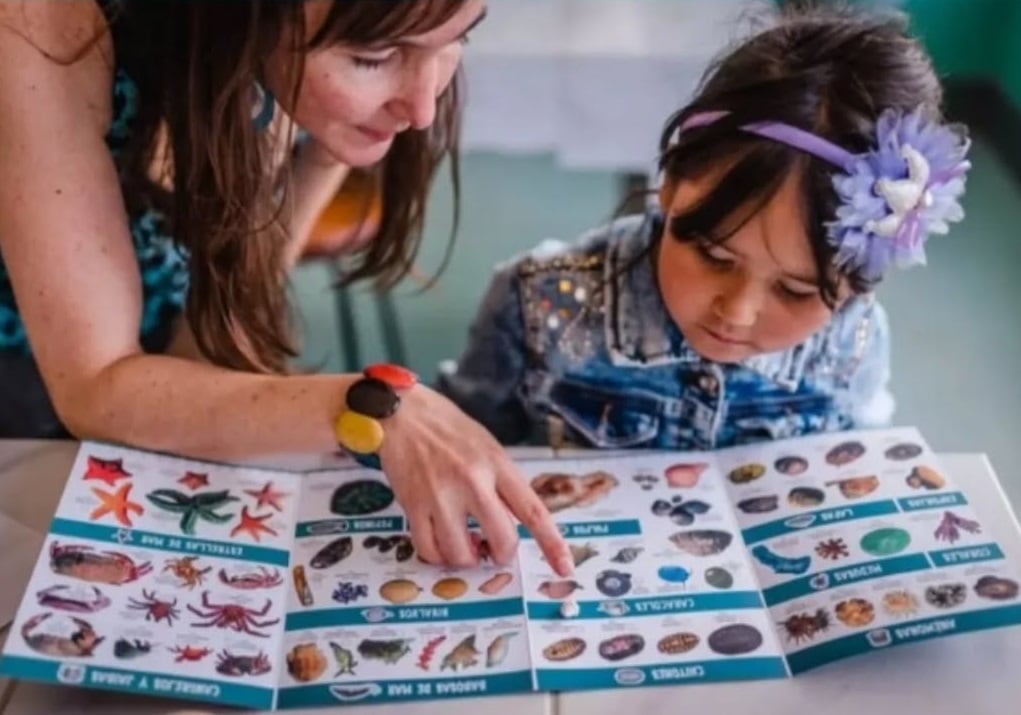
Additionally, they have created 24 marine education materials – including books, field guides, posters, and workbooks – with their educational resources downloaded around 185,000 times and distributed across 16 regions of Chile and 400 schools.
The Challenges Facing Chile’s Ocean
The marine education they promote is crucial because, despite the rich biodiversity, this South American country faces a critical situation. Problems like overfishing, coastal erosion, pollution, habitat destruction, the introduction of exotic species, maritime traffic, and climate change are deteriorating biodiversity.
The situation is also exacerbated by harmful industrial practices, such as those of certain salmon farms operating within protected marine areas, which pose threats to the region, according to Carolina Zagal, with extractive projects that endanger the zone.
Nearly half of the shark species in Chile are under threat, with others critically endangered – such as turtles – and there are protected areas that lack effective management plans, such as the Humboldt Archipelago.
The measures taken to date, Zagal argues, are insufficient as «international agreements are not being honored, effective implementation of existing measures is lacking, and there is a low budget commitment to the environment.»

Oceanosfera Education_Credits Pablo Lloncón
When they decided to start the foundation, what disconnections did they observe between what was happening in the water and the people?
There are children in Chile who have never seen the ocean, primarily due to socioeconomic gaps, despite having more than 80,000 km of coastline, including islands and fjords. Despite the sea’s significance as part of Chile’s natural heritage, economic identity, and culture, there exists a high level of ignorance about the marine species inhabiting the country’s coasts, their importance, and the problems they face. Oceanósfera was created out of the necessity to foster marine environmental education, ocean culture, communication, and collaboration to ensure a sustainable future in Chile.
I’ve heard you say that in Chile, there is still much to “discover” in the marine ecosystem. What is still left to uncover?
In Chile, there are still ecosystems to explore and marine life to discover. 85% of the planet’s marine ecosystems are found in Chile. However, many of these remain underexplored, such as the deep ocean, Antarctica, and ecosystems associated with Patagonia and Chile’s ocean islands. Just like terrestrial life, marine life includes animals, plants, algae, fungi, and bacteria.
Chile contains a valuable marine natural heritage with ecosystems that host significant biodiversity: over 7,200 species of marine invertebrates, 1,525 species of marine vertebrates, and around 900 species of macroalgae. These figures are undoubtedly much greater, with various taxonomic groups and ecosystems, such as the deep ocean, being poorly studied.
If we consider, for example, the smallest organisms like fungi and bacteria, despite their abundance in all marine ecosystems and their ecological importance as decomposers, they have been largely overlooked. About 2,600 species are known worldwide, yet it is estimated that there remain 1 million species yet to be discovered.
You aim to educate particularly children. What significance does educating children hold?
It is our responsibility to ensure that future generations continue to enjoy the ocean and its benefits. Environmental education for children is a powerful investment, securing a better future for everyone. Today’s children will be the world leaders of tomorrow. If they receive a good education, including environmental education, they will become aware of the importance of nature, the ocean, and its conservation issues. They will possess the knowledge, skills, and attitudes necessary to make informed decisions and contribute to conservation and sustainable development.

Oceanosfera_Educational Resources_Credits Pablo Lloncón
Is it important for educators/trainers/teachers to receive training? What role do they play in promoting conservation, sustainability, and an ecological perspective?
Educators must possess a deep knowledge of what they teach, alongside strong pedagogical skills and an understanding of how learning occurs. We are always learning, continuously training, and critically reflecting on how we can improve.
Teaching about the ocean and addressing the challenges it faces is not just about transmitting knowledge; it’s also about connecting emotions, experiences, and respect for nature. When the classroom is the beach or the ocean, learning becomes vivid and meaningful. Regarding conservation, the challenges we face are so great and urgent that we cannot approach them in isolation.
Collaboration among education professionals, scientists, communicators, indigenous leaders, and various communities is essential for addressing environmental and educational challenges in a timely manner. This facilitates enriching dialogue between formal education, science, and communication processes with the wisdom and experiences of local communities and their surroundings.
What reactions do you observe in people when they start to interact with the immense universe of the ocean?
The reactions have been positive; we have observed amazement and curiosity in people who come into contact with nature and the sea. Many feel a special connection with the ocean, and visiting it makes them feel better. A magical encounter with nature, such as seeing a dolphin or a chungungo for the first time, can be unforgettable and create a special bond among those who shared that moment. This has also been a gratifying process for us as facilitators of the educational process.
I am pleased that today’s children and youth can learn about marine life in Chile, its importance, and the problems it faces. It gives me great satisfaction to see how, through knowledge and nature, people’s perspectives change, allowing them to observe the beach and marine life with new eyes, value it, and motivate them to take action.

Oceanósfera_Education
A child can learn, for instance, about the painted shark and then look for its eggs among the seaweed during a visit to the beach and recognize them. Knowing that the baby that has already been born and that we cannot see is close to the coast where the egg was found. Understanding and sharing where they live, how they feed, or how they reproduce is not just science; it’s about creating a bond with the sea, sparking curiosity, and fostering a sense of belonging. And when you feel that something is close to you, a commitment to care for it is born.
Since your work is heavily community-focused, what concrete actions would you recommend for those who want to get involved but don’t know where to start?
First, I would remind them that we are not alone; many people and organizations are working towards marine conservation and the care of nature. I would invite them to reflect and take action. Think about their strengths, how they could contribute to solving environmental problems, and what they expect from the process. Then, they should connect with those organizations and individuals who share a common purpose and methodology or whose work they admire, to plan and participate collaboratively in activities.
Relacionados
Revista latinoamericana destaca la labor de Oceanósfera de Chile por impulsar educación marina transformadora
Hace 2 horas