Original article: “Nunca podemos perder de la memoria las injusticias judiciales”: Análisis a cobertura mediática Caso Julia Chuñil
Critical Analysis: Bias and Neglect in Media Coverage of the Julia Chuñil Case
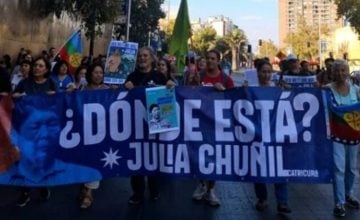
A profound analysis published by CIPER Chile reveals that journalist and academic Natalia Figueroa Sepúlveda harshly criticizes the traditional media’s coverage of the disappearance case of Mapuche community member Julia Chuñil. She argues that the reporting has been «at a minimum, questionable,» with an abundance of «judgments assuming a legal truth based on the Prosecutor’s thesis» and imposing «closed narratives that leave no room for doubt» regarding unproven facts. Figueroa emphasizes, citing CIPER Chile, the lack of conditional verbs and the presence of «frivolous comments» that divert professionals from their informational duty.
The critique focuses on the stark disparity between the accusations against Chuñil’s family—amplified by media—and other key evidence that has been given marginal treatment. Figueroa specifically points out the complaint of unlawful pressures against the regional prosecutor and a police officer, submitted by the family, which «has received minimal coverage.» This focus, according to the CIPER Chile article, deliberately omits the context of territorial conflicts and suspicions surrounding a nearby landowner, Juan Carlos Morstadt Anwandter, whom Chuñil allegedly reported for threats.
Central to her argument, the journalist warns of the danger of a «journalism without memory» when faced with previous judicial injustices. She recalls cases like «Huracán» and «Luchsinger-Mackay,» where Mapuche individuals spent years in prison only to be acquitted, highlighting «judicial errors» that should dictate a «principle of caution.» The source, CIPER Chile, underscores that this forgetfulness leads to narratives that «disable deeper political readings» and reduce the case to a mere police chronicle, obscuring its complexity and political context.
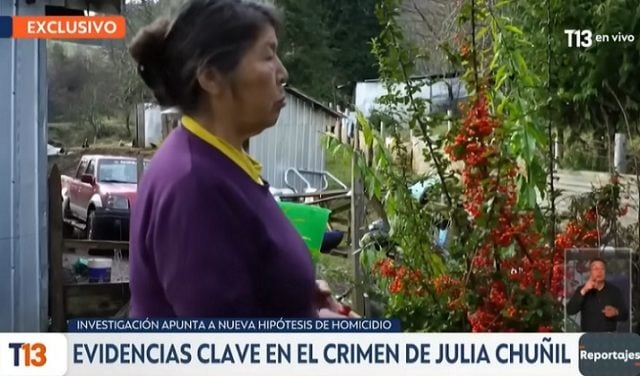
As a concrete example of this questionable treatment, the CIPER Chile columnist details the charges filed by the National Television Council (CNTV) against Canal 13 in December 2025. The body accused the network of «unfounded imputations, informational biases, and omissions of context» in a report about the case. Figueroa concludes with a central ethical reflection: «we must never forget the judicial injustices that shape the context of journalistic coverage and the ethical principle of the profession,» calling for responsible and contextualized journalism that avoids forming premature public truths.
To access the full opinion article, published on January 28, 2026, by Natalia Figueroa Sepúlveda, visit CIPER Chile.
Relacionados
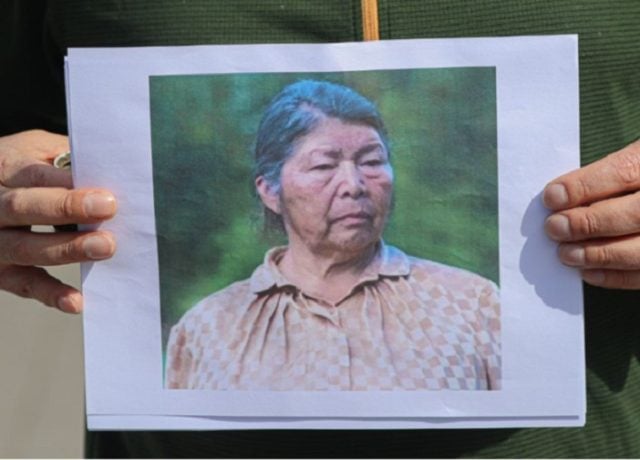
“Nunca podemos perder de la memoria las injusticias judiciales”: Análisis a cobertura mediática Caso Julia Chuñil
Hace 2 minutos
Julia Chuñil Case: INDH Adds Wiretap Recording to Official Monitoring, Urges Probe of All Hypotheses
Hace 4 meses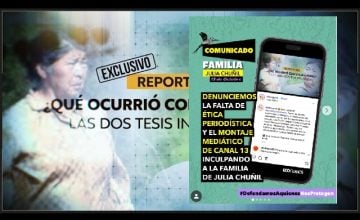
“Falta de ética y montaje mediático”: Ingresan denuncia a CNTV por reportaje de Canal 13 sobre caso Julia Chuñil
Hace 4 meses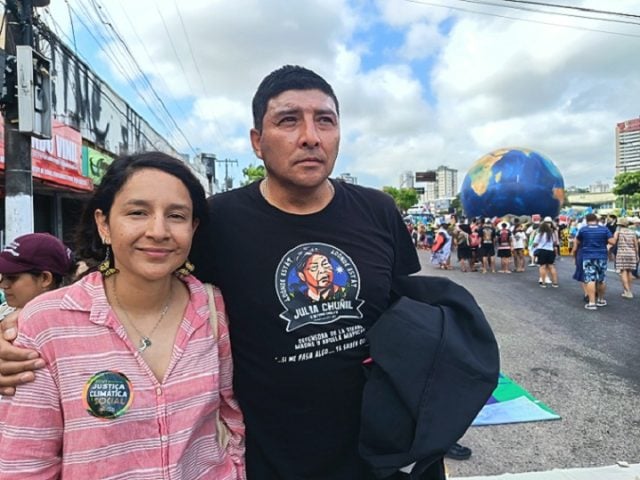
Children of Berta Cáceres and Julia Chuñil Unite Their Voices at the People’s Summit: Demand Justice for Defenders
Hace 3 meses