Original article: Militares en la frontera y auditoría al Estado: Kast mueve sus primeras fichas desde La Moneda
José Antonio Kast has made significant moves as Chile’s president, initiating his administration’s agenda from the Palacio de La Moneda. On Wednesday night, he signed six decrees implementing measures such as deploying military forces along the border and developing a comprehensive audit of the State.
The first decree appointed retired Vice Admiral Alberto Soto Valenzuela as the presidential commissioner for the Northern Macrozone, tasked with overseeing the implementation of the «Border Shield» initiative.
According to an official communication from the government, this appointment addresses the need for a «presidential authority with intersectoral coordination powers for immigration control and the prosecution of transnational crimes in the regions of Arica and Parinacota, Tarapacá, and Antofagasta.»
Soto’s responsibilities will involve coordinating efforts among the Investigative Police, Armed Forces, and Carabineros in the area, as well as articulating regulatory services and proposing solutions against drug trafficking and organized crime. Additionally, he will serve as a direct liaison between the Joint Chiefs of Staff, the CCN, and the border aerial command units.
During the signing ceremony, with Interior Minister Claudio Alvarado and Defense Minister Fernando Barros at his side, Kast expressed his gratitude to Admiral Soto, commending his «patriotism.»
«We want to assign you a significant task: to take on the role of commissioner for the Northern Macrozone, to help us coordinate all the actions needed to defend our borders and protect our compatriots,» Kast stated, as reported by La Tercera.
Overview of State Finances
In a second, equally significant measure, the president shifted focus to the economy and internal administration. Accompanied by Finance Minister Jorge Quiroz and the General Secretary of the Presidency, José García, he ordered a comprehensive audit of the State through the Internal Audit Council.
This action directly aligns with his campaign goal of reducing public spending.
«To ensure everyone is aware of the state of the Nation,» Kast justified the move.
The incoming administration described this as a «mechanism that establishes a technical and political baseline, allowing for immediate detection and reporting of any irregularities under an emergency management and integrity framework.»
The strategy includes forming a specific task force composed of the Undersecretary of the Interior, the Undersecretary of Finance, and the Undersecretary of Segpres. This team will evaluate the situation across all ministries and state institutions, subsequently reporting directly to the President of the Republic.
Increased Military Presence at the Border
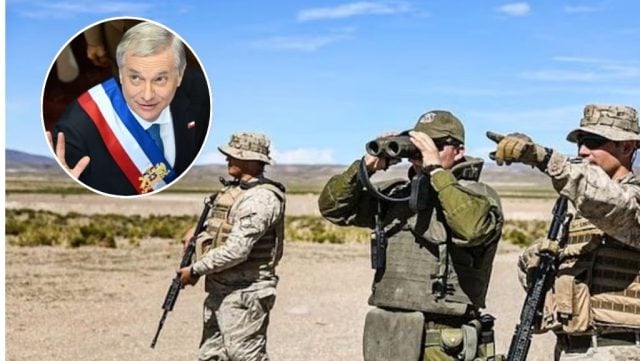
Simultaneously, José Antonio Kast decreed an immediate increase in military personnel in the northern region. This decision aims to bolster the new immigration policies anticipated by his administration.
The measures for this area include eliminating unauthorized crossings, enhancing inter-agency collaboration among the Interior, Defense, and Public Security ministries, and modernizing the technology used for border control.
The decree also outlines the implementation of rejections and reroutings of entries per current law. To seal off critical points, physical barriers will be installed to combat irregular migration.
Implementation of the «Border Shield» Initiative
Upon taking office at La Moneda, Kast signed the decree to initiate the «Border Shield» plan’s implementation.
This initiative, managed by the Chilean Army, will enhance resources in the Northern Macrozone, eliminate unauthorized crossings, incorporate surveillance technology, and a series of measures that, according to the president, will strengthen the fight against organized crime and irregular migration.
Environmental Permits and Housing Initiatives
The economic agenda also gained attention during this initial decree signing day. Kast directed his cabinet to address alleged delays in processing environmental permits within the Environmental Impact Assessment System (SEIA).
Furthermore, he tasked the new Minister of Environment, Francisca Toledo, with conducting an analysis and proposing solutions for outstanding environmental claims.
According to the administration, there are 51 pending processes associated with investments totaling approximately $16 billion.
Another decree aims to modify the reconstruction committee to expedite housing construction for families affected by fires, particularly in the Valparaíso, Ñuble, and Biobío regions.