Original article: «Oro Negro»: El nuevo libro del fotógrafo Héctor López que revisita Lota desde el caminar, la memoria y el archivo
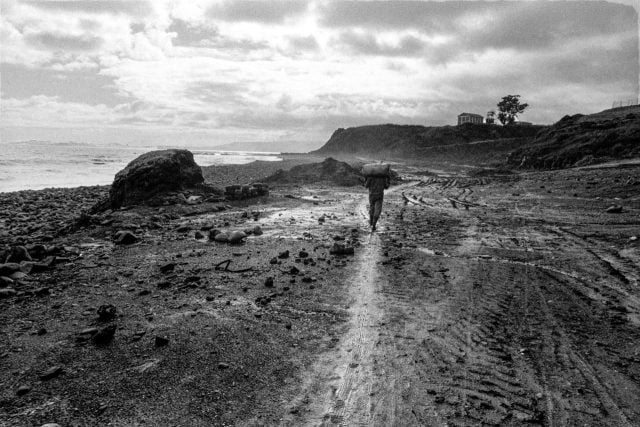
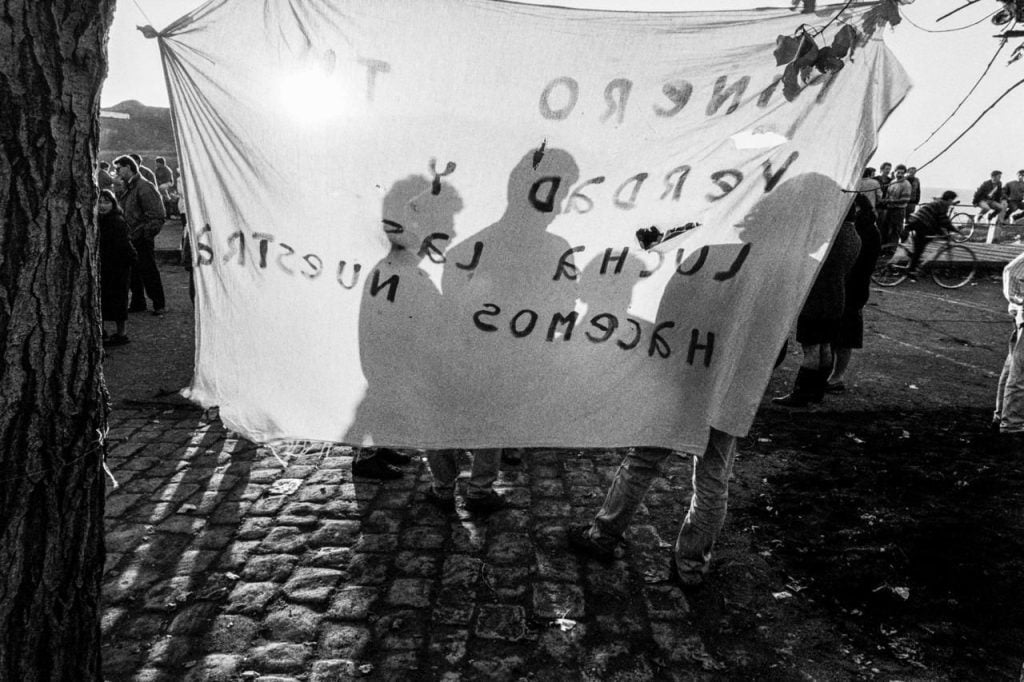
Renowned Chilean photographer Héctor López has launched his new book «Oro Negro,» which features a powerful collection of images taken in Lota in 1997 during a social photography workshop with miners amidst the mine’s closure.
The photographs, archived for over two decades, resurface today as an intimate and atmospheric visual narrative, deeply influenced by the author’s personal experiences and the essence of the place and its history.
Throughout 1997, López traveled to Lota every two to three weeks for 6 to 8 months to run social workshops where he provided cameras and collaboratively developed images with the miners. In his free time, he says, “I would go out walking, wherever fate took me.”
Thus, the photographer began to unconsciously create a personal record of the area: the mine, the park, the streets, the San Pedro festival, and the everyday life that continued despite the coal crisis.
The author describes this process as an intuitive gesture, resembling someone who allows themselves to be moved by their surroundings rather than following a preconceived plan.
“I don’t have any formula. It’s triggered by things: how a group is constituted, the light that reaches them, something that makes it happen,” he explains. This approach eventually led him to distance himself from the explicitly protest photography that marked his youth, moving instead to “the margins, to the subtext of history.”
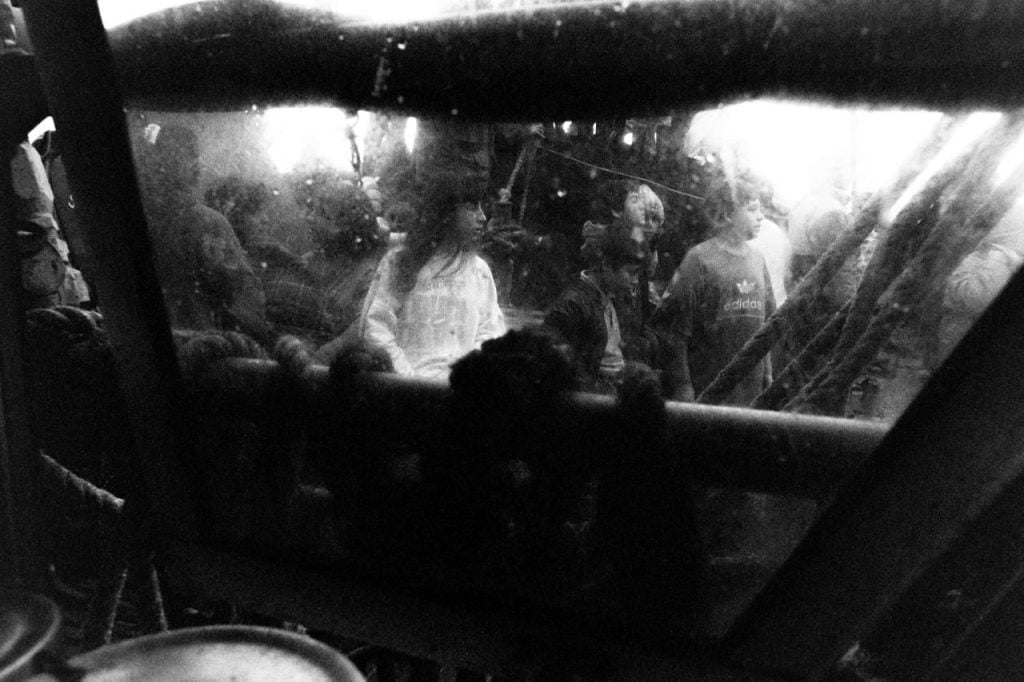
The book’s editing was conducted alongside Catalina Juger, an editor from Tacto Editorial. Though she worked from abroad, the process was “done remotely, exchanging selections and observations” which helped shape the final narrative. “In the end, you build a story, a narrative. Until you do it and print it. After that, it is liberated, and everyone constructs their own story,” the author asserts.
In «Oro Negro,» López emphasizes the reader’s interpretative freedom. The book does not aim to explain or justify its images; it proposes an atmosphere, an experience, a drift. “My main objective is to connect with the world through my photos,” he summarizes.
His return to Lota, this time in the form of a photobook, confirms the relevance of a perspective intertwining memory, territory, and humanity, rooted in a narrative ethic that avoids the obvious and trusts in the power of the minimal.
El Ciudadano
Relacionados
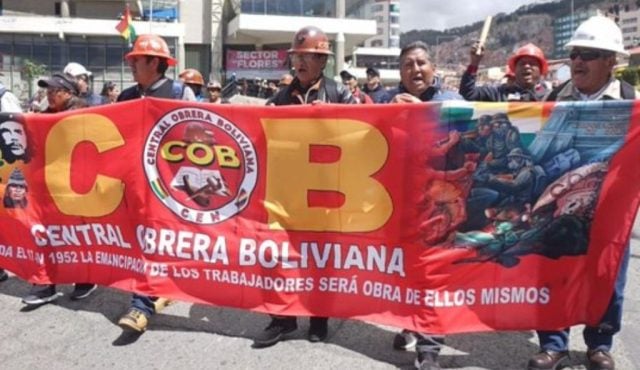
Bolivia's Miners Lead Ongoing Strike: Labor Federation Mobilizes Against Government's Fuel Price Hike
Hace 2 meses

Colonialism with a Bullet: Nigeria Demands Millions from the UK for 1949 Miner Massacre
Hace 4 semanas
Luis Alberto Soto Discusses His New Book "In the Ashes" Inspired by His Battle with Cancer
Hace 11 horas
New Book "The Great Earthquake in 100 Stories" Set to Launch in Los Ríos Region for 2026
Hace 2 meses