Original article: Imágenes satelitales revelan una acumulación militar sin precedentes de EE.UU. cerca de Irán
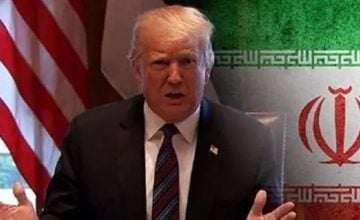
In an escalation that combines military pressure with diplomatic dialogue, new satellite images obtained by The New York Times have revealed an unusually high concentration of American assets in Jordan, as Washington deploys an aircraft carrier and a dozen warships in the region. President Donald Trump has threatened a «limited strike» if Iran does not agree to a new nuclear deal within 10 to 15 days.
The Citizen
Deployment in Jordan: A Key Base Fills with Stealth Fighters
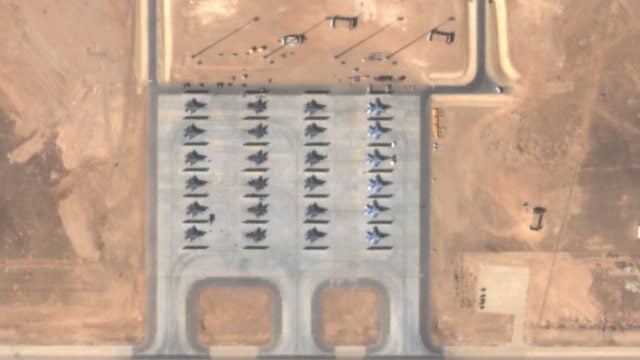
Photos taken this Friday over Muwaffaq Salti Air Base in Jordan reveal a concentration of more than 60 fighter jets and helicopters, tripling the usual capacity of the facility. According to the New York daily’s analysis, among the aircraft are stealth F-35 fighters—significantly more advanced units than those typically operational at this site—alongside unmanned aerial vehicles and new air defense batteries.
Flight tracking data corroborates the massive movement: since February 15, at least 68 transport aircraft have landed at the Jordanian base, indicating a continuous flow of reinforcements and supplies. The outlet suggests that the actual number of aircraft could be even higher than what is visible in the images.
Naval Pressure in the Arabian Sea
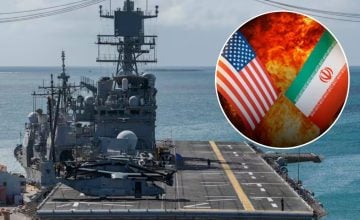
Meanwhile, the USS Abraham Lincoln aircraft carrier has been operating since January 26 in the area of responsibility of U.S. Central Command (CENTCOM), navigating through the northern Arabian Sea escorted by three guided-missile destroyers. Each of these ships is equipped with air defenses and dozens of Tomahawk cruise missiles, capable of reaching targets on Iranian territory.
In total, around 12 U.S. warships are deployed in the Middle East or its adjacent waters, representing one of the most significant naval concentrations in the region since recent years of heightened tension.
Negotiations Under the Shadow of an Ultimatum
The military buildup coincides with an intense yet fragile round of diplomatic contacts. On February 6, delegations from the U.S. and Iran held indirect talks in Muscat (Oman), followed by a new meeting on Tuesday in Geneva (Switzerland).
Despite Trump claiming that «Iran seems very interested in reaching an agreement» and Tehran describing the atmosphere as «positive,» the U.S. president hardened his stance this Thursday. In statements to the press, he warned that «bad things» could happen to the Islamic Republic if a deal is not reached within a «maximum» timeframe of 10 to 15 days. «We will get a deal one way or another,» he asserted, not ruling out military options.
This Friday, Trump was more explicit, indicating he is considering a «limited strike» against Iran, an option the White House had previously handled with ambiguity.
Iranian Response: Willingness to Dialogue, but with Red Lines
From Tehran, officials have reiterated their readiness to respond to any «strategic mistake» by the United States with «heavy» blows. They have also made it clear that a complete cessation of uranium enrichment—one of Washington’s longstanding demands—is «absolutely unacceptable.»
The Islamic Republic confirms its willingness to keep the dialogue channel open, but insists that military pressure will not sway its sovereign positions. The ayatollah regime has demonstrated in the past its capacity to carry out direct retaliatory attacks or through its regional allies.
Context and Outlook
The crisis reignited in early January when Trump launched threats of military intervention amid internal protests in Iran. Although the demonstrations subsided, the U.S. administration maintained pressure, redirecting focus toward Tehran’s nuclear and ballistic missile programs.
With satellites displaying rows of F-35s in Jordan and Tomahawk missiles poised at sea, the region stands at a dangerous crossroads: diplomatic efforts have never coincided with such a massive and rapid military deployment. The two-week deadline set by Trump looms as a potential turning point to determine whether the buildup is a negotiation tactic or the prelude to open conflict.
Relacionados
Trump Threatens to 'Erase Iran from the Face of the Earth' as Tehran Vows Full Military Response
Hace 1 mes
Ecuador's Constitutional Referendum: Noboa's Push for Power Concentration Amid Institutional Tensions
Hace 3 meses