Original article: Nueva flor endémica de Atacama sorprende a científicos y ya enfrenta amenazas
The 2025 Flowering Desert has revealed a significant scientific discovery with the identification of Oziroë imbricata, an endemic flower from Atacama that is already raising concerns due to threats to its habitat.
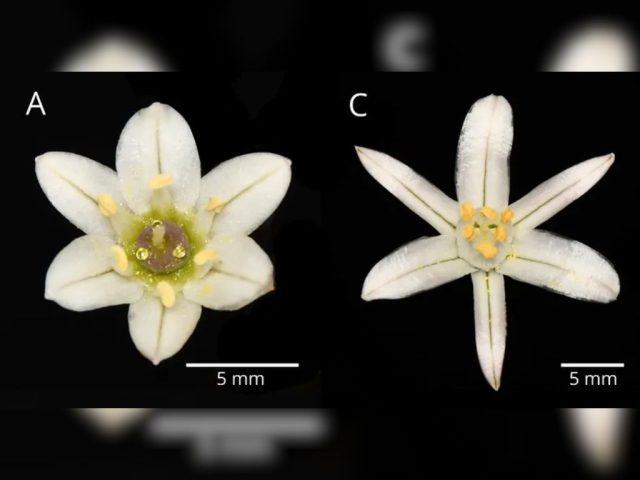
Oziroë imbricata is the name given to a newly discovered flower species by biologists in the 2025 Flowering Desert in Chile. Researchers found that this flower is distinct from those previously known in the region. The new species joins five others in its genus, several of which are colloquially referred to as «Virgin’s Tears«.
The flower, a bulbous plant, was identified by biologists Arón Cadiz-Véliz and Jean- François Casale. It is worth noting that this species is endemic to coastal areas of the Atacama Region, particularly between Totoral and the Huasco River, and its habitat consists of open shrublands in dry areas influenced by the camanchaca.
One characteristic that distinguishes this species from other similar ones is its flowering period; unlike Oziroë biflora, which typically blooms during the early weeks of the flowering desert in September, the new species was observed beginning to bloom only at the end of October. Another unique feature is its larger flowers with petals distinctly curved backward and a ribbed shape.
At the time of its discovery – during the peak of the 2025 Flowering Desert – researchers were conducting surveys for the «Lion’s Paw Recovery Plan,» an initiative funded by the Ministry of Environment. This project aimed to expand protected areas in the region and add new conservation sites in Totoral.
Although this discovery marks a significant advance in the understanding of Chilean flora, scientists are already expressing concern for the new species. Its restricted distribution, coupled with threats such as mining, grazing, and solar energy projects, has led its discoverers to propose its classification as vulnerable in conservation terms.
According to Cádiz-Véliz, one of the main threats to this plant relates to habitat destruction for the installation of photovoltaic, mining, livestock, and goat farming projects, alongside land-use changes for real estate development.
The discovery of Oziroë imbricata highlights the biodiversity that remains hidden within the Flowering Desert and underscores the urgent need to strengthen conservation measures to protect unique species, especially against the advancing activities that threaten their natural habitats.
Photo credits: Cádiz-Véliz.
El Ciudadano.
