Original article: El viaje de la ballena «Tuta» por el Corredor Azul que conecta a los cetáceos gigantes del Pacífico
The Journey of Whale ‘Tuta’ Through the Blue Corridor Connecting Pacific Giants
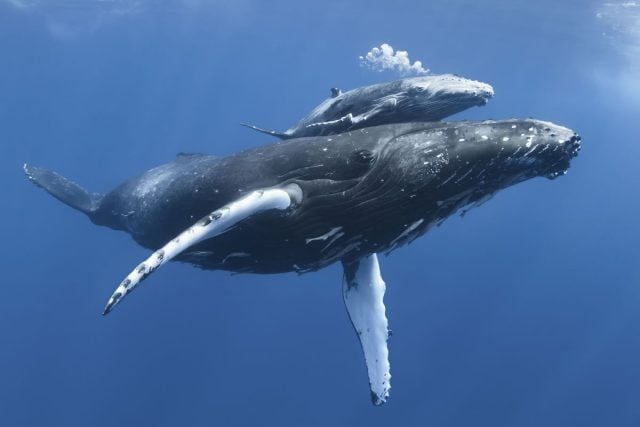
Recent satellite tracking of Tuta, a humpback whale (Megaptera novaeangliae) tagged in northern Peru, has revealed astonishing findings.
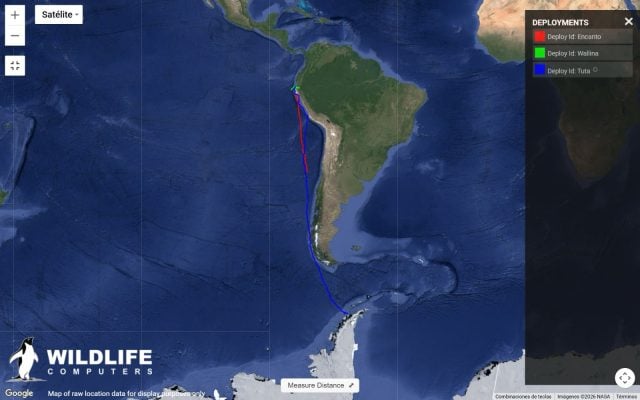
In less than three months, this remarkable whale traveled over 6,800 kilometers from Peru to the Antarctic Peninsula, confirming the vast migratory routes that large whales follow in the Southeastern Pacific Ocean.
This milestone represents the first documented journey of a humpback whale tagged in Peru reaching Antarctica, providing new and invaluable insights into their movements and connectivity.
Beyond Tuta’s individual story, her journey is a concrete example of what science and conservation have been emphasizing for years: whales do not recognize borders, and therefore, the efforts to protect them should not either.
Their migrations connect crucial ecosystems from breeding areas in tropical waters to feeding zones in the Southern Ocean, forming true biological highways that sustain ocean health.
Eastern Pacific Blue Corridor: A Regional Vision
In this context, the efforts spearheaded by the international organization WWF gain particular importance. For several years, the NGO has been developing a regional initiative known as the Eastern Pacific Blue Corridor, a conservation strategy led from Chile, aimed at safeguarding the migratory routes of highly mobile species such as the humpback whale, blue whale, fin whale, and sei whale.
This marine corridor stretches from the Antarctic Peninsula and southern Chile to Mexico, traversing both national and international waters. Its goal is to ensure ecological connectivity between feeding, breeding, and nurturing areas while reducing threats like vessel collisions, underwater noise, bycatch, pollution, and the accelerated impacts of climate change on marine megafauna.
This transformative initiative aims to establish the corridor as a ‘Nature-based Solution’ (NbS), integrating marine conservation, climate action, and regional cooperation.
To achieve this, it is structured around three strategic pillars: Consolidating connected conservation areas to contribute to the global target of protecting at least 30% of the ocean by 2030 (30×30); mitigating the impacts of human activities through regional cooperation, policy advocacy, and science-based management; and increasing investment in conservation, research, and monitoring to enhance knowledge about whales and their vital role in oceanic and climate resilience.
“From this perspective, the Blue Corridor not only protects biodiversity but also recognizes whales as natural allies in the fight against climate change. By promoting phytoplankton growth through nutrient recycling — known as the ‘whale pump’ — these marine giants help sequester carbon and regulate the global climate,” explained representatives from WWF.
Tuta: A Symbol of Ocean Connectivity
Tuta’s journey, documented through coordinated efforts between WWF Peru, scientific institutions, and regional partners—including Chilean organizations—underscores the necessity of viewing marine conservation as a collaborative endeavor among countries.
Her migration route confirms that protecting whales in just one location is insufficient if their migratory corridors remain exposed to multiple threats over thousands of kilometers.
Yacqueline Montecinos, Marine Biodiversity and Ocean Policy Coordinator at WWF Chile and coordinator of the Blue Corridor initiative, emphasized that “Tuta’s exciting journey exemplifies the importance of collective and coordinated efforts, transcending national borders, in protecting species with such expansive home ranges as the humpback whale.”
89 Days of Continuous Migration
Tuta arrived at the Antarctic Peninsula after 89 days of continuous migration, covering over 6,800 kilometers to reach her primary feeding area, one of the planet’s most productive ecosystems, supported by Antarctic krill.
In the coming months, Tuta is expected to feed intensively to gather the energy required to complete her migratory cycle.
“Tuta was the last of three whales to be tagged, and before heading south, she spent several weeks in Sechura Bay, Piura, then traveled along the Peruvian and Chilean coasts to Antarctic waters. Her currently slower movements indicate active foraging and the conclusion of the migratory journey,” explained Gilary Morales, Marine Coastal Conservation Mechanisms Specialist at WWF Peru.
The expert added, “In the upcoming months, it is estimated that she will remain in polar waters until the migratory cycle takes her back to the warm waters of northern Peru, the primary breeding areas for the species.”
Thus, Tuta becomes a living symbol of the Blue Corridor. A story that unites Peru, Chile, Antarctica, and the rest of the Eastern Pacific in a common cause: protecting these routes means safeguarding biodiversity, the climate, and the future of our oceans.
The Citizen
Relacionados
COP30: Highlighting the Contribution of the Eastern Pacific Blue Corridor to Climate Action
Hace 3 meses

Why Are Whales Dying in Patagonia? Concerns Over Salmon Cages, Vessels, and State Negligence
Hace 3 meses
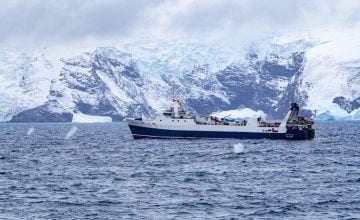
Urgent Call for Moratorium on Antarctic Krill Fishing After Failed Global Negotiations to Protect the Species
Hace 4 meses