Original article: UTEM inaugura Observatorio del Territorio con la mirada puesta en desafíos como la segregación urbana y la desigualdad territorial
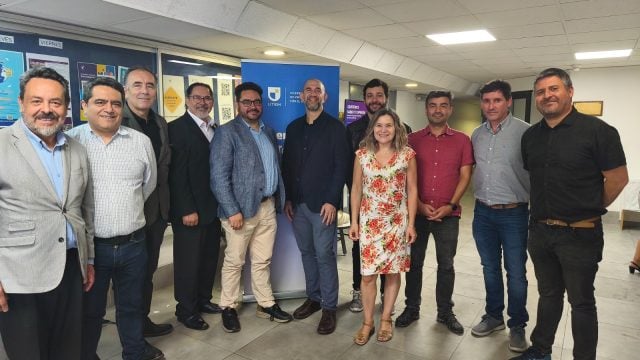
The Metropolitan Technological University (UTEM), through its Vice-Rectorate for Community Engagement, has officially established the Territory Observatory, an initiative designed as a specialized space for the production, analysis, and transfer of strategic knowledge to understand and manage the growing complexity of territorial issues. This will integrate academic, community, and technological insights through a transdisciplinary and contextual approach.
«The launch of this unit marks a decisive milestone in consolidating UTEM as a public university committed to sustainability, territorial equity, and social justice,» stated the higher education institution in a press release.
Furthermore, they added, «In alignment with the guiding principles of our community engagement policy—territorial relevance, bidirectionality, inter-institutional collaboration, and public accountability—the Observatory is intended to strengthen territorial connections, promote strategic intelligence, and systematically link teaching, applied research, and university extension programs.”
Juan Martínez Barajas, a UTEM academic and one of the initiative’s advocates, explained that «what we are promoting is, in essence, a new way of thinking about and working with territory from the public university. This involves recognizing the diversity of actors and knowledge that coexist within it and acknowledging that the production of knowledge must be collaborative, relevant, and oriented toward the common good. The Observatory is born to create the conditions for consolidating this dialogue and transforming it into impactful action.”
«The Observatory starts from a fundamental premise: territories are not static surfaces or mere administrative supports, but living systems made up of relational frameworks that intertwine social, environmental, political, cultural, technological, and economic dimensions in constant transformation,» the educator added.
This understanding underscores the need for analytical and methodological frameworks capable of capturing the plurality of rationalities in the territory, surpassing traditional models of spatial analysis and management that have historically tended to fragment analysis and reduce the complexity of socio-spatial phenomena.
«Our goal is to establish a space that integrates education, research, action, and community engagement. We aim to generate strategic information to support decision-making, strengthen institutional and community capacities, and contribute to evidence-based public policy design (…) In summary, we seek to contribute to building fairer, more resilient, and sustainable territories,» emphasized Professor Juan Martínez.
Seminar
As part of the launch of the Territory Observatory, an International Seminar titled “Territorial Intelligence and Spatial Justice” took place on November 26 and 27, organized by the Vice-Rectorate for Community Engagement, the International Relations Directorate (DRII), and the Territory Observatory in partnership with CLACSO Latin America and the National University of Colombia.
The event brought together experts, researchers, and institutional representatives from various countries to discuss territorial governance, socio-spatial inequality, environmental conflicts, technological transformations, and the establishment of frameworks for spatial justice.
Furthermore, a significant milestone at the meeting was the signing of a collaboration agreement between UTEM and CLACSO Latin America, which establishes «a robust platform for inter-institutional cooperation aimed at expanding UTEM’s presence in regional research networks, promoting joint training programs, encouraging comparative studies, and supporting instances of academic and student exchange,» the university explained.
The seminar also highlighted the urgency of establishing institutional frameworks capable of sustaining comprehensive territorial analysis processes: «The discussions revealed that the fragmentation of knowledge and insufficient coordination between academia, citizens, and local governments constitute significant barriers to addressing challenges such as territorial inequality, urban segregation, climate change, environmental degradation, and socio-spatial vulnerability,» stated UTEM representatives.
The Citizen
Relacionados
Chile Launches Updated National Museum Policy for 2026-2031 to Enhance Cultural Ecosystem
Hace 2 semanas

Lafamiliateatro Launches New Pathways in International Theatre with Presence at Teatro a Mil Festival
Hace 2 meses