
Original article: “Los videos dan cuenta de su desprecio por el cumplimiento de la normativa”: Carlos Gajardo, abogado de Gustavo Gatica, sobre Claudio Crespo
The trial against former carabineros officer Claudio Crespo is nearing its conclusion, with charges brought by the North Central Prosecutor’s Office for severely injuring the now-elected deputy Gustavo Gatica, who lost his sight after being hit by pellet gun shots during a protest in the social uprising of 2019.
On Wednesday, closing arguments continued, where former prosecutor Carlos Gajardo, representing Gatica, presented the court with a series of video evidence that reveals a recurring pattern of misconduct by the defendant, marked by a disregard for police protocols and human dignity. «Unfortunately, there is a constant in Mr. Claudio Crespo of disrespecting the regulations,» he stated.
Gajardo reiterated before the court that the former carabineros lieutenant colonel is «the material author of the shots that blinded Gustavo Gatica,» emphasizing that the case relies heavily on the synchronization of over 30 video recordings that accurately reconstruct the moments of the shots and their temporal correspondence with the injuries suffered by the sociologist on November 8, 2019.
“The videos clearly depict the unlawful manner in which Claudio Crespo discharged the shots, aiming at the upper third of the protesters, which was expressly prohibited by carabineros regulations that mandated shooting at the lower third,” Gajardo asserted.
He reiterated that the violations of regulations by the former officer are «evident and have tragic consequences for how he fired at the bodies of the protesters, targeting their upper thirds.»
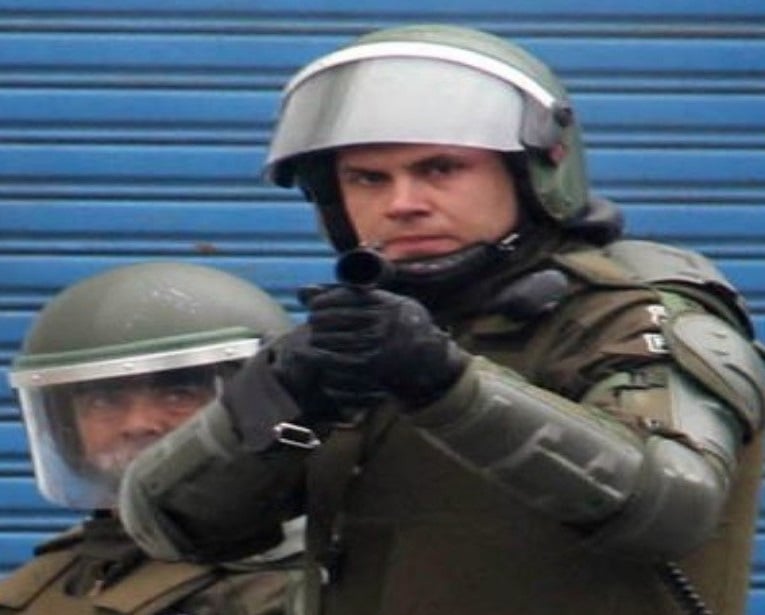
Revealing Videos of Crespo: «We’re Going to Take Your Eyes Out»
The attorney went further, presenting videos that showcase an attitude of Crespo that transcends mere technical violations.
“Throughout the trial, various videos were shown indicating his contempt for following regulations,” he stated, while revealing one recording where an individual on the street, seemingly in support of Crespo, urges him to «kill these f***ing dogs,» to which Crespo responds, «We need to kill them all.»
Another video presented to the court depicts an even graver situation. Gajardo described, “One person is on fire, and instead of taking action, Mr. Claudio Crespo remarks, ‘Let him burn, f***.’”
The lawyer referred to a third incident involving “an interaction with a protester he could detain, where he tells that protester, ‘Dude, you’re a goner; we’re going to take your eyes out,’” reported La Tercera.
For the plaintiff, these incidents are not isolated, demonstrating “a constant disdain for adherence to the rules, which was fundamental for ensuring that police activities were conducted properly and did not result in severe human rights violations.”
Gajardo reminded the court that the guidelines for using the riot shotgun were included in Carabineros’ circular 1832, which mandated directing shots at the lower body. He pointed out that this directive had been reiterated over the radio at least three times on the day of the incidents. By then, over 180 people had already suffered ocular injuries in protests, a figure that had generated internal alarm and international coverage.
The lawsuit maintains that these details, combined with evidence that shots were aimed at the upper body (Gatica’s face), allow for the establishment of a malicious intent in relation to foreseeable harm. That is, the defendant anticipated the potential for injury and decided to proceed nonetheless.
Gajardo also criticized the failure to produce recordings from the accused’s personal camera, arguing that “this is consistent with a continual lack of adherence to the rules by the accused, which, frankly, if followed, would have prevented us from being in this trial.”
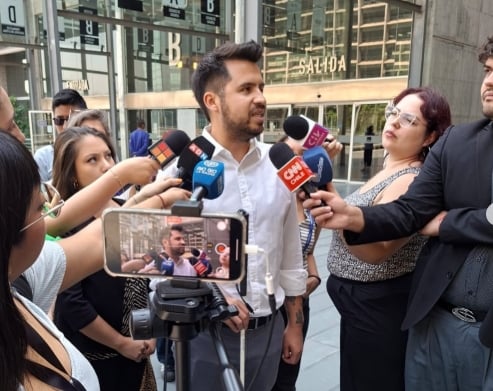
Gustavo Gatica: «The Evidence is Very Compelling»
After the session, Gustavo Gatica addressed the press, highlighting, “The evidence is very compelling; there are established facts here.”
The sociologist clarified that the aim of the process is not to attack the Carabineros as an institution, but to establish individual responsibilities. “The carabineros who bypass protocols need to be prosecuted,” he asserted.
The newly elected deputy for District 8 reflected on the broader significance of the trial, indicating that a “climate of impunity” regarding human rights violations during the uprising still persists in Chile. Citing data from Amnesty International, he noted that only about 1% of the cases opened in that context have been resolved, expressing hope that this case will serve as a symbolic reference for other victims.
He linked his personal struggle to the motivations behind the uprising. “People took to the streets to protest, and each of them had a dream. I protested because I felt that Chile was a very unequal country, which it still is; we need to change that,” he explained.
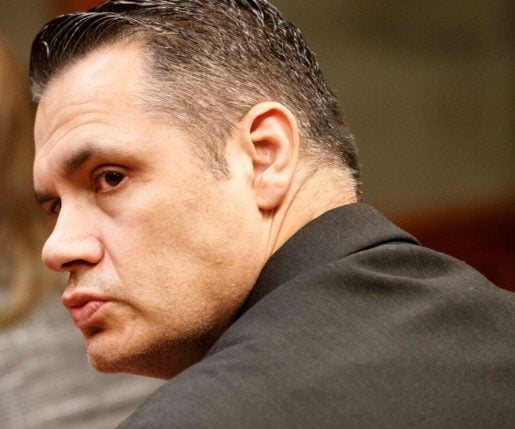
Final Stretch in the Trial Against Claudio Crespo
With the presentation of Carlos Gajardo, the plaintiff’s arguments have concluded. The defense for former officer Claudio Crespo will have its turn to present closing arguments starting December 22. The Oral Criminal Court of Santiago has already set the date for the verdict reading: it will take place on January 9, 2026.
Through his Instagram account, Gustavo Gatica shared a message following the hearing regarding the final phase of the trial.
“With the final presentation of my lawyer, Carlos Gajardo, a crucial stage of this process concludes. Today, the closing arguments from those representing me as a victim in this trial were finalized.”
He expressed gratitude to his legal team, the National Institute of Human Rights, the State Defense Council, and the Prosecutor’s Office, highlighting a process that has included over 200 hearings.
“None of this would have been possible without the sustained efforts of those who have pursued this case with conviction, professionalism, and respect for the truth,” he wrote.
The trial against Claudio Crespo not only seeks justice for a particularly emblematic case of ocular injuries but has also become a public examination of police force use, adherence to protocols, and accountability during a time marked by social crisis. The court’s decision, to be announced on January 9, 2026, is being viewed as a crucial precedent for justice and human rights in Chile.
