Original article: El fuego abre paso a los pinos invasores: La silenciosa amenaza que acecha a los bosques de ruil
Wildfires Exacerbate Invasive Pine Threat to Endangered Ruil Forests in Maule Region
Historically, fire has been a significant disturbance affecting the structure and composition of coastal Maulino forests. However, large-scale wildfires, such as the one that occurred in the summer of 2017, have raised profound questions about the resilience of these ecosystems in the face of the current extreme climate conditions characterized by prolonged droughts and heatwaves.
A study published in the scientific journal Frontiers in Plant Science examined the post-fire response of these forests in the Maule Region. The findings reveal that the ruil—an endangered species—faces an even greater threat: not only from the direct effects of fire that impacted 9 out of its 15 populations, but also from the massive invasion of pine trees following the blaze.
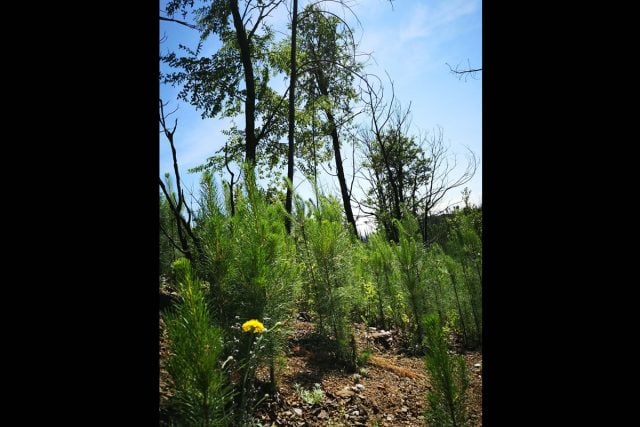
This invasive species rapidly colonized the affected areas, disrupting the successional trajectory of these relic forests and pushing them toward an alternative state dominated by pines.
In areas with high severity, the density of invasive pines reached 9,760 individuals per hectare five years after the fire. This figure indicates drastic changes in the ecosystem’s composition and structure, creating intense competition between the invasive species and native plants for available resources during crucial early developmental stages essential for forest regeneration.
While the ruil has shown some capacity for recovery through basal sprouting and seed regeneration, these strategies cannot match the highly efficient mechanisms of pine: a species adapted to frequent fire regimes that ensures its quick establishment post-fire.
This situation fosters a positive feedback loop between wildfires and the invasion of Pinus radiata, where pines accumulate and connect forest fuel, increasing the risk of new megafires that, in turn, promote further expansion of the species.
The real danger lies not only in the fires but also in their consequences within highly fragmented landscapes, where exotic species dominate and remnants of native forest are reduced to small patches. This dynamic encourages irreversible transformations in the native forest: the invasion of pine displaces the ruil, pushing it perilously close to extinction.
In light of this scenario, researchers are urging urgent action on three fronts: monitoring and controlling the spread of invasive pines using satellite technology and on-the-ground work; ecologically restoring the affected areas by prioritizing the early removal of young pines in the first two to five years post-fire; and involving local communities, forestry companies, and public agencies in a landscape-scale conservation strategy.
Without immediate intervention, the last fragments of ruil forest in the Maule region could collapse and disappear permanently.

We will continue to provide updates.
Obtén tu Pasaporte y apoya a El Ciudadano
Elimina la publicidad, accede a contenido exclusivo y sé parte de la comunidad.
Cancela en cualquier momento · Sin permanencia