Original article: Carta al Director: La peor noticia para la Filosofía. Gracias Matías Del Río
Dear Editor:
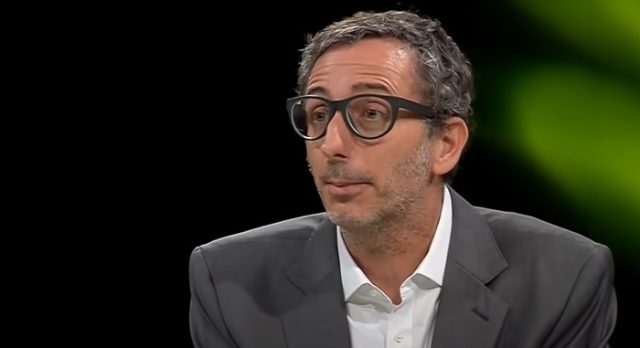
Recently, journalist Matías del Río excitedly shared a story that quickly went viral: major artificial intelligence labs are hiring philosophers.
The conclusion seemed clear: philosophy finally has value. After decades of answering the uncomfortable questions «Why do you study philosophy and what is its use?», many celebrated what appeared to be a historic acknowledgment of the discipline. I believe this is, in fact, the worst news for philosophy.
If philosophy needs to be employed by Silicon Valley to prove its worth, then it has lost. It lost the moment it accepted that its dignity relies on being useful to the market. The need for a discipline to justify its existence by enhancing technology is not an intellectual victory; it is a cultural surrender. Peter Thiel would not agree.
Artificial intelligence can already summarize books, compare theories, detect contradictions, construct arguments, and even engage in surprisingly sophisticated philosophical conversations. If philosophy is merely about producing good arguments or transmitting content, it’s only a matter of time before machines surpass us in these tasks.
But philosophy has never been just that. Philosophy was born to discomfort. To challenge power. To educate citizens before specialists. To teach us how to live together, not just to think correctly.
Its place has never been confined solely to classrooms, conferences, or libraries, as some professors from the nation’s best universities claim; it has always been – and must return to being – in public life, in schools, in neighborhoods, in democratic deliberation, and in any action capable of transforming a community.
Perhaps the problem isn’t that artificial intelligence is learning to think, but rather that we have spent too long teaching a philosophy that has forgotten to act. While we discuss how to make machines more ethical, we are training individuals who are increasingly less capable of participating, engaging in dialogue, organizing themselves, questioning authority, or taking responsibility for others. No language model will solve that issue.
Therefore, rather than celebrating that philosophy is now useful for training artificial intelligences, we should ask ourselves why it has ceased to be essential for forming human intelligences.
Because the real danger is not that machines might come to think like us. It is that we might end up living like them: efficient in responding but incapable of judging, committing, and changing the world.
Trinidad López Marambio
Philosophy Graduate and Professor
Certified in Neurosciences
Master’s in Philosophy
Faculty of Philosophy and Humanities
University of Chile
Obtén tu Pasaporte y apoya a El Ciudadano
Elimina la publicidad, accede a contenido exclusivo y sé parte de la comunidad.
Cancela en cualquier momento · Sin permanencia