Original article: Un salvavidas que se niega a la pesca artesanal
No fisherman sets out to sea without a lifebuoy. They may understand the winds, the current signals, and even the flight of birds as indicators of the conditions at sea, but they know that the ocean can be unpredictable. When a storm hits, there’s no time to debate whether the lifebuoy is «foundational»: they put it on.
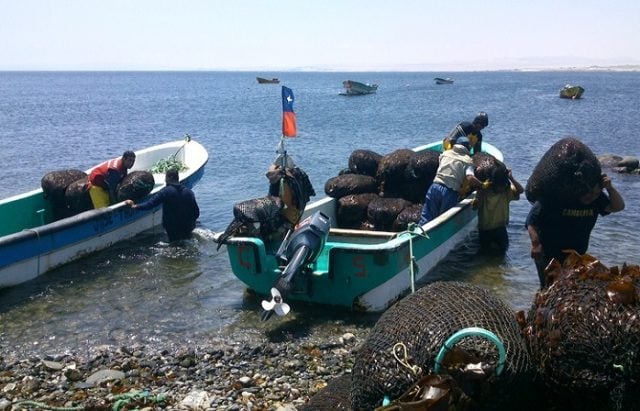
Chile is currently experiencing one of the most intense storms, leaving an unprecedented amount of rain in a short period. The frontal system of the past weeks has caused significant damage in towns and cities from Atacama to Coquimbo, heavily impacting the Biobío region. Many families are suffering, and artisanal fishing is no exception: boats have been damaged, fishing gear lost, forecasts predict weeks without being able to go out to sea, and the beaches are damaged due to rising sea levels and swells.
This situation is a consequence of what scientific evidence has warned for years: an El Niño phenomenon exacerbated by the climate crisis, which disrupts currents and displaces marine resources.
The complexity of the reality left behind is significant: for families involved in artisanal fishing, every day spent on land translates into a day without income. And today, in such circumstances, there are no insurances, no quick assistance mechanisms, nothing at all. Only the goodwill (or lack thereof) of decision-makers regarding resource allocation.
The proposed New Fishing Law that was discussed in the previous legislature included a provision: a Social Platform for artisanal fishing. This would have been a permanent resource allocation mechanism to support families when the sea is closed, funded by income from the fishing activity itself, money obtained through industrial fishing auction revenues. Without burdening the public treasury. A fiscally responsible path that would keep the lifeline funded by the fishing industry.
The current government withdrew that proposal. The excuse from the undersecretary of fishing was that it seemed «foundational» to them. It is worth recalling who uses that term: a bureaucrat who prepared reports for SONAPESCA and represented the industry at OROP-PS.
SONAPESCA has firmly opposed changes to the current Fishing Law (Longueira Law), particularly regarding the auction of industrial fishing quotas. Their management has been consistent with its origins, aligning with the interests of large fishing companies, who have benefited from the quotas distributed amidst the corruption of the Longueira Law up to this day.
Once again, decisions are made favoring the wealthy. The protection for tens of thousands of coastal families is withdrawn, while the privilege of seven corporate groups (now merged into four fishing companies) remains intact.
The fishing communities are not requesting a favor: they ask for an efficient, effective, and responsible tool for public finance. Something like what was already drafted and has now been wiped off the paper.
The question, then, is simple and deserves an answer: what alternative does this government propose?
Hernán Cortés
President of CONDEPP — Spokesperson for the National Alliance for the Defense of Artisanal Fishing
Ramón Chaparro
Director of CONDEPP
Marco Bello
Director of CONDEPP
Obtén tu Pasaporte y apoya a El Ciudadano
Elimina la publicidad, accede a contenido exclusivo y sé parte de la comunidad.
Cancela en cualquier momento · Sin permanencia