Original article: Álvaro Ramis advierte «consecuencias nefastas» tras recortes de Kast a la educación pública
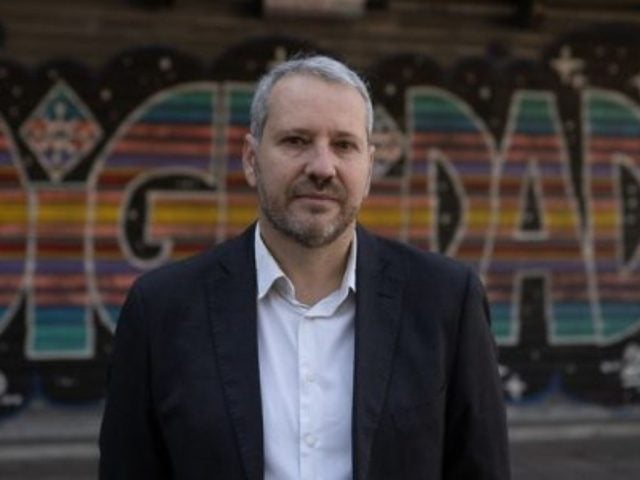
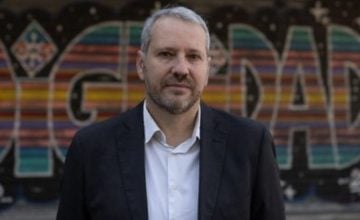
On March 18, a new episode of Sentido Común premiered, featuring Javier Pineda interviewing Álvaro Ramis, the current rector of the Academy of Humanistic Christianity University and president of the Public Policy, Territory, and Community Study Center.
Education poses a critical challenge for José Kast’s administration, characterized by a focus on market freedom and fiscal tightening over concrete public policies. Adding to this, there is a lack of experience within the ministerial team, no solutions for school dropout rates, and a confrontational stance towards teachers’ unions and early education.
The government’s approach—focused on budget cuts, limitations on free education, and a return to selective schooling—lacks real technical proposals, emphasizing more on ideological burdens than on improving the performance or infrastructure of the public education system.
In an interview with El Ciudadano, Álvaro Ramis discussed the early days of the administration and some already announced public policies. He expressed his astonishment that the government has adopted a baseline for financial cuts to the state of 3% uniformly across all departments and ministries.
Ramis explained that alongside health and housing, the education ministry is one of the most affected by this measure, which he labeled as “lacking any technical justification.”
“What is the criterion for cutting 3% in the country’s public policies? I believe these are elements that are not considered, and the effects are not yet quantifiable or dimensioned, because they have enormous consequences on everything: on teacher staffing, on the impact on infrastructure quality, on all types of administrative procedures, and on the management of legal changes necessary in the education system, affecting overall quality. Ultimately, this arbitrary cut has been made under complete discretionality, and it will have disastrous consequences for education as a whole,” Ramis added.
Regarding the tightening of CAE payments, Ramis criticized the government’s intention to implement “draconian” measures that overlook the labor situation of debtors. He also pointed out an error in the presidential announcements about publishing defaulters, clarifying that, by law, CAE debts cannot appear in commercial records since 2021.
Moreover, Álvaro Ramis questioned that while previous figures like ex-minister Bitar have acknowledged the flaws of CAE in search of solutions, the current government seeks to maintain the system uncritically, ignoring its historically negative effects.
He also criticized the proposal to eliminate free education for future students over 30 years old, though he clarified that those already benefiting would not lose it. He noted that the proposal lacks a proper impact analysis and technical rationale, indicating that while it is financially irrelevant for the state, it is extremely serious in terms of limiting people’s right to education.
When asked if the Ministry of Finance could pressure to lower the amount the state pays for each student in free education, Ramis explained that there is currently a complex legal mechanism and that this process does not depend on a single actor, but involves commissions and Congress, which provides some institutional stability against arbitrary decisions.
Ramis mentioned that the current debate centers around the fact that regulated tuition fees are already insufficient to cover the actual costs of programs, leading to deficits in universities.
Thus, Ramis believes it is unlikely that Kast’s government will push for a reduction in tuition fees, as it would divide its own sector. Many private universities affiliated with the right would also be financially harmed and instead pressure the state to increase those payments rather than decrease them.
Regarding the early days of the administration, Álvaro Ramis stated that Kast’s announcements resemble a “whirlwind” of perplexing and discretionary measures. In his view, there is no intention to construct new policies, but rather to dismantle the environmental, social, and immigration institutions developed over the past two decades. He emphasized that this regulation is not the work of a single sector but the result of a long process of institutionalization spanning from the governments of Bachelet and Piñera to that of Boric.
On another note, Ramis referred to the government’s criticism of “permisología,” defining it as a communicative slogan used by the right to discredit current regulations. For Álvaro, the objective of attacking the alleged “permisología” is to dismantle controls over the financial sector and various industries.
Ramis expressed concern regarding the removal of these legal tools, warning that the country could regress to a scenario of completely deregulated investment like that of the early 2000s, allowing for malpractice and abuses by sectors that would remain without real oversight.
Finally, Ramis noted that the opposition is divided into four blocks: the ultra-right with Kaiser, neoliberal populism with Parisi, the old officialism with Democratic Socialism, the Broad Front, and the Communist Party, as well as an emerging social-territorial sector composed of independent mayors and governors like Rodrigo Mundaca.
In this context, Ramis pointed out that it is positive for the opposition to highlight distinctions, as this allows the public to identify different priorities and political criteria, unlike when they are in government, where differences tend to be muted.
“When in power, differences have to be set aside, but in opposition, certain distinctions can be drawn that are beneficial for the public to see that not all political actors have the same criteria and can also better profile their priorities,” he noted.
Ramis concluded that beyond communicational differences, the opposition will fail if it does not achieve parliamentary discipline. Without coherent articulation to secure majorities and quorums, they will not be able to effectively stop or manage the government’s reforms.
Below, you can review the full interview with Álvaro Ramis:
Artículos Relacionados

"The Chainsaw Represents an Aggressive Stance": Rector Álvaro Ramis Critiques Kast's Brashness and Ties to Milei
Hace 3 meses
Álvaro Ramis advierte "consecuencias nefastas" tras recortes de Kast a la educación pública
Hace 2 minutos