Original article: El pueblo de Estados Unidos le da una lección a Trump: los republicanos pierden la mayoría en ambas cámaras
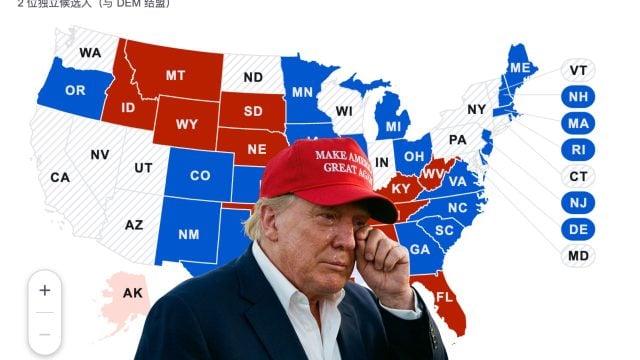
On November 3, the midterm elections in the United States concluded with a «blue wave». The Democratic Party not only regained control of the House of Representatives but also accomplished a feat many deemed nearly impossible in the Senate: flipping states that had been under Republican control for decades, including Texas, Kansas, and South Carolina, taking away their majority. For Trump, who has been in his second term for less than two years, this is a full-blown political reckoning. Voters sent a clear message with their ballots: they are fed up with rising living costs, an endless war with Iran, and Trump’s own governance style.
El Ciudadano
Texas Turns Blue: The End of an Era
If there is one result that encapsulates the impact of the evening, it is Texas. Democratic state legislator James Talarico, 37, defeated Republican Attorney General Ken Paxton, a Trump-backed candidate, becoming the first Democratic senator from Texas since 1988. The AP described the victory as «stunning»: just two years prior, Trump had won that state by double digits. On the same day, Democrat Gina Hinojosa claimed the governorship, becoming Texas’s first Democratic governor in over three decades.
Texas was not an isolated case. In Kansas, Pastor Adam Hamilton defeated the incumbent Republican senator, becoming the first Democratic senator from that state since 1932. In South Carolina, Democratic victory by Annie Andrews was noted by the BBC as «one of the biggest surprises of the night,» as the state had not elected a Democratic senator in over twenty years. Senate seats in North Carolina, Ohio, and Iowa also changed hands. In Georgia, former Atlanta Mayor Keisha Lance Bottoms won the governorship, becoming the country’s first African American woman to hold that position.
Why Were Voters Angry?
Exit polls revealed the reasoning behind the debacle. According to NBC, 43% of voters explicitly stated that their vote was motivated by «opposition to Trump». Even more revealing, 71% of voters—including 41% of Republicans—believed Congress had not provided sufficient oversight of Trump.
What truly infuriated voters was the grocery bill. With the war in Iran entering its ninth month, rising gas prices and living costs continued to squeeze wallets, while the White House offered no clear exit strategy. Democrats hammered this point throughout the campaign, and it evidently resonated. When Trump urged voters at his rallies to «pretend I am on the ballot,» voters in Iowa, Kansas, and South Carolina listened—and then voted for Democrats.
Trump’s Response: Accepts the Result, But Not the Defeat
Election night showcased a contradictory Trump. In an interview with The New York Times, he stated that he was «absolutely willing to accept the outcome» and was prepared to work with Democrats. In a call with Fox News, he even congratulated his rivals and admitted that the war with Iran «partially» influenced the results.
Yet at the same time, he posted on Truth Social: «I am not on the ballot. If I were, we would have won by a landslide.» He also shared an image of a red hat emblazoned with the word «VETO», suggesting that his strategy would shift from pushing legislation to exercising a defensive veto. An anonymous White House official tried to blame the candidates, asserting that Trump campaigned harder for the midterms than the candidates themselves.
What Happens Now?
The Democrats’ reclaiming of both chambers effectively signals the doom of Trump’s legislative agenda for his final term. The House of Representatives can initiate investigations, issue subpoenas, and even reactivate impeachment proceedings, although conviction in the Senate requires a two-thirds majority that is not currently within reach. In the Senate, Democrats will be able to block Trump’s nominations to the Supreme Court or cabinet positions, especially if any unexpected vacancies arise.
Politically, the market is already digesting the expectation of a «divided government». Analysts indicate that a Democrat-controlled Congress could heighten regulatory oversight on artificial intelligence and get embroiled in prolonged budget battles and debt ceiling disputes with the White House. In diplomatic and military arenas, Trump maintains considerable autonomy, but a hostile Congress could limit his freedom of action in Iran through budgetary power.
For American politics emerging from this night, one thing is certain: the swing states that Trump won in 2024 are now signaling with their votes that patience has limits. And that senatorial seat in Texas that changed colors is perhaps the most quietly powerful statement of the night.
El Ciudadano
Obtén tu Pasaporte y apoya a El Ciudadano
Elimina la publicidad, accede a contenido exclusivo y sé parte de la comunidad.
Cancela en cualquier momento · Sin permanencia