Original article: Entre los escombros y el derecho a un futuro: La resiliencia de la mujer palestina este 8 de marzo
By Vera Baboun, Ambassador of the State of Palestine in Chile
Every March 8th, the international community commemorates International Women’s Day, a day dedicated to honoring the historic struggle for rights, equality, and social justice.
This day serves as a moment of reflection prompting the world to forge a future marked by greater equality, dignity, and safety for all women. But what does this commemoration mean today for Palestinian women?
While discussions in many parts of the world focus on representation gaps or social progress, for Palestinian women, the fight is far more fundamental. It is existential. It is a struggle for the most basic human rights: the right to exist, to bring life into a safe environment, to access education, and to ensure that their people and history are not erased.
For Palestinian women, this International Women’s Day is not just a moment of reflection; it stands as a cry for survival, dignity, and justice against systematic violence and dispossession.
Before the unprecedented destruction unleashed by the Israeli military occupation intensified against the Palestinian people, Palestinian women were the undeniable intellectual driving force of society. The statistics were clear: over 60% of those filling university classrooms were women, and Palestinian girls vastly outperformed their peers in educational success.
Today, that vision for the future has been buried beneath rubble. With most schools in the Gaza Strip destroyed and severe restrictions in the West Bank, hundreds of thousands of young women have been denied their fundamental right to education. Schools are targeted because it is understood that educating Palestinian women is crucial for the development and future of their society.
That same creative strength leads the voice of Palestine in the world today. Despite the siege, pain, and continuous attempts to silence them, Palestinian diplomacy proudly showcases women’s faces.
Currently, the State of Palestine boasts 18 highly qualified female ambassadors representing the nation globally, with around 30% of the diplomatic corps comprised of women. They are seated at decision-making tables, demonstrating that their leadership is not merely a theoretical aspiration but an active and foundational reality of the present.
Yet, while Palestinian diplomats demand justice in international forums, the reality on the ground for mothers, daughters, and sisters is bleak. To date, this offensive has claimed the lives of over 33,000 women in Gaza. The occupation has transformed the miracle of giving life into a terrifying ordeal.
Today, approximately 60,000 pregnant women in Gaza exist without protection, privacy, or basic services. They are forced to give birth amid the near-total collapse of the healthcare system, with 283 hospitals and health centers destroyed or rendered inoperable. Surviving childbirth, facing high-risk pregnancies, and enduring severe malnutrition is the brutal reality for those sustaining Palestinian families amid genocide.
It is in this abyss of dehumanization where international law is starkly highlighted. More than two decades ago, the UN Security Council adopted the historic Resolution 1325 on Women, Peace and Security, establishing the binding obligation to protect women and girls in armed conflicts and ensure their participation in peace processes. Today, for Palestinian women, that resolution is an unfulfilled promise and a painful testament to international inaction.
Protecting Palestinian women is not a diplomatic option or an act of charity; it is a legal mandate. Preventing violence against them requires addressing the root cause of this instability: illegal occupation.
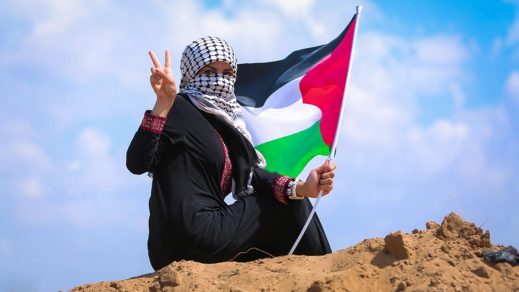
Palestinian women are already fulfilling their part in history. They continue to lead community resilience, humanitarian response, and political resistance. They are not merely victims of this war; they are the fabric that holds Palestine together.
However, this year compels us to face a painful reality: the countless women whose lives have been taken by war and conflict. Many Palestinian women have lost not only their own lives but also their children, families, and homes. Too often, their suffering is not fully counted, and their stories remain silent.
Their loss demands a voice.
On International Women’s Day 2026, we must also remember the silenced voices by violence and war and reaffirm the responsibility of diplomatic and women leaders to raise their voices on behalf of those who can no longer speak, so that their suffering is not forgotten or ignored.
On this day, responsibility can no longer be confined to words; it must translate into action. The international community cannot continue to celebrate women’s rights while remaining silent in the face of death, displacement, and the deprivation of the most basic rights of Palestinian women.
International law is not a symbolic declaration; it is a binding commitment. If it wishes to maintain its credibility, it must protect those who need it most.
Palestinian women do not ask for compassion; they demand justice, protection, and the right to live, to raise their children, and to build their nation’s future with dignity and peace.
Vera Baboun, Ambassador of the State of Palestine in Chile
Relacionados

Senate Decision an Outrage to Those Mourning the Killings and Disappearances of Loved Ones
Hace 19 horas
"We Are Many and They Cannot Forget Us": Chilean Feminist Authors Call for March on March 8th
Hace 23 minutos