Original article: APEC 2026: Lo más importante y qué ocurrió en Shenzhen
The Chinese city of Shenzhen was the backdrop for a pivotal week in global economics and geopolitics. The presence of Xi Jinping, Donald Trump, and Vladimir Putin, the technology dispute between Washington and Beijing, the pursuit of new international trade rules, and agreements reached by Chile characterized a summit that highlighted tensions and opportunities in the emerging multipolar order.
By El Ciudadano
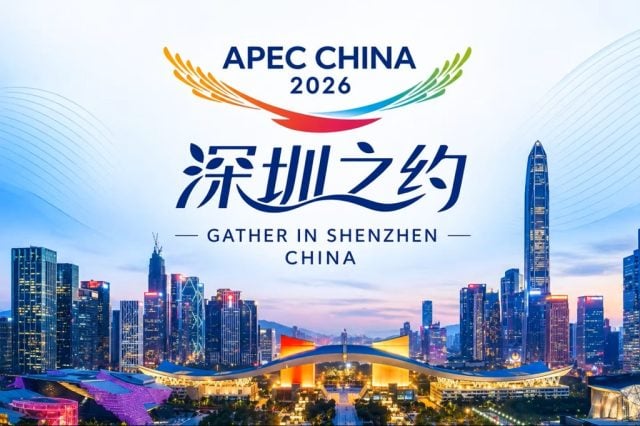
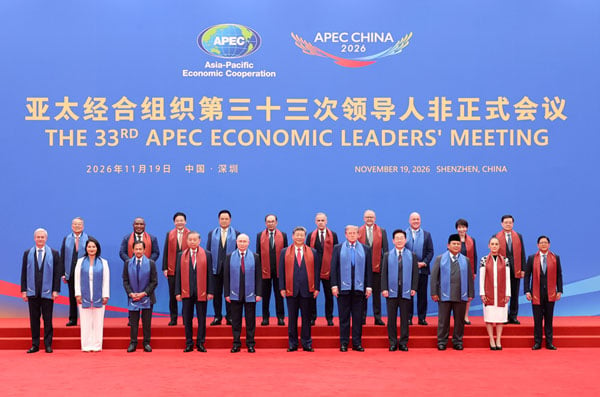
From November 17 to 19, Shenzhen, one of China’s main technology and manufacturing hubs, became the center of international economic diplomacy. The APEC CEO Summit and the 33rd Meeting of APEC Economic Leaders took place there.
This gathering brought together representatives from 21 APEC member economies in an international context marked by the rivalry between the United States and China, the war in Ukraine, technological transformations, and the reorganization of global supply chains.
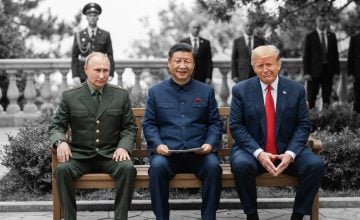
Notably, this edition featured an exceptional element: the simultaneous presence of presidents Xi Jinping, Donald Trump, and Vladimir Putin, culminating in an unprecedented trilateral meeting.
Here are the key events that defined the summit, presented chronologically.
November 17: The CEO Summit Begins as China Hosts Major Global Corporations
The first day was dedicated to the APEC CEO Summit, which gathered over 2,000 representatives from 21 economies within the forum and 13 invited economies.
According to the China Council for the Promotion of International Trade (CCPIT), representatives from 115 companies listed in the Fortune Global 500 attended.
American companies represented the largest group among foreign participants, making up nearly 20% of the total.
Discussions at the business meeting revolved around three main issues: the future of regional connectivity, the development of open artificial intelligence ecosystems, and the sustainable transformation of Asia-Pacific economies.
The dialogue went beyond grand declarations about innovation, showcasing practical applications of artificial intelligence in traditional sectors such as agriculture, automotive, and manufacturing.
China aimed to project Shenzhen as an exemplar of integration between technology, industry, infrastructure, and international trade.
November 17: Kast and Xi Jinping Strengthen Chile-China Relations
Among the initial significant meetings for Latin America was the bilateral discussion between Chilean President José Antonio Kast and his Chinese counterpart, Xi Jinping.
Following their conversation, both countries signed two cooperation instruments: an economic-commercial roadmap and a memorandum of understanding on free trade and multilateralism.
Topics discussed included mining, agriculture, artificial intelligence, logistics, infrastructure, health, and scientific cooperation.
Xi also proposed expanding collaboration in clean energy, new energy vehicles, polar research, and deep-sea exploration.
Kast invited Xi to make an official visit to Chile. Xi expressed interest in the proposal, although no date was established.
The meeting underscored China’s ongoing significance for the Chilean economy, especially as its primary trading partner.
However, a strategic question arose: Chile does not want to limit its relationship with China to the export of raw materials but seeks to progress towards mineral processing, research, and the incorporation of technology.
November 17-18: ChileWeek Aims to Expand Chilean Business Presence in China
Parallel to the presidential meetings, the Chilean business delegation pursued a promotional agenda focused on trade and technology.
One of the activities included visits by Chilean tech companies to Tencent, one of China’s leading digital conglomerates, to explore their solutions in artificial intelligence, cloud computing, and digital services.
Engagements were also made with companies specializing in cybersecurity, tech infrastructure, and drones.
The agenda featured activities promoting agri-food products, including the launch of the Chilean cherry season in Shenzhen.
President Kast highlighted the growth of this industry, which expanded from approximately 7,000 hectares planted two decades ago to nearly 80,000 hectares today.
Exports increased from around 70 million boxes over five seasons to nearly 100 million in the most recent season.
China remains the critical market for this product.
The initiative showcased one of Chile’s primary export strengths but also raised the challenge of diversifying trade destinations and reducing reliance on a single market.
November 17: Xi Jinping Meets Claudia Sheinbaum, Expanding Latin American Agenda
Mexican President Claudia Sheinbaum also held a bilateral meeting with Xi Jinping.
Both leaders discussed trade, manufacturing, science, artificial intelligence, agriculture, health, and technological cooperation.
Sheinbaum linked the bilateral relationship to Mexico’s Plan for Strengthening Industrial Production and Attracting Investments.
The meeting had an additional dimension: Mexico will host APEC in 2028 and expressed interest in deepening coordination with China within multilateral mechanisms.
This encounter highlighted how Latin American economies are seeking to expand ties with Beijing, even while maintaining significant trade and productive relationships with the United States.
Simultaneously, Xi met with Peruvian President Keiko Fujimori. According to statements from the president, China committed $22.5 million in assistance to support Peru in the face of El Niño effects through financial aid and machinery.
Climatic cooperation was thus integrated into the economic and diplomatic agenda between China and Latin America.
November 18: Putin Arrives in Shenzhen, Initiating Diplomacy Among the Three Major Powers
The arrival of Russian President Vladimir Putin heightened the geopolitical dimension of the summit.
Putin was officially welcomed in Shenzhen and held a bilateral meeting with Xi Jinping.
Both leaders reaffirmed the stability of their strategic partnership and the need to deepen economic, energy, scientific, and technological cooperation.
The Russian president also presented investment opportunities in sectors such as artificial intelligence, satellite communications, rail transport, and maritime logistics.
He emphasized the potential of Russia’s Far East and the Northern Sea Route as pathways to enhance commercial connectivity in the Asia-Pacific region.
His participation aimed to signal that Russia, despite Western sanctions and the war in Ukraine, continues to prioritize Asia in its economic strategy.
November 18: Xi Presents His Economic Vision for Asia-Pacific
In his address at the CEO Summit, Xi Jinping advocated for open trade, multilateral cooperation, and stability in global supply chains.
The Chinese leader announced that his country would seek to reduce tariffs, enhance access for foreign companies to certain sectors, and improve regulatory conditions for investments.
He also emphasized the importance of advancing towards the Asia-Pacific Free Trade Area (FTAAP), an integration initiative aimed at progressively connecting the 21 economies within the forum.
On the technological front, he advocated for cooperation in artificial intelligence, digital trade, data governance, and new infrastructure.
China also announced a $20 million contribution to finance practical cooperation projects under APEC and the establishment of an Asia-Pacific Community Studies Center in Shenzhen.
The message from Beijing was clear: amid international trade and technology tensions, China wants to position itself as a power committed to regional economic integration.
November 18: Trump Arrives in Shenzhen, and Technological Competition Takes Center Stage
Donald Trump’s arrival marked one of the most symbolic diplomatic moments of the week.
Xi Jinping personally welcomed the U.S. president at the airport.
Both leaders later participated in the official welcoming reception, where they also met Vladimir Putin.
The context of the visit was colored by the ongoing technology dispute between Washington and Beijing, particularly regarding U.S. restrictions on advanced semiconductor exports.
Artificial intelligence emerged as a central topic in the discussions.
Trump later confirmed that he had spoken with Xi about the technology, although no agreement modifying trade restrictions on advanced chips was announced.
The competition between the two nations extends beyond chip manufacturing to data centers, cloud computing, digital infrastructure, energy, and control over technological supply chains.
For Latin American countries, this rivalry poses a crucial question: how to develop their digital capacities without being constrained by the restrictions and decisions of the great powers.
November 19: Chile and the Philippines Sign Historic Trade Agreement
A significant outcome of Chile’s participation was the signing of the Comprehensive Economic Partnership Agreement (CEPA) between Chile and the Philippines.
President José Antonio Kast and his Filipino counterpart Ferdinand Marcos Jr. witnessed the signing during their bilateral meeting in Shenzhen.
This marks the first trade agreement signed by the Philippines with a Latin American country and Chile’s 37th trade agreement.
The CEPA outlines tariff preferences for approximately 10,467 categories of Chilean products and covers nearly 90% of Chile’s current exports to the Philippines.
Beneficiary sectors include:
- Fruits, food, and agro-industrial products.
- Wines and seafood products.
- Salmon and fishery products.
- Forestry and chemical products.
- Copper, lithium, molybdenum, and other minerals.
- Services, investments, and the digital economy.
For the Philippines, the agreement offers an opportunity to diversify its supply chains and enhance trade relations with Latin America.
For Chile, it’s an advancement in its market diversification strategy and a reinforcement of its presence in Southeast Asia.
The agreement must complete internal legal procedures before coming into effect.
November 19: Sheinbaum Meets Trump, Discussing the Future of the USMCA
The Mexican president also took the opportunity in Shenzhen to meet with Donald Trump.
Bilateral trade and the future of the United States-Mexico-Canada Agreement (USMCA) were among the topics discussed.
After the meeting, Sheinbaum asserted that trade negotiations between both countries were well advanced.
Pending issues included U.S. tariffs on steel, aluminum, and automobiles, as well as conditions for the review of the North American treaty.
No definitive trade agreement was announced, but the meeting underscored Mexico’s commitment to maintaining open channels of dialogue with Washington.
The Mexican situation is particularly interesting as it highlights the strategy of an economy seeking to deepen its relationship with China without compromising its productive integration with the United States.
November 19: Xi, Trump, and Putin Hold an Unprecedented Trilateral Meeting
The most significant geopolitical event in Shenzhen was the first formal trilateral meeting among the leaders of China, the United States, and Russia.
The three presidents discussed the international situation, strategic security, and the role of great powers in maintaining peace.
A central topic was the reduction of nuclear risks.
The three leaders agreed that a nuclear war cannot be won and must never be fought.
The meeting concluded with a joint declaration consisting of four points:
First: UN Reform. The three governments expressed readiness to work on reforming the organization to enhance its response capability to international challenges.
Second: Energy Security. There were calls to increase the production and supply of refined petroleum products while preserving the stability of international energy flows.
Third: International Immunities. The declaration supported respect for the immunities of state officials and questioned potential jurisdictional overreach by the International Criminal Court and other bodies.
Fourth: Nuclear Security. The three countries committed to maintaining dialogue aimed at reducing nuclear risks and preventing the proliferation of atomic weapons.
The document holds evident diplomatic importance, yet it does not constitute a disarmament treaty nor does it establish quantified commitments to reduce arsenals or production.
It also does not contain a peace agreement regarding Ukraine or Iran.
Although Putin claimed to have discussed Ukraine with Trump and Xi, the conflict is not addressed in the joint text.
Ultimately, the meeting produced, above all, a political commitment to maintain communication channels among the three powers.
November 19: APEC Approves Shenzhen Declaration and Hands Presidency to Vietnam
The leaders’ meeting concluded with a consensus approval of the APEC Economic Leaders Declaration 2026, titled Shenzhen Outlook.
The document reaffirms the commitment of the 21 economies to an open, integrated, innovative, and resilient Asia-Pacific region.
Its main pillars include:
Trade and Investment: Enhance regional economic integration, improve the business environment, facilitate investments, and advance the Asia-Pacific Free Trade Area agenda.
Connectivity: Improve infrastructure, trade corridors, digital customs, and business mobility.
Innovation: Expand scientific and technological cooperation, boost the digital economy, and leverage artificial intelligence to increase productivity.
Development: Reinforce energy and food security, vocational training, economic inclusion, and environmental cooperation.
Three additional documents on trade, connectivity, and innovation were also approved.
At the closing, responsibilities were transferred to Vietnam, which will host APEC in 2027.
Future hosts include Mexico in 2028, Singapore in 2030, and Japan in 2031. Chile will again take presidency of the forum in 2032, followed by Papua New Guinea in 2033 and Peru in 2034.
What Did Shenzhen Leave for the World and Latin America?
The summit highlighted three processes transforming international relations.
1. Competition Among Great Powers Continues, but There Is Also Interest in Avoiding Direct Confrontation.
The Trump-Xi-Putin meeting demonstrated that Washington, Beijing, and Moscow can maintain dialogue channels even amidst deep political, military, and economic differences.
However, the trilateral declaration did not resolve the conflicts among these powers nor produce concrete disarmament commitments.
2. Artificial Intelligence Has Become an Issue of Economic Sovereignty.
Control over semiconductors, data centers, digital infrastructure, and international information flows is acquiring strategic importance comparable to oil and major trade routes in earlier eras.
Countries that fail to develop their own capacities risk becoming subordinate to the technological decisions of leading powers.
3. Latin America Has an Opportunity But Needs to Move Beyond Its Traditional Role as a Raw Material Supplier.
Chile, Peru, Brazil, and other regional countries possess strategic resources for energy transition and the expansion of artificial intelligence.
However, their importance as suppliers of copper, lithium, energy, and food does not guarantee they will capture the industrial and technological benefits of these transformations.
The challenge lies in advancing local processing, scientific research, innovation, digital infrastructure, and human capital development.
The agreement between Chile and the Philippines serves as an example of how to expand trade relations beyond traditional markets. However, the next step will be to transform those agreements into productive investment, skilled jobs, and new industrial capabilities.
Shenzhen: A Summit of Opportunities and Contradictions
APEC 2026 left a picture of two simultaneous realities.
On one hand, the great powers advocated for dialogue, economic cooperation, and the need to preserve international stability.
On the other hand, trade tensions, technological restrictions, military conflicts, and differences over international institution operations continue.
China leveraged its role as host to showcase Shenzhen as a symbol of innovation, economic openness, and technological development.
The United States aimed to defend its commercial and technological interests. Russia sought to bolster its international position and expand its ties with Asia-Pacific.
Meanwhile, countries like Chile and Mexico worked to diversify their economic links and leverage the presence of global leaders to open new opportunities.
The big question that arises from Shenzhen is whether this new phase of power competition will build a more balanced international economy or, conversely, reproduce new dependencies.
For Latin America, the answer will depend notably on its ability to act autonomously, coordinate regional positions, and transform its natural wealth into technological and industrial development.
Because the challenge of the 21st century is not merely to possess the resources the world needs, but also to participate in the decisions, technologies, and industries that will determine how that wealth is utilized.
Xi, Trump, and Putin: Four Declared Commitments and Numerous Unresolved Issues
The trilateral meeting held on November 19, 2026, in Shenzhen concluded after approximately 90 minutes. The leaders of China, the United States, and Russia issued a joint declaration comprising four points, presented as an initiative for peace and international stability. However, the document contains general political commitments, without timelines for implementation or concrete compliance mechanisms.
1. UN Reform: Commitment Completed and Published
The three nations, as permanent members of the Security Council, agreed to promote UN reforms to ensure the organization can respond more effectively to global challenges and fulfill its mission of maintaining international peace and security.
Status: COMPLETED AND PUBLISHED. The commitment was included in the joint declaration. However, no specifics were provided regarding which reforms will be pursued, what institutional changes are proposed, or when negotiations might begin.
2. Energy and Oil: Commitment Announced, Implementation Pending
China, the United States, and Russia expressed their intention to increase the production and supply of refined petroleum products for the benefit of all countries. They also reaffirmed the importance of maintaining stable energy flows.
Status: AGREED IN PRINCIPLE AND PUBLISHED. No production quotas, supply volumes, contracts, coordination mechanisms, or specific commitments to modify energy sanctions against Russia were announced.
3. Immunity of Authorities and the ICC: Joint Political Position Published
The three leaders reaffirmed the importance of national consent and the immunity of state officials. They also indicated that the International Criminal Court and similar bodies should not abuse their powers.
Status: COMPLETED AND PUBLISHED AS A POLITICAL POSITION. No treaty, legal reform, or international mechanism to alter the ICC’s authority was announced. This pronouncement is particularly relevant given the arrest warrant issued against Vladimir Putin by the ICC.
4. Nuclear Risk and Proliferation: Dialogue Agreed, Disarmament Without Agreement
The three presidents reiterated that a nuclear war cannot be won and must never be fought. They also expressed their willingness to maintain a dialogue to reduce nuclear risks and prevent the proliferation of such weapons.
Status: DIALOGUE AGREED; NO DISARMAMENT AGREEMENT. No arsenal reduction targets, limits on nuclear warheads, negotiation timelines, or new arms control treaties were established. Additionally, no verification mechanism was announced.
5. Ukraine War: No Trilateral Agreement
Despite Putin confirming that Ukraine was among the topics discussed with Trump and Xi, the war was not mentioned in the joint declaration.
Status: NO AGREEMENT. No ceasefire, peace negotiations, security guarantees, or trilateral mechanisms to address the conflict were announced.
6. Iran War and the Strait of Hormuz: No Operational Commitment
Donald Trump indicated that Iran was part of the discussions and agreed with Xi on the need to fully reopen the Strait of Hormuz and prevent Iran from acquiring nuclear weapons. However, no joint initiative from China and Russia to intervene in the crisis was announced.
Status: NO OPERATIONAL AGREEMENT. No mediation commitment, coordinated diplomatic action, or cooperation guarantees to resolve the conflict were communicated.
7. Future Meetings Among the Three Presidents: No Schedule
The meeting opened a direct dialogue channel among the leaders of the three major nuclear powers. However, no permanent framework or agenda for new summits was announced.
Status: NO AGREEMENT ON PERIODIC MEETINGS. The continuity of the trilateral format was left without a schedule or announced institutional mechanism.
Balance: A Historic Declaration, but No Agreements to Resolve Wars
The meeting produced a joint political document and four convergence areas: UN reform, energy cooperation, immunity of state officials, and dialogue on nuclear risks. However, it did not achieve concrete agreements on Ukraine, Iran, nuclear disarmament, or the strategic tensions between Washington and Beijing.
The most tangible outcome was the publication of a joint declaration. Its eventual translation into policies, negotiations, or verifiable commitments remains pending.
El Ciudadano
Obtén tu Pasaporte y apoya a El Ciudadano
Elimina la publicidad, accede a contenido exclusivo y sé parte de la comunidad.
Cancela en cualquier momento · Sin permanencia