Original article: Entre la alarma y los hechos: no hay evidencia sólida de un plan iraní para atacar California
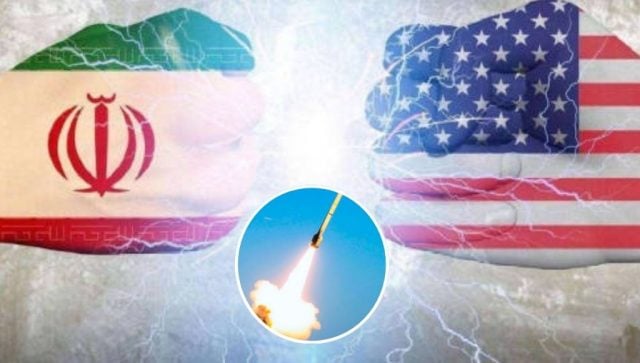
Amidst the ongoing conflict involving the United States (U.S.) and Israel against Iran, a series of reports have emerged suggesting that Tehran might retaliate with attacks on U.S. territory, including possible drone operations targeting the West Coast, particularly California.
These reports have raised international alarm, as they imply an escalation of the conflict beyond the Middle East borders.
However, a closer examination of the original documents supporting these claims reveals an unclear and fundamentally weak situation, as most information relies on precautionary security alerts rather than verified intelligence indicating Iran’s intention to attack the United States.
So far, Iranian counteroffensive actions have been restricted to military operations against U.S. installations located in Western Asia.
Origin of the Alleged Attacks on California
The news being circulated across media and social networks primarily stems from the coverage of a police bulletin distributed to California authorities. On March 11, NBC’s local Bay Area affiliate reported that the FBI had warned law enforcement about the possibility that Iran could attempt a «surprise drone attack» launched from a vessel against targets on the U.S. West Coast.
Crucially, to understand the true scope of this information, the officials cited in the report emphasized that the communication did not constitute a credible or imminent threat, and that the alert was primarily issued as a precautionary measure in the context of the ongoing war, as noted by The Palestine Chronicle.
On the same day, People magazine published its own coverage of the security bulletin, describing the document as outlining a hypothetical scenario involving drone use from ships. The publication explicitly acknowledged that the warning did not identify specific targets or operational timelines, both of which would be key elements if it were a real threat based on solid data.
Rolling Stone, which also reported on the same bulletin on March 11, noted that the FBI’s warning was conveyed to California authorities out of fear of possible Iranian retaliation. The magazine remarked that the intelligence information underlying the alert remained unverified and was largely speculative.
In a similar vein, the security-focused publication Police1 informed that the alert called for vigilance but explicitly stressed that there was no concrete information indicating an imminent attack.
The combination of this media coverage forms the documentary basis upon which claims that Iran might be planning an attack on U.S. territory have been built.
What none of these reports present are proofs that Tehran has developed, announced, or prepared plans to carry out such operations. The supposed evidence relies on a precautionary FBI bulletin, which the media itself describes as lacking in concreteness and confirmed intelligence information.
What is Iran’s Military Approach?
The actual military stance Iran has maintained during the current conflict tells a significantly different story.
It’s worth recalling that on February 28, the U.S. and Israel launched a joint attack on Iran, which resulted in the death of Supreme Leader Ali Khamenei.
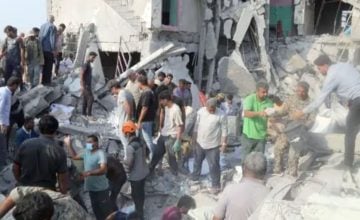
The aggression, denounced by Tehran as a blatant violation of its sovereignty, left over 1,330 dead in Persian territory, including 171 girls at a primary school in Minab, southern Iran.
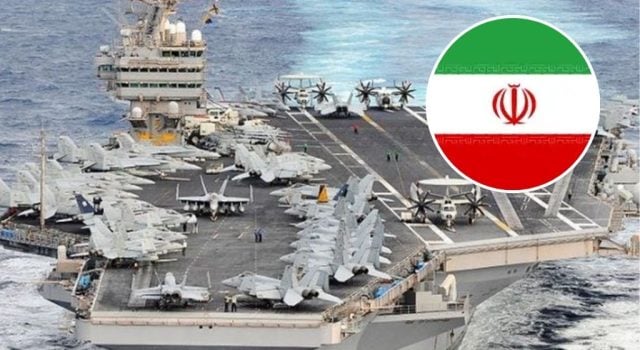
Since the outbreak of hostilities, the Islamic nation and its allied forces have initiated a counteroffensive, including attacks on Israeli military installations, U.S. bases across the region of Western Asia, and U.S. naval assets operating in the Persian Gulf and its surroundings.
Iranian missile and drone operations have consistently targeted what the Iranian government considers legitimate military objectives directly tied to the war. This operational conduct reveals a pattern: Tehran has restricted its retaliatory actions to targets within the regional theater of operations, without expanding the conflict to territories outside the Middle East.
Statements from Iranian officials have systematically reinforced this strategic approach, as they have repeatedly asserted that U.S. military forces present in the Middle East, Israeli infrastructures, and military assets involved in attacks against Iran will continue to face retaliation.
However, there has been no documented public statement in which they threaten to carry out bombings on U.S. territory.
«Military analysts note that this approach reflects Iran’s long-standing strategy of asymmetric regional deterrence, focusing on attacking U.S. forces and their allies in the Middle East rather than projecting military operations across the Atlantic or Pacific,» stated The Palestine Chronicle.
Military analysts consulted across various outlets highlight that this approach reflects Iran’s long-term strategy: regional asymmetric deterrence.
The U.S. Domestic Political Context
The political environment in the United States also helps explain why these reports, despite their limited foundation, have captured public and media attention. Public support for the war undertaken by the Trump administration remains remarkably low.
A Reuters/Ipsos poll published on March 3 revealed that only 27% of Americans supported U.S. attacks on Iran, while 43% opposed them, with the remainder undecided. These figures depict a divided nation, but with a clear inclination towards opposition or caution regarding the escalation of the conflict.
Other polls indicate similar skepticism among the American public. A YouGov survey published on March 5 revealed that the majority of citizens oppose sending U.S. troops to fight directly against Iran, reflecting widespread concern about engaging in another prolonged war in the Middle East, following two decades of interventions in Iraq and Afghanistan that left deep war fatigue within American society.
These figures impose clear political limitations on any administration, such as the Republican magnate’s, considering significant military escalation.
Why Are the Rumors Gaining Traction?
A large-scale expansion of the conflict, including a potential ground invasion of Iran or operations that could provoke retaliations on U.S. soil, would likely require much broader internal support than currently exists.
In this context, narratives that depict foreign adversaries as direct threats to national security take on particular political relevance.
«The emergence of reports suggesting that Iran might attack the United States raises an important question: why are these claims gaining traction now? One explanation is that intelligence agencies routinely prepare for the worst-case scenarios in wartime and issue alerts even when the underlying intelligence is incomplete,» the quoted media suggested.
Furthermore, it pointed out that the reports emerging in the media are also situated within a broader strategic and political context.
«If Iran can be portrayed not only as a regional adversary but also as a direct threat to U.S. national security, the discourse surrounding the war could take a radical turn. Historically, the fear of attacks on U.S. soil has been one of the main drivers of public support for military escalation,» it explained.
However, accurate data and information confirm that the war remains largely confined to the Middle East and that Iran’s military actions continue to focus on Israeli targets and U.S. bases in the region.
Relacionados

Iran Claims 650 U.S. Casualties as USS Abraham Lincoln Withdraws to Indian Ocean Following Attacks
Hace 1 semana