Original article: Al otro lado del Mar Rojo, las guerras se alimentan unas a otras
Beyond the Red Sea: How Wars are Interconnected and Fueling a Larger Conflict
By Vijay Prashad* / SomosMass99
Wednesday, November 4, 2026
The conflict in Sudan is often depicted as an African catastrophe, while the war in Yemen is characterized as an Arab conflict and the turmoil surrounding Iran is labeled as a Gulf crisis.
Such categorizations obscure the flow of arms, money, soldiers, and commercial interests among these conflicts.
When viewed from the African coast of the Red Sea, a different picture emerges. These wars originate from distinct backgrounds, yet they increasingly feed into one another through military sponsorship, competition over ports, and the devastation of civilian livelihoods.
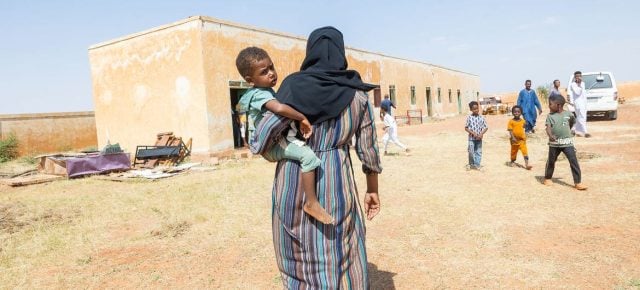
Focusing on the population in Sudan is crucial. The World Food Program currently estimates that 19.5 million people are facing acute hunger, while around 8.6 million are internally displaced.
Moreover, it reports that sorghum prices are nearly three times higher compared to a year ago, and wheat flour prices have almost doubled. Maritime disruptions are increasing fuel and fertilizer costs. Thus, Sudanese families are grappling with their own war along with the economic fallout from conflicts across the sea.
The fighting that erupted in April 2023 between the Sudanese Armed Forces, led by Abdel Fattah al-Burhan, and the Rapid Support Forces (RSF), commanded by Mohamed Hamdan Dagalo, stemmed from the militarized political economy of Sudan.
Dagalo, commonly known as Hemedti, built his power through a paramilitary apparatus rooted in the violence of Darfur. Both military factions amassed economic power and obstructed civil democracy. Foreign intervention enhanced their capacity to devastate a country whose popular movement had sought a different future.
Yemen has contributed to this disaster. After Sudan joined the Saudi-led intervention in 2015, Sudanese soldiers, including large contingents from the RSF, crossed the Red Sea.
A 2019 investigation by the International Crisis Group revealed that Hemedti provided a significantly higher number of troops than the regular army and that his forces frequently occupied frontline positions. Low-income families supplied recruits attracted by military pay. An impoverished African population became a source of combat labor for wealthy Gulf monarchies.
This deployment strengthened Hemedti’s position and his external relations. His forces gained battlefield experience while he cultivated ties with sponsors beyond Sudan’s borders.
The importance of this fact transcends any individual payment or deployment. Gulf intervention aided a Sudanese commander in consolidating an armed organization with resources and connections outside civilian control. A war fought in Yemen contributed to the rise of a military center that would later wage war within Sudan. The connection is direct and historical.
Gold constituted another fundamental resource.
A January 2024 report from the UN Expert Panel described gold as a consistent revenue source for the warring factions in Sudan and documented smuggling networks.
A shipment linked to a trader associated with the RSF reached Dubai via Port Sudan in May 2023. The panel also discovered that routes were redirected to Egypt once combat began.
This is a regional war economy, capable of altering its trade routes when circumstances demand.
Interventions in Sudan
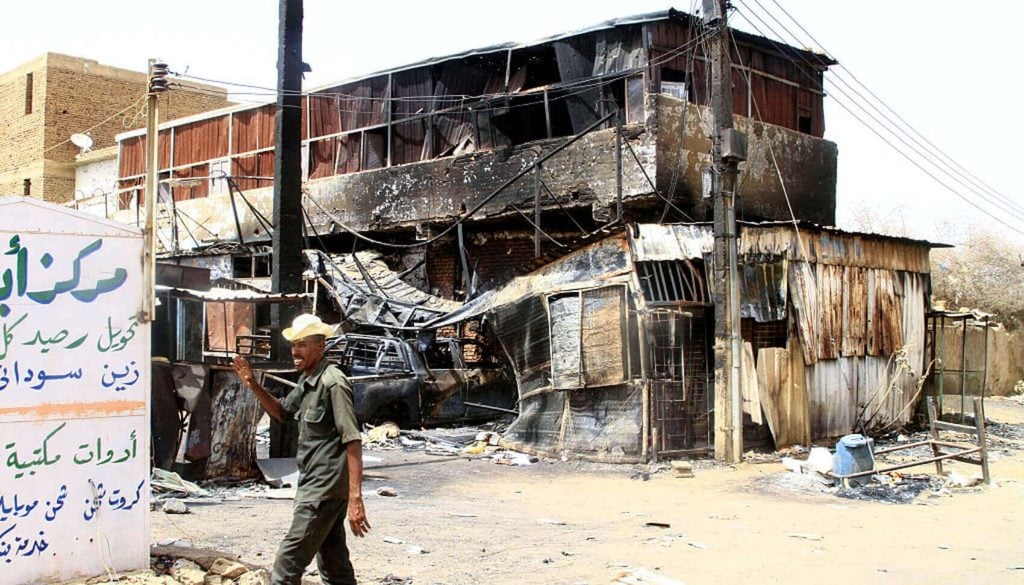
The role of the United Arab Emirates requires close analysis. Amnesty International reported in May 2025 that guided bombs and howitzers used by the RSF had likely been re-exported through the Emirates. Their analysis examined identifiable remnants of weapons and munitions.
Abu Dhabi denies having supplied the RSF, but this denial must be considered alongside the visual evidence. International arms suppliers also bear responsibility for preventing the diversion of weapons to Sudan.
An October 2026 assessment by the European Union Asylum Agency describes reported RSF supply routes through eastern Chad, southeastern Libya, and northeastern Somalia.
These routes connect Sudan’s interior to a much broader African geography. Airstrips, border crossings, commercial intermediaries, and military sponsors are as critical as formal alliances.
Darfur cannot be protected while the networks that resupply armed groups remain intact. Responsibility cannot be limited to the men who pull the trigger.
Saudi Arabia and Egypt, on the other hand, favor the Sudanese army, although their interests and policies differ.
Riyadh combines mediation with support for the continuity that Burhan’s authorities represent, while Cairo views the territorial integrity of Sudan and the survival of a central state as strategic concerns.
However, these preferences do not make either government defenders of Sudanese popular democracy. The danger is that negotiations become a bargaining process among military sponsors over the country’s future.
Consequently, there is no unified Gulf policy towards Africa. The interests of Saudi Arabia and the UAE overlap and yet clash. Sudan exemplifies these differences, as does Yemen.
Hostility towards Iran does not create a straightforward regional division. Such relations show how local military authorities seek assistance from various sources, while foreign governments calculate their interests separately in each scenario. Their alignments are practical, contingent, and perilous.
The African coast provides the strategic framework for these relationships. Port Sudan connects a vast interior to the Red Sea. Further south, ports facing the Aden Gulf offer navigation access near Bab al-Mandab.
Commercial investment can meet real development needs, but port contracts become politically explosive when combined with foreign security arrangements or deals that bypass national institutions. Control of an entry point can determine the economic options of an entire country.
Somalia has challenged this pattern. In a January interview with Al Jazeera, State Minister for Foreign Affairs, Ali Mohamed Omar, explained the cancellation of his government’s agreements with the UAE.
He accused Abu Dhabi of undermining Somali sovereignty through dealings with entities outside the federal government. He stated that military personnel and equipment needed to withdraw while investments in Berbera and Bosaso required a legal resolution. These were the demands put forth by Mogadishu, not proof that all agreements had immediately ended.
The dispute highlights what is at stake for Africa in the competition across the sea. Somaliland and Puntland have their own histories and political interests, but foreign powers can exploit disputes over authority to secure access to ports and military facilities.
African sovereignty thus becomes a negotiable issue between foreign capitals and rival local authorities. What appears efficient from the outside can be perceived locally as the fragmentation of the state and the loss of democratic control.
Yemen serves as a warning against the assumption that such agreements are permanent. An evaluation documents the collapse of much of the Southern Transitional Council’s territorial control – supported by the UAE – in January 2026, following advances by Saudi-backed forces.
Emirati troops withdrew, even from Socotra and Perim. However, local allies maintained their influence. Therefore, the withdrawal altered the form and scope of Emirati power without indicating that Abu Dhabi had ceased to be relevant in Yemen.
Renewed fighting now threatens the southern Red Sea. On October 29, Ansarallah claimed attacks on Saudi refineries, an Aramco facility, and airports. Saudi authorities reported interceptions and a limited number of casualties and damages caused by debris.
On October 30, the coalition announced another interception toward the Mecca region, although Ansarallah denied having targeted it that day. These conflicting statements indicate an escalation but do not prove that each claimed objective has been achieved.
Nonetheless, the rivalry between Saudi Arabia and the UAE coexists with security cooperation. On October 7, the UAE’s Ministry of Foreign Affairs condemned the attacks on Saudi civil and economic facilities, as well as on Saudi vessels in the southern Red Sea and Bab al-Mandab.
Both governments may oppose each other’s local partners while simultaneously supporting one another against another adversary. Considering them as a unified block or irreconcilable enemies obscures how intervention truly operates.
The United States and Israel have expanded this system of insecurity through their war against Iran.
The military escalation has forced countries already involved in African conflicts to face new threats on their own territory. However, their vulnerability has not diminished their competing African ambitions.
For Africa, the lesson is that dependence on external military sponsors imports their broader confrontations. A government seeking arms for a battlefield may find itself embroiled in struggles whose decisions are made elsewhere, while its own population inherits the economic costs and political dangers of those decisions for years to come.
The war surrounding Iran magnifies these dangers through the maritime economy. Hormuz and Bab al-Mandab are distinct chokepoints, but disruptions in both challenge interconnected trading systems.
UNCTAD estimated in March that approximately one-third of global maritime fertilizer trade passes through Hormuz. Energy costs, insurance premiums, and freight expenses transfer military escalation to agricultural costs.
African countries experience this connection through import bills, shortages, and pressure on already constrained public finances.
For a Sudanese farmer, these pressures compound displacement and crop loss; and for neighboring countries hosting refugees, they increase the cost of supporting people displaced from their homes.
The repercussions extend well beyond the coast. War directly damages production and consequently raises the cost of recovery. The same trade system that facilitates the circulation of arms becomes more expensive for those trying to transport food and fertilizers.
Diplomacy must address these connections without denying the political roots of each conflict.
On October 20, Iranian Foreign Minister Abbas Araghchi said that Saudi Arabia and Ansarallah had not responded to Tehran’s mediation offer. An agreement between Washington and Tehran could ease regional tensions, but it would not automatically resolve Yemen’s disputes over governance, territory, and resources.
Similarly, an agreement between Saudi Arabia and the United Arab Emirates would leave the demand for civil democracy in Sudan unresolved.
Hence, an African peace agenda must insist on halting external military supplies, protecting humanitarian routes, and defending sovereign control over ports and resources.
Sudanese civil organizations must have a decisive political space in any agreement. The Red Sea must connect people through trade and cooperation, and its coasts cannot be left at the mercy of deals in which African wealth finances the destruction of Africa while foreign powers negotiate their share of the resulting ruin.
* Vijay Prashad is an Indian historian and journalist. He is the author of 40 books, including «Washington Bullets,» «A Red Star Over the Third World,» «Dark Nations: A People’s History of the Third World;» «Poor Nations: A Possible History of the Global South,» and «How the International Monetary Fund Suffocates Africa,» co-authored with Grieve Chelwa. He is the executive director of Tricontinental: Institute for Social Research, chief correspondent for Globetrotter, and editor at LeftWord Books (New Delhi). He has also appeared in the films «Shadow World» (2016) and «Two Meetings» (2017).
This article is produced by Globetrotter
Cover Photo: Ahmed Mohamdeen Elfatih / Unicef
Obtén tu Pasaporte y apoya a El Ciudadano
Elimina la publicidad, accede a contenido exclusivo y sé parte de la comunidad.
Cancela en cualquier momento · Sin permanencia