Original article: Boric se la juega por Bachelet: candidatura a la ONU va en bloque con Brasil y México
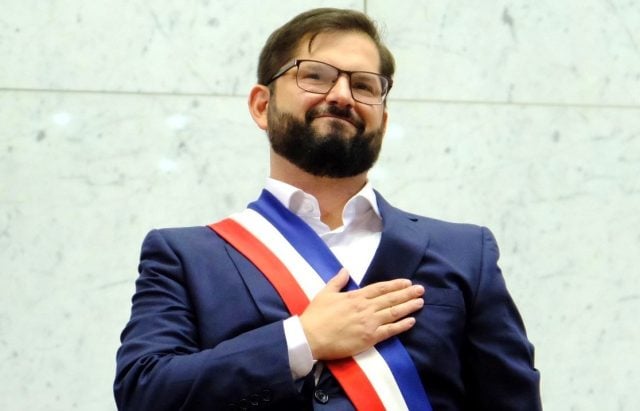
This morning at the Palacio de La Moneda, President Gabriel Boric officially registered the candidacy of former president Michelle Bachelet Jeria for the position of Secretary-General of the United Nations. This nomination, formalized today at the UN headquarters in New York, is significant not only for the candidate’s profile but also for the diplomatic strategy underpinning it: a joint presentation with Brazil and Mexico.
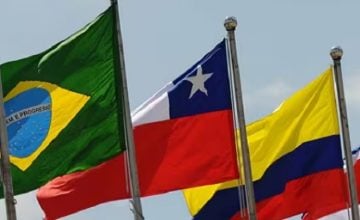
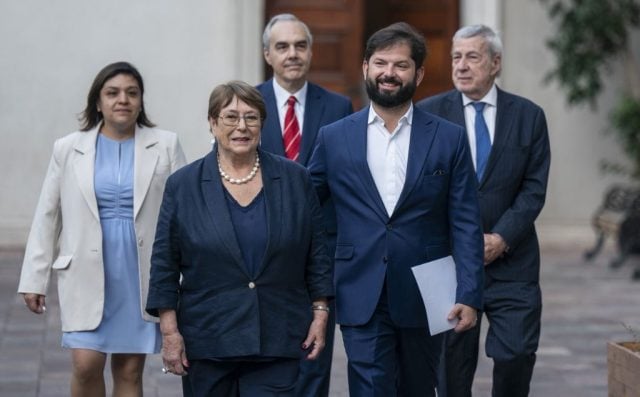
Accompanied by Bachelet herself, Foreign Minister Alberto Van Klaveren, and the ambassadors of Brazil, Paulo Pacheco, and Mexico, Laura Moreno, the President emphasized the collective nature of the initiative. «As you can see, we are not alone in this nomination. The candidacy of President Bachelet, which we are registering—actually, has already been registered with the United Nations—will be presented jointly with our brother countries of Brazil and Mexico, the two most populous nations in Latin America,» Boric stated, highlighting the support, conviction, and courage of President Lula da Silva and President Claudia Sheinbaum.
This tripartite movement aims, according to Boric, to express «a common will to contribute to global governance and the strengthening of multilateralism» and to convey «a shared hope that Latin America and the Caribbean will make their voices heard in building collective solutions to the tremendous challenges of our time.»
He substantiated this stance by arguing for a more effective international organization, stating that «the international system can and must respond more effectively, with a sense of urgency, legitimacy, and humanity to the major problems of the global world.»
To support the nomination, the Head of State referenced Bachelet’s extensive career: twice head of state, Minister of Health and Defense, the first Executive Director of UN Women, and UN High Commissioner for Human Rights.
«These roles highlight a political and human experience that allows her to offer meaningful contributions to the work of the United Nations at a time when the world needs more cooperation, trust, and shared responsibility,» he noted, adding the «recognition, respect, and affection» that the former president has garnered in multilateral forums.
Bachelet: «The UN Must Renew Itself to Remain Legitimate»
Bachelet, for her part, expressed her honor at the regional support, stating that it «reflects a shared commitment and renews hope that we can work together towards common goals.»
«It is also a sign of the importance that the organization holds for Latin America and the world that, despite the challenges posed by a difficult geopolitical context, we continue to advocate for strengthening the tools of multilateralism,» she emphasized while highlighting her commitment to assume «the tremendous responsibility that this entails.»
In her speech, she outlined a roadmap for the UN as it approaches its centennial, advocating for «an organization that is efficient in management, coherent and effective in action, reliable and transparent in leadership,» and underlined the need for renewal in light of «multiple crises, conflicts, climate change, profound inequalities, technological disruption, and institutional distrust.»
«The United Nations must renew itself to remain legitimate, more modern, efficient, and result-oriented,» she concluded.
Kast’s Shadow Over Bachelet’s Candidacy
However, the path to the Secretary-General’s position is fraught with internal political challenges. Most of the lobbying and diplomatic support processes will have to be managed by the incoming administration of elected President José Antonio Kast and his future Foreign Minister, Francisco Pérez-Mackenna.
Kast has maintained a position that avoids committing to a definitive stance. After a meeting with Bachelet late last year, he declined to provide a clear response regarding potential support, stating only, «I won’t say anything until March 11.»
«I’ll see what I do… I listen to and read everything people mention. I am quite autonomous, along with a team, in the decisions we make,» he asserted on the occasion.
«It wouldn’t be appropriate for me to discuss a matter that will only concern me when I take office… We must respect institutionalism; currently, there is an acting President who is Gabriel Boric, and this is not resolved today or tomorrow,» argued the right-wing politician.
From his political sector, the National Libertarian Party (PNL) has issued direct criticisms. Elected deputy and PNL vice president Hans Marowski remarked that «Bachelet represents a worn-out political cycle, fiscal waste, poor reforms, and zero responsibility with state resources… To think about spending money Chile doesn’t have to resurrect her image is neither prudent nor necessary. It’s repeating the mistakes that the country has already paid dearly for.»
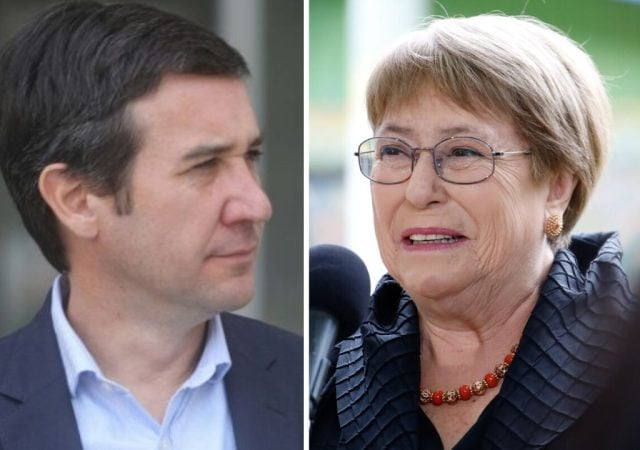
From the Independent Democratic Union (UDI), its president, Guillermo Ramírez, expressed a personally adverse position, albeit deferential toward Kast’s authority.
«If I were President, I wouldn’t support her,» Ramírez stated, criticizing the former president’s legacy: «For UDI, of course, Michelle Bachelet is a very distant figure; we believe her second government was truly poor.»
However, he clarified that his party will not «attempt to influence the President-elect’s opinion in any way; we will abide by whatever he decides.»
Thus, Bachelet’s candidacy stands not only as a diplomatic outreach of global significance and a demonstration of Latin American unity driven by the outgoing government, but also as an early test for the incoming administration’s capacity to forge consensus on state policy and manage ideological tensions within its support base. The world will be watching to see if Chile, under a new administration, maintains the unified momentum behind this historic nomination.
Relacionados
UDI President Declares Opposition to Bachelet's UN Candidacy, Kast Remains Non-Committal
Hace 2 meses
Pinochetist Barbarism Returns to Rule Chile After Gabriel Boric's Government Succumbs to Presidential Agenda
Hace 3 meses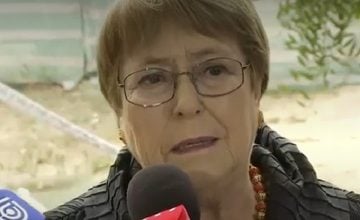
Former President Bachelet Calls for Post-Electoral Dialogue and Emphasis on Protecting Social Rights
Hace 3 meses