Original article: Acercar la atención de salud a las comunidades rurales siguen siendo un desafío para envejecer con autonomía en Los Ríos
Bringing Health Care Services Closer to Rural Communities: A Challenge for Aging with Autonomy in Los Ríos
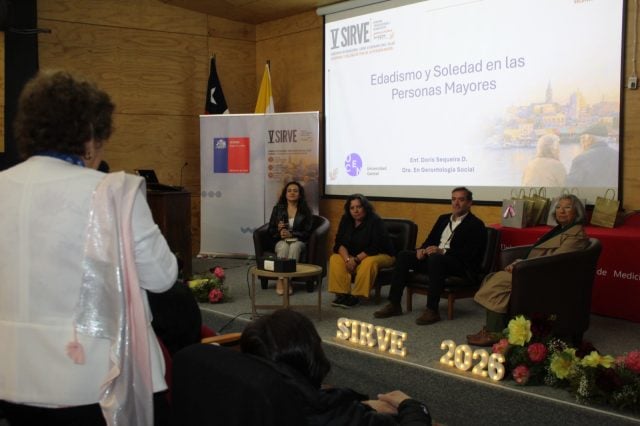
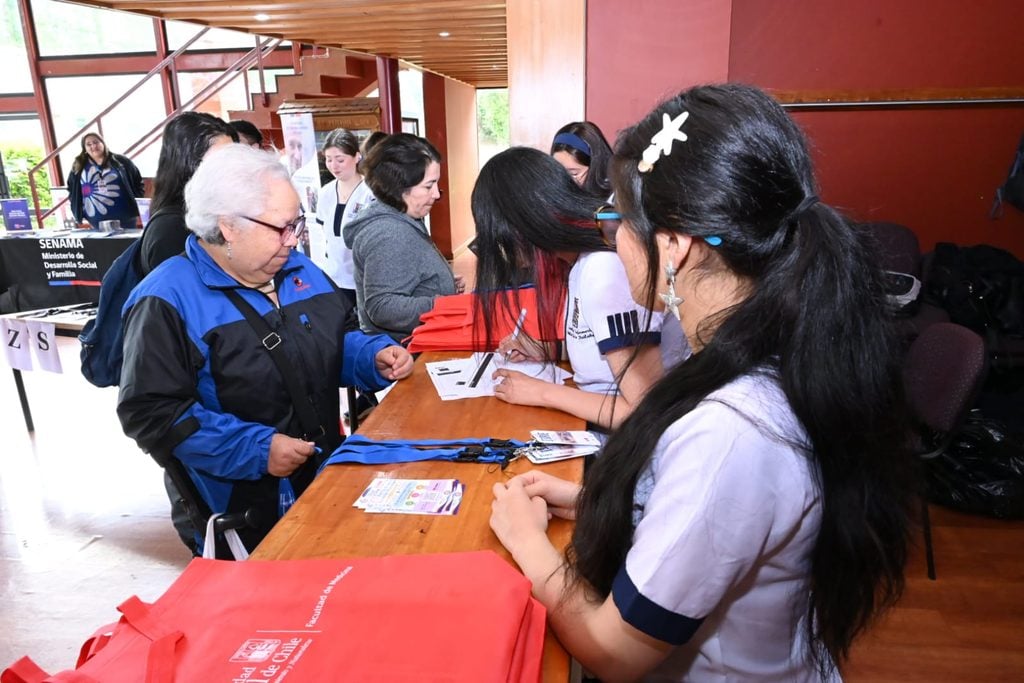
The V International Seminar on Older Adults held at the Universidad Austral de Chile (UACh) brought together 250 participants, both in-person and online, including health care teams from the region, elderly individuals, caregivers, community leaders, and representatives from Chilean and foreign universities.
Reflecting on the seminar, Carola Rosas, director of the Nursing Institute at UACh’s Faculty of Medicine and a member of the organizing committee for SIRVE 2026, discussed the challenges faced by older adults based on their living conditions.
«One of the most urgent challenges is to reduce territorial inequalities so that all older adults have the opportunity to age with autonomy, well-being, and dignity, regardless of their location. In Los Ríos, we have skilled and committed professionals; this seminar allowed us to meet, share experiences, and identify opportunities for collaborative work,» explained Rosas.
«The disparities,» she added, «are reflected in the difficulties faced in accessing health check-ups, securing transportation, obtaining rehabilitation services, or having necessary support. However, we must also recognize the strengths of each territory. Rural life can offer opportunities for daily movement, connection to the land, a sense of belonging, and meaningful community ties.»
«Therefore, the solution cannot simply be moving older adults to the city: we must bring services and supports closer to their communities, respecting their lifestyles, preferences, and motivations,» emphasized the academic.
In comparing the experience of aging in Valdivia with that in a rural area, Rosas highlighted the role of family and neighbor networks and noted that understanding how these networks operate in each locality helps identify necessary supports to strengthen.
«There is a significant difference in access to services. In a rural locality, attending a consultation may require traveling long distances, relying on limited transportation schedules, or needing a family member to take time off to accompany them. This can complicate the continuity of care and increase dependence on others for everyday needs,» she analyzed.
«However, support networks offer a more diverse reality: living in the city does not guarantee companionship, just as living in the countryside does not mean isolation,» emphasized the educator from UACh.
In this context, she noted that «in some rural communities, there are valuable neighborly ties and mutual aid practices, although some individuals may live far from their families and have limited support. We need to understand each reality and strengthen both services and local networks, without idealizing rural life or viewing it solely through the lens of its shortcomings.»
Need for Coordination
For older adults living with multiple chronic illnesses, the Nursing Institute’s director emphasized the need to coordinate health teams and agree on a care plan tailored to individual priorities.
«Health care must focus on prevention and promotion, fostering healthy lifestyle habits in primary care is key to ensuring our society ages well, with independence, autonomy, and well-being,» stated Carola Rosas.
«For older adults with chronic illnesses, health care must be organized with each person’s individual needs in mind. When someone lives with multiple chronic conditions, it is insufficient to address each diagnosis separately: we need to coordinate care and agree on a comprehensive plan that is understandable, relevant for each individual, and developed collaboratively with an interdisciplinary health care team,» emphasized the professional.
Caring in Community and Strengthening Participation
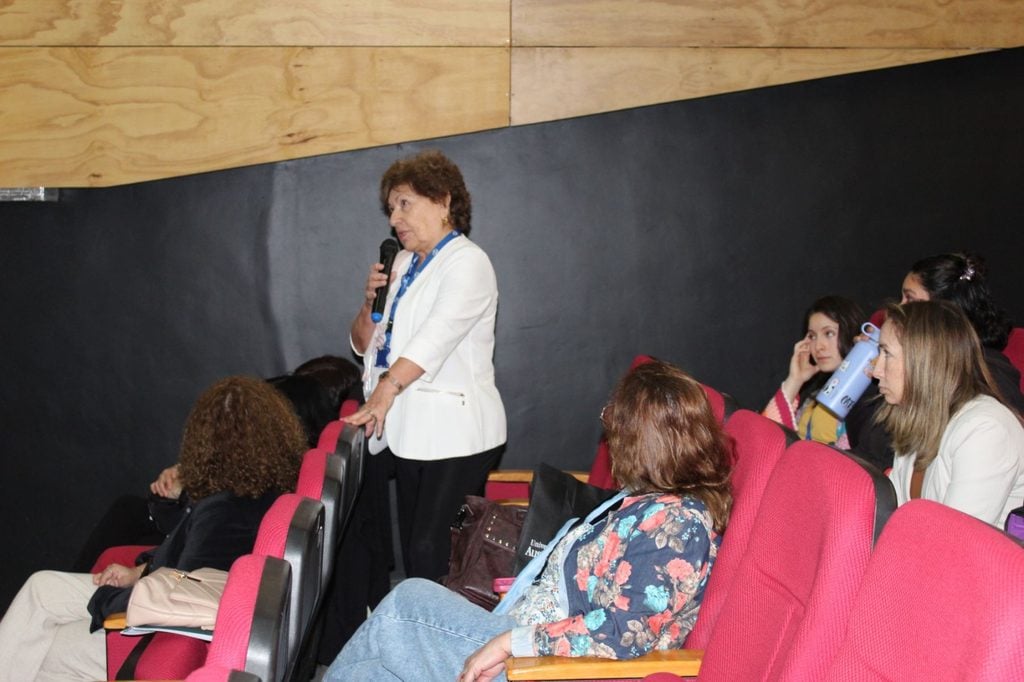
Regarding community care experiences shared at the seminar, Rosas highlighted the significance of social participation and emotional bonds.
«I emphasize the need and benefits of aging in community; social participation enables us to age with greater autonomy and quality of life. Compassion, the need to connect with others, to care for others, and to maintain our emotional ties allows us to age alongside others and opens us to the human possibility of caring and being cared for,» she underscored.
The academic proposed continuing the seminar’s work through a territorial table involving institutions and organizations of older adults.
«This SIRVE 2026 was made possible due to intersectoral collaboration, and we had massive participation from various professionals, officials, caregivers, academics, university students, and older adults, making it essential to strengthen the territorial working group among health institutions, municipalities, Senama, universities, and older adult organizations, with representatives from the regional capital and its communes,» she suggested.
She added that «another concrete step would be to enhance collaboration between institutions and organizations representing older adults. This work is ongoing, but we need it to grow alongside the demographic increase of the older adult population in our society. Creating spaces for social participation, recognizing, and supporting leaders who continue to advocate for their rights and the freedom to age with dignity is paramount.»
Rosas anchored these proposals in a reflection on how opportunities and bonds throughout life stages influence the aging process: «We age from the moment we are born, and the way we do so is shaped by the experiences, bonds, and opportunities we have encountered throughout our lives.»
«Aging should be a collective experience, acknowledging that it is a diverse process that is not synonymous with deterioration. Accepting our differences, our vulnerability, and our finitude also allows us to recognize the importance of caring and being cared for. In life, we have the opportunity to leave a legacy and transcend; thus, seeking meaning and significance in our lives and relationships is crucial,» she stated.
Regional and International Participation
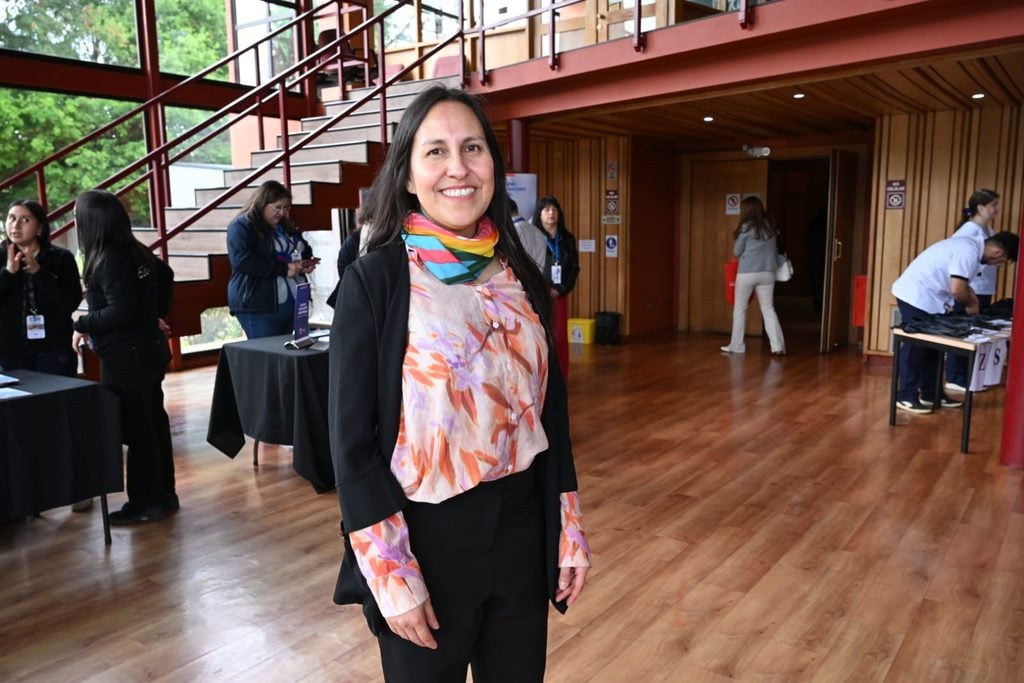
The SIRVE 2026 program included the III Integral Care Meetings SENAMA and the XI National REDESAM Meeting, alongside sessions on longevity, dementia, comprehensive geriatric assessment, end-of-life care, and community experiences.
Among the contributions from UACh’s Faculty of Medicine, Daniela Urrutia, a faculty member of the Clinical Neurosciences Institute, addressed elder abuse. Dr. Pamela Ehrenfeld, director of the Graduate School, discussed cancer, inflammation, and aging. Carmen Gloria Muñoz, from the Public Health Institute, spoke on working with older adults and their connection to the environment.
Cristóbal Heskia, from the Clinical Neurosciences Institute, presented an urban project designed for older adults, while Mauricio Lorca, from the Institute of Movement and Human Occupation, discussed virtual reality and dependence.
International Collaboration on Publication
As part of her academic work on aging, the director of the Nursing Institute is also coordinating «Além dos anos», a publication on intrinsic capacity, functionality, and active aging that gathers scholars from four countries.
«The book is called ‘Além dos anos’ capacidade intrínseca, funcionalidade e os novos paradigmas do envelhecimento ativo. In English, it translates as ‘Beyond the Years’. Its organizers include Vilani Medeiros de Araújo Nunes, Gilson de Vasconcelos Torees, María Laurencia Grou Parreirinha Gemito, Carola Rosas, and Ana Comesaña, academics from the Federal University of Rio Grande do Norte-Brazil, the University of Évora-Portugal, the National University of Mar del Plata-Argentina, and Universidad Austral de Chile,» explained Carola Rosas herself.
The publication can be found at https://ebooksdepository.com
Obtén tu Pasaporte y apoya a El Ciudadano
Elimina la publicidad, accede a contenido exclusivo y sé parte de la comunidad.
Cancela en cualquier momento · Sin permanencia