Original article: «Los riesgos para la inflación han aumentado de forma relevante»: Banco Central advierte panorama más complejo para el bolsillo de las familias chilenas
Central Bank of Chile Warns of Rising Inflation Risks and Complex Financial Outlook for Families
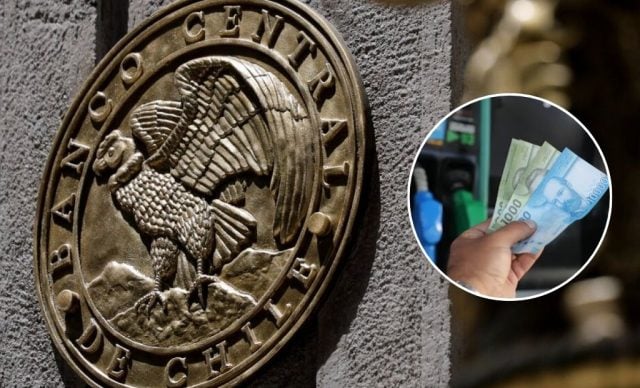
The Central Bank of Chile has raised concerns about a more challenging financial landscape for Chilean families, highlighting that inflation risks have significantly increased and that projections for the upcoming months have been notably escalated.
During its Monetary Policy Meeting, the Council of the issuing institution decided to keep the monetary policy interest rate at 4.5%, a decision unanimously supported by all members, in a scenario where cost pressures and uncertainty necessitate careful monitoring of price developments.
The monetary policy interest rate is one of the primary tools used by the Central Bank to manage inflation and serves as a benchmark for the financial conditions of the economy.
Global Scenario and Impact on Chile
On the international front, the institution described a more adverse energy price environment than anticipated in the central scenario of September’s Monetary Policy Report, due to the escalation of geopolitical tensions in the Middle East. Since the release of that report, the price of oil (average WTI-Brent) has risen by approximately 25%, while the futures curve indicates higher levels for the next two years.
Moreover, the issuing body noted an unusually intense El Niño phenomenon that is already impacting international food prices, adding pressure from energy, transportation, and fertilizer costs associated with ongoing military conflicts.
Nevertheless, it indicated that despite this backdrop, global activity continues to show resilience, particularly in economies connected to the development of artificial intelligence (AI), while the price of copper remains stable compared to the previous meeting.
In a statement, the institution mentioned that international financial conditions have become more restrictive, in a context of expectations for more contractionary monetary policy, stock market declines, a global appreciation of the dollar, and increases in long-term rates. These last factors reflect the high demand for financing associated with investments in AI, rising geopolitical risks, and heightened fiscal tensions in developed economies, increasingly evident in some European nations.
Decline of Imacec and Peso Depreciation
The local financial market echoed these trends, with a decline in the Selective Stock Price Index (IPSA), a depreciation of the peso, and an increase in long-term nominal rates.
In terms of economic activity, the Imacec— which measures the real monthly evolution of the country’s economic activity—recorded a yearly drop of 1% in August (-0.7% month-on-month adjusted for seasonality), falling short of expectations outlined in the central scenario of the Monetary Policy Report, primarily due to performance in the mining sector.
Conversely, the non-mining Imacec grew by 1.4% annually (+0.7% month-on-month), showing resilience and reflecting the recovery of certain sectors affected by the storms in July.
Regarding domestic spending, high-frequency indicators for the third quarter suggest that both consumption and particularly investment, continue to exhibit weak performance, although investment prospects remain favorable due to inventory levels, copper prices, momentum from the Reconstruction Law, and increased public investment spending.
Inflation Risks
Meanwhile, the labor market showed a slight increase in the unemployment rate during the mobile quarter ending in August, accompanied by high labor cost growth.
According to the Central Bank, the inflation accumulated by September aligns with projections in the most recent Monetary Policy Report (4.1% and 3.2% annually for total and core CPI), being largely driven by the rise in fuel prices, which has followed historical patterns.
However, in line with greater cost pressures, short-term market inflation expectations have seen a substantial increase.
While two-year inflation expectations remain anchored at the 3% target according to the Economic Expectations Survey (EEE), the Financial Operators Survey (EOF) indicated a rise to 3.2%.
The risks for inflation have notably increased: although CPI data has been in line with expectations, projections for the coming months have escalated significantly, deviating above the trajectory of the central scenario outlined in the Monetary Policy Report. This comes amid declining short-term activity prospects, primarily due to supply factors linked to mining and climate shocks,
Additionally, while predictions indicate that the local economy will regain momentum toward 2027, the current weakness is expected to persist beyond prior forecasts.
The Council expressed the necessity for constant evaluation of alternative scenarios where the responses of the global and local economy could create different inflation trajectories than expected and necessitate changes in monetary policy.
Thus, it stated that the future evolution of the monetary policy interest rate will be assessed meeting by meeting based on ongoing developments and clarified that its goal remains for inflation to converge to 3% within a two-year horizon.
It announced that the next Monetary Policy Meeting will be held on December 15, 2026.
Obtén tu Pasaporte y apoya a El Ciudadano
Elimina la publicidad, accede a contenido exclusivo y sé parte de la comunidad.
Cancela en cualquier momento · Sin permanencia