Original article: Infancias bajo fuego (crónicas desde el Donbass)
By Omar Raby, historian, communicator, and expert in public management
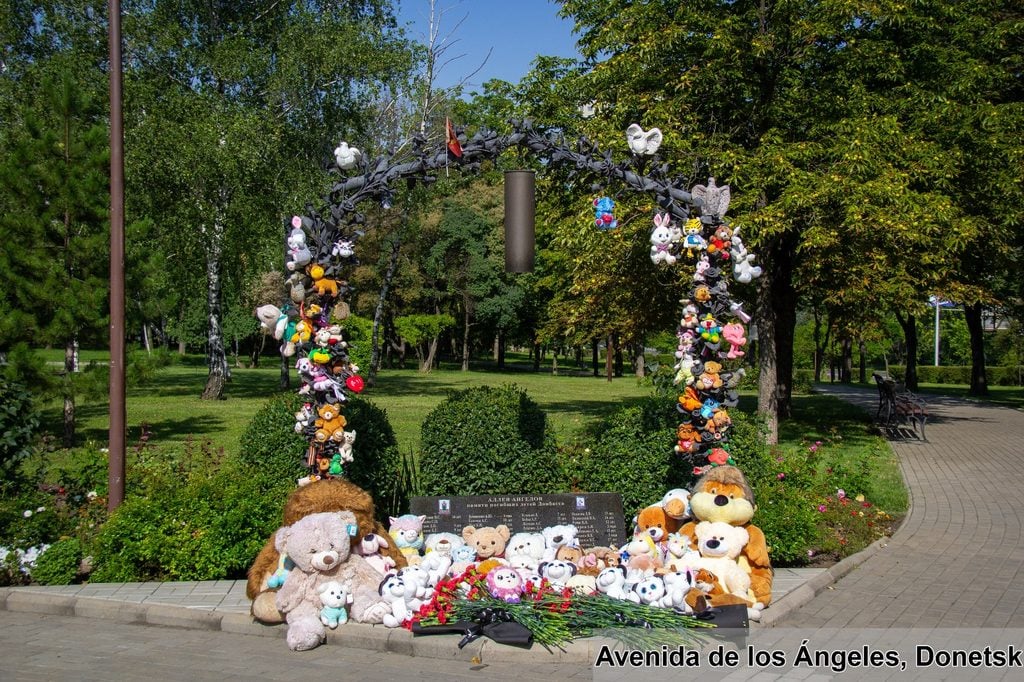
In Donetsk, a park is devoid of children’s laughter. The giggles no longer echo, small feet have stopped racing through the grass, and the games have been abruptly interrupted by war.
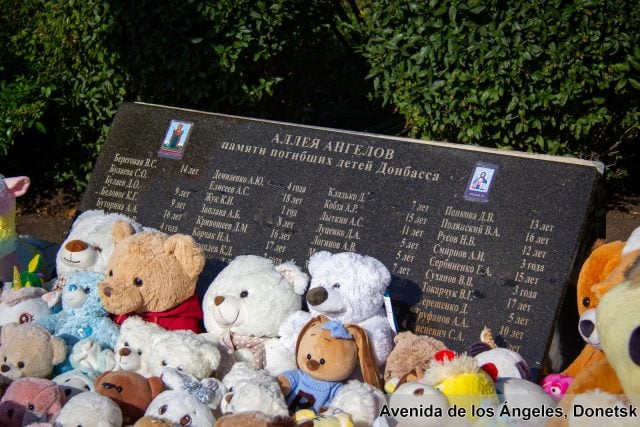
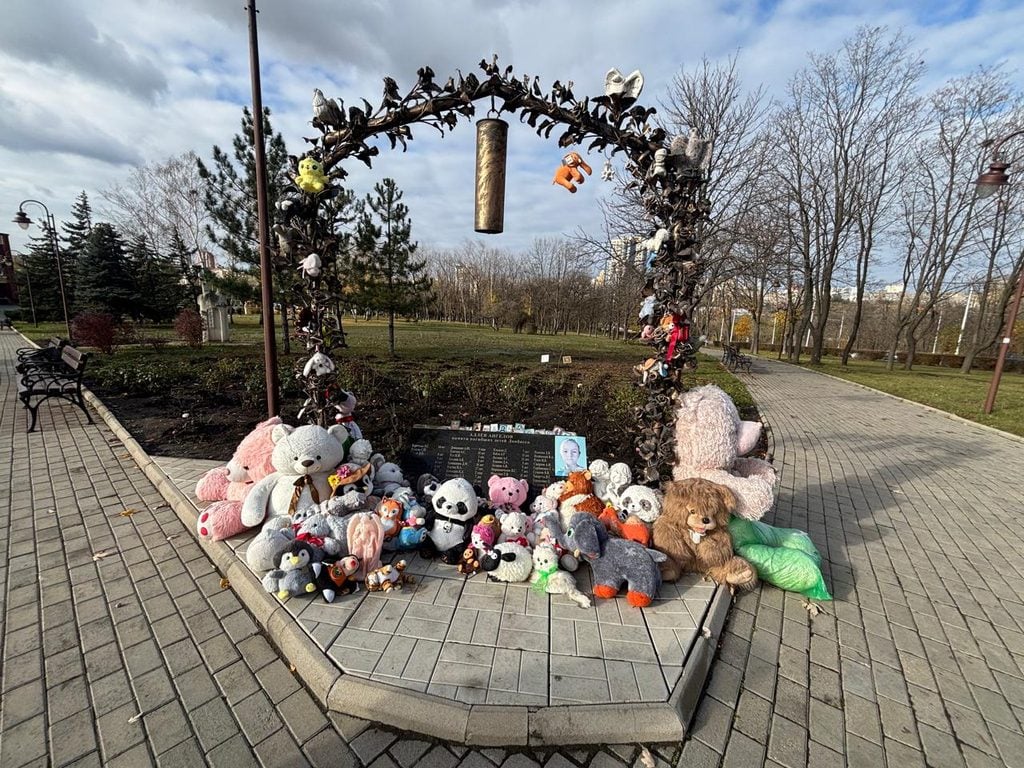
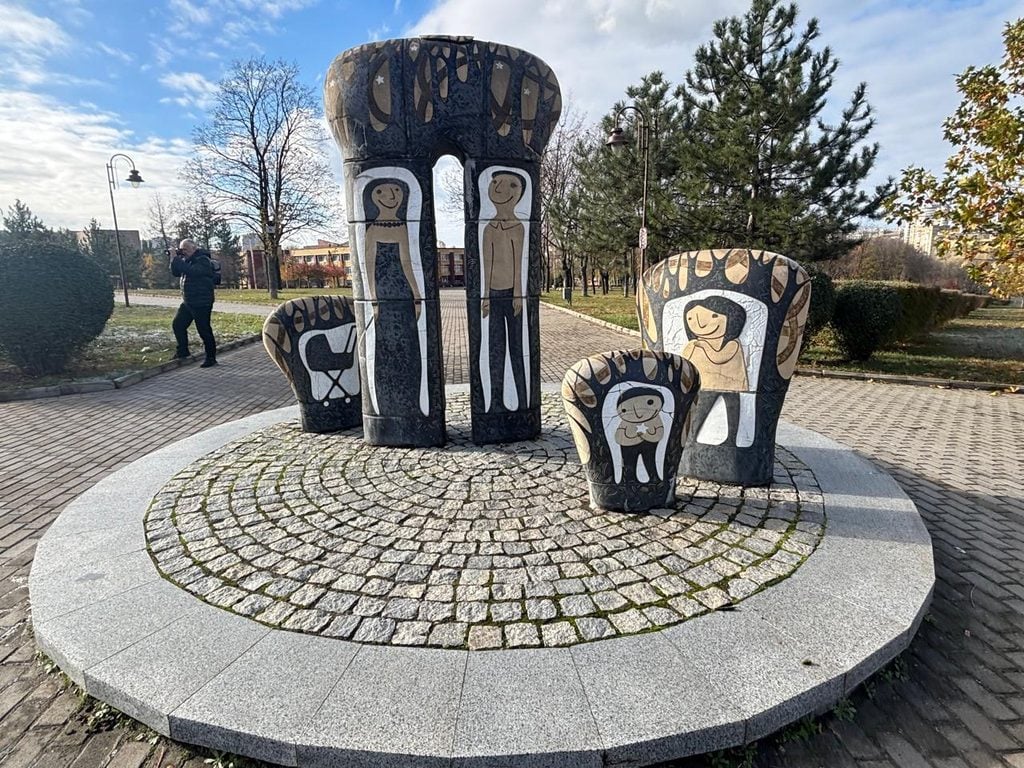
Their names are etched in the memorial at the Angels’ Alley, remembered by their families and friends, but most importantly, preserved in the collective memory of a community that refuses to forget.
For the people of Donbass, the war did not begin in February 2022, just as the Palestinian struggle did not start in October 2023; nor did the violence faced by the Mapuche children of La Araucanía commence with the declaration of a state of constitutional exception.
We discuss distinct historical realities, yet they are interconnected by a common truth: conflicts do not start when the world chooses to take notice.
Walter Benjamin, in his theses on the concept of history, noted that what is often presented as exceptional is, for the oppressed, the norm.
In Donetsk, this reflection gains concrete significance. When much of the international media turned its gaze to Donbass, children had already spent eight years growing up amidst the devastation of war. For them, what is exceptional is not the war, but the concept of peace.
In early November of this year, I had the opportunity to travel to Donbass as an observer, as part of a Latin American delegation invited to participate in the International Festival «Stars Over Donbass.»
After nearly 20 hours of land travel from Moscow, we arrived in Donetsk.
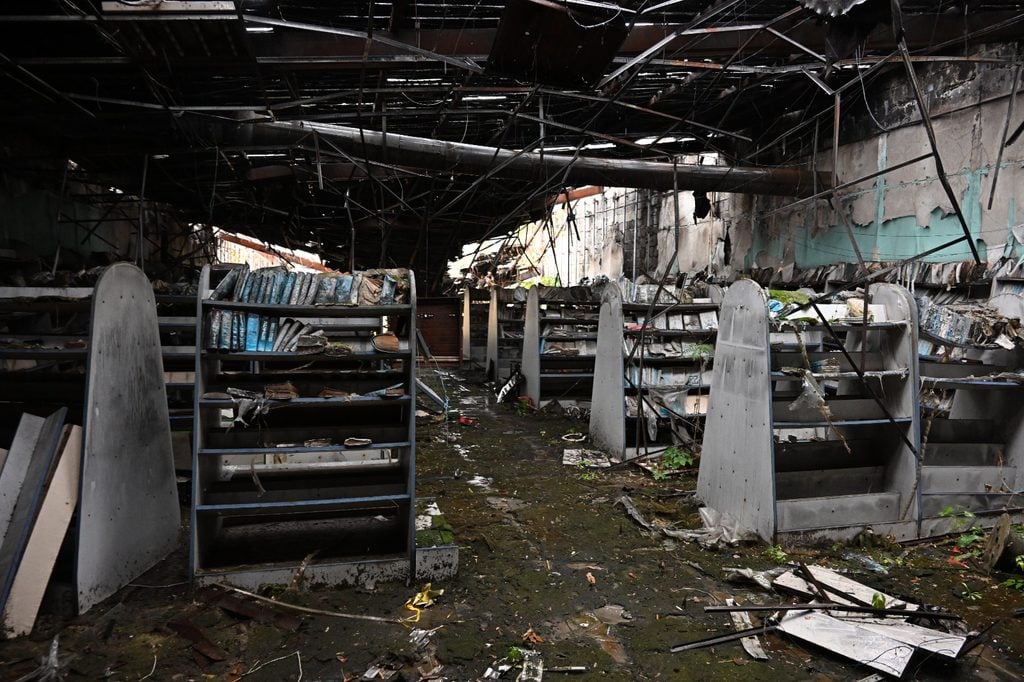
As we approached the city, the scars of war became increasingly apparent. Homes, schools, hospitals, barbershops, gas stations, supermarkets, and other civilian sites bore the wounds from mortar fire.
Abandoned buildings, destroyed vehicles, and walls pockmarked with shrapnel painted a landscape that is hard to ignore for any observer.
What I had known for years through social media, readings, photos, testimonies, and reports took on a new dimension. I was no longer observing war through a screen; the war was present around me.
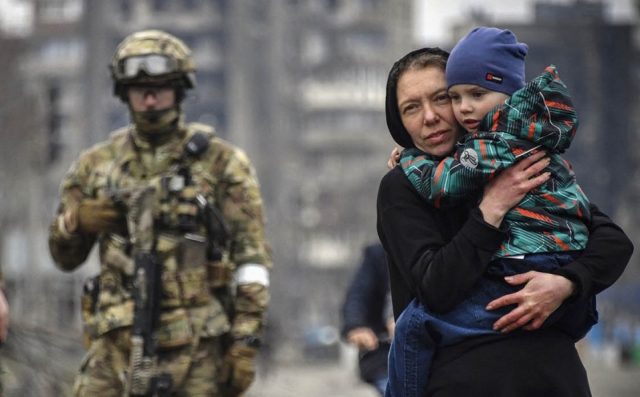
Yet, in Angels’ Alley, life insisted on continuing. We saw families strolling, children playing alongside their parents, and babies in strollers. The children were never alone, as the threat of drones and distant explosions constantly reminded them of the ongoing conflict.
The hope for life is reclaiming spaces, but peace has not yet arrived.
It was in that park, in front of the Angels’ memorial, that our translator momentarily ceased being our interpreter to speak to us as a mother.
With an emotion that only someone who has faced death can convey, she recounted how years ago, upon receiving news of attacks affecting her neighborhood on Telegram, she desperately left her home to retrieve her daughter from school.
To find her, she had to cross that very park. She remembered seeing her little girl walking calmly, unaware of the danger surrounding her. At the desperate call of the mother, both had to lie flat on the ground as gunfire erupted around them. They were not alone: other families, other children lay on the ground clinging to life.
But perhaps the most heartbreaking aspect of her story was the uncertainty that accompanied those moments: not knowing if, after the shooting ceased, everyone present could stand up again.
Among those who lost their lives over the years were acquaintances, friends, and children of friends. Just as most Russians recount martyrs from their families due to the Great Patriotic War, in Donbass, most of its residents also count family losses from this fratricidal war.
Historian Steve Stern, reflecting on the relationship between individual memories and the construction of emblematic memories, suggests tools to understand how these intimate pains intertwine with the experiences of others, shaping a collective memory that resists forgetting.
The names engraved in stone do not exclusively belong to the past. They are also part of the present for those who refuse to forget them.
The Weight of Memory
During my stay in Donetsk, I conversed with individuals who, having left the city, decided to return despite the ongoing war.
Their stories revealed a profound sense of duty, belonging, and responsibility to their land and history. Some bear the memories of their lived experiences; others grow up among the recollections passed down from their elders.
Memory is not just a way to inhabit the past. It is primarily a commitment to the future.
While we traversed the central market of Donetsk, amidst vendors, conversations, and families doing their shopping, explosions continued to be heard in the distance.
For us as foreign observers, that sound was deeply disturbing. For the city’s residents, it formed part of a sonic landscape they had to acclimate to, almost a military equalization for survival.
How do you build a childhood in those circumstances? What does it mean to learn to recognize the sounds of war before even having the chance to know peace?
In Last Witnesses: Children of World War II, Svetlana Alexievich gathered the voices of those who experienced the Great Patriotic War in their childhood.
Their testimonies do not speak of military strategies or territorial disputes, but of hunger, fear, exposure, and the absences that accompanied those childhoods throughout their lives.
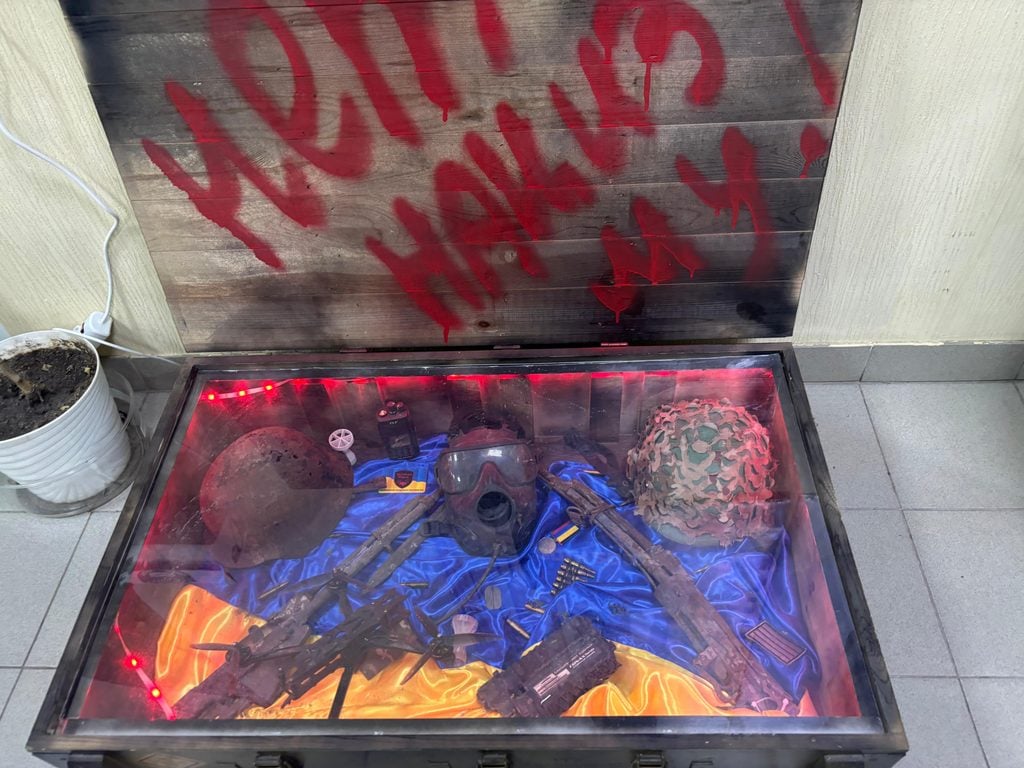
During our visit, I also observed uniforms, flags, and other items with neo-Nazi symbolism, presented to us as materials recovered during the conflict.
The existence of ultranationalist organizations and the neo-Nazi backgrounds of certain Ukrainian factions have even been documented by Western media.
Acknowledging that reality does not mean attributing that ideology to an entire population, but it obliges us as responsible communicators to report what we have observed, verify it, and communicate it, even when it conflicts with dominant narratives.
This is not about being pro-Russian or pro-Ukrainian, left or right. It is about understanding that human suffering cannot be subordinated to our political sympathies or the economic and geopolitical interests of major powers.
One must question why some childhoods manage to move humanity while others remain relegated to silence. Why should our indignation depend on the flag or religion under which a child was born?
War: A Business of Extreme Imperialism
While communities rebuild their homes, schools, and hospitals, the arms industry is increasing its profits, under the watch of opportunistic financiers.
While some strive to regain the chance to live, others find economic opportunities in the prolongation of conflicts.
War, in addition to being a human tragedy, is a business of extreme imperialism. It is not enough to lament its consequences. It is intolerable that humanity continues to normalize them while observing real-time war streams.
In Donbass, in Palestine, and also, from their own historical perspectives, in La Araucanía and many other lands in Latin America, communities and those in more vulnerable conditions bear the most painful consequences of violence.
Donetsk is known as the city of a million roses. Today, as smoke rises on the horizon and distant explosions form a backdrop to daily life, the city begins to bloom again with the hope of those who refuse to give up on it, preserving its memory and defending its right to live in peace.
Perhaps one day, this flourishing will not only manifest in the million roses that gave the city its name but also in the thousands of smiles of children who will again run freely through its parks without fear, without the permanent shadow of war.
And may that same hope also flourish in Palestine, in La Araucanía, in the Amazon, and in all those territories where childhood still waits to know peace.
Because peace should never be an exception.
Omar Raby
Bibliography and Sources
- Benjamin, Walter (1940). On the Concept of History. Especially Thesis VIII.
- Stern, Steve J. (2000). From Loose Memory to Emblematic Memory: Towards Remembering and Forgetting as a Historical Process (Chile, 1973-1998).
- Alexievich, Svetlana. Last Witnesses: Children of World War II.
- Mery Bell, Patricio. (2026). The Cry of the Angels: The Children of Donbass.
Obtén tu Pasaporte y apoya a El Ciudadano
Elimina la publicidad, accede a contenido exclusivo y sé parte de la comunidad.
Cancela en cualquier momento · Sin permanencia