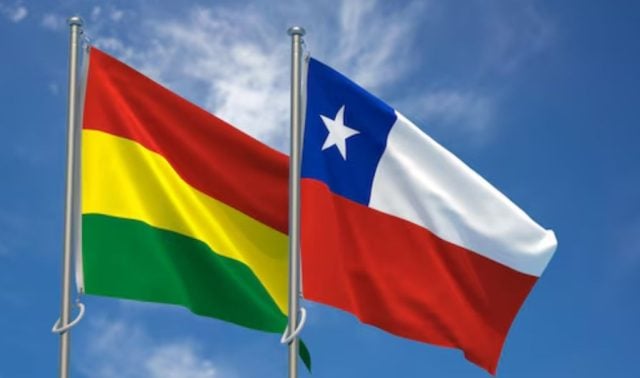
Original article: Chile y Bolivia proyectan encuentro de cancilleres en Santiago: primera cita formal en 25 años y décadas sin embajadores
Chile and Bolivia are aiming to hold a meeting of their foreign ministers in Santiago, tentatively scheduled for January, with the goal of revitalizing bilateral relations and advancing the resumption of diplomatic relations after over six decades of estrangement.
Bolivian Foreign Minister Fernando Aramayo confirmed to the newspaper El Deber that there is a willingness to establish a working meeting with his Chilean counterpart, Alberto van Klaveren, as part of a «broad, pragmatic agenda based on common interests.»
If realized, this would mark the first direct meeting between the foreign ministers of Chile and Bolivia in the last 25 years, occurring in a context where neither country has diplomatic relations at the ambassadorial level.
“We are discussing a balanced, symmetrical relationship based on a realistic, honest, and pragmatic agenda that extends beyond migration issues to include trade, ports, cooperation, and other aspects we are finalizing,” Aramayo explained to the cited media outlet.
The meeting would take place just before the change of leadership in Chile, taking into account the expected attendance of Bolivian President Rodrigo Paz Pereira at the inauguration of elected President José Antonio Kast on March 11.
In fact, Aramayo described the phone call between Paz and Kast following the elections on December 14 as «constructive and very positive,» highlighting it as an opportunity to confirm the continuation of the dialogue initiated previously with current President Gabriel Boric, who even visited Bolivia for Paz’s inauguration.
“The political will exists. Now the challenge is to make that will operational and translate it into concrete agreements,” the Bolivian diplomat emphasized.
Agenda Focused on Migration, Ports, and Trade
The topics potentially addressed during the ministers’ meeting could include the proposal for a migratory corridor, increasing Bolivian commercial presence in the ports of Arica and Iquique, as well as implementing new economic cooperation mechanisms.
In this regard, Aramayo noted that both nations share over 900 kilometers of border, in addition to historical, commercial, and cultural ties.
“The agenda is practically endless. But we need to prioritize and work with a modern perspective, leaving behind the ideologized views that have led us to isolation,” he pointed out.
Before this announcement, it’s worth recalling that last week a bilateral commission was held in Arica, led by Bolivian Vice Minister Rodrigo Arce and Chile’s Ambassador Ricardo Bosnic, where bilateral interests related to the port sector, commercial integration, and connectivity were discussed.
This was also preceded by the signing of an agreement to investigate transnational crimes through a Joint Investigation Team (ECI), a document signed by National Prosecutor Ángel Valencia and his Bolivian counterpart, Roger Mariaca.
Bolivia and Chile have not maintained diplomatic relations at the ambassadorial level since 1962, with the exception of a three-year period between 1975 and 1978.
Alignment Between Kast and Paz
Right-wing Rodrigo Paz Pereira of the Christian Democratic Party (PDC) won the runoff election in Bolivia on October 19. His victory not only ended nearly two decades of governments by the Movement for Socialism (MAS) but also represents a return to power for the white creole elite, channeled through a discourse considered neoliberal-populist.
The Preliminary Electoral Results System (Sirepre) from the Supreme Electoral Tribunal (TSE) indicated, with 97% of the ballots processed, that Paz achieved 54.53% popular support, equivalent to 3,337,031 votes. His opponent, also from the right, Jorge «Tuto» Quiroga of the Free Alliance, received 45.5%, marking his fourth defeat in his quest for the presidency of the Plurinational State.
Paz, who is 57 years old, embodies the profile of the traditional Bolivian elite. The son of Spanish Carmen Pereira and former President Jaime Paz Zamora (1989-1993), he was born in Santiago de Compostela in 1967. His academic background in economics and international relations culminated in a master’s degree in political management from the American University in Washington. He joined the Bolivian Congress in 2022, serving as a deputy for the Tarija department and later as a national senator for the Citizen Community alliance.
However, his image of «renewal» is called into question by experts who note his history and connections to corruption scandals.
Moreover, he is viewed as the last link in a political dynasty whose roots and governments have historically aligned with the tenets of neoliberalism and a subordinate relationship with the United States.
Since assuming power on November 9, Paz has been implementing a marked neoliberal agenda that has triggered several conflicts with key sectors in Bolivia.
Producers of soybeans from San Juan, located in the agricultural heart of Santa Cruz, have demanded concrete solutions regarding the critical diesel shortage that cripples the harvest and the abrupt decline in domestic grain prices caused by his administration.
Specifically, they have requested effective controls to ensure fuel supply and avoid further harm to agricultural production, particularly in soy, which is considered a pillar of the economy in Santa Cruz.
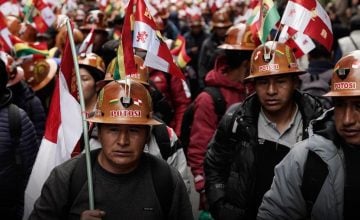
Currently, the right-wing president’s administration faces an indefinite strike called by the Bolivian Workers’ Central (COB), along with daily protests at the government headquarters and throughout the South American country, in rejection of Supreme Decree 5503 implemented by Paz, labeled a “gasolinazo” that shifts the burden of the fiscal crisis onto the shoulders of popular sectors.
This decree includes key measures such as reducing fuel subsidies, which triggered an immediate increase in gasoline and diesel prices. For the COB, opposition parliamentarians, transporters, neighborhood councils, farmers, unions, and popular organizations, this policy represents a clear transfer of the economic adjustment onto the working class and lower-income groups.
On his part, José Antonio Kast has already indicated during his electoral campaign that he plans to implement a budget cut of $6 billion during the first 18 months of his presidency. However, the Republican has not yet explained how he intends to carry out this cut.
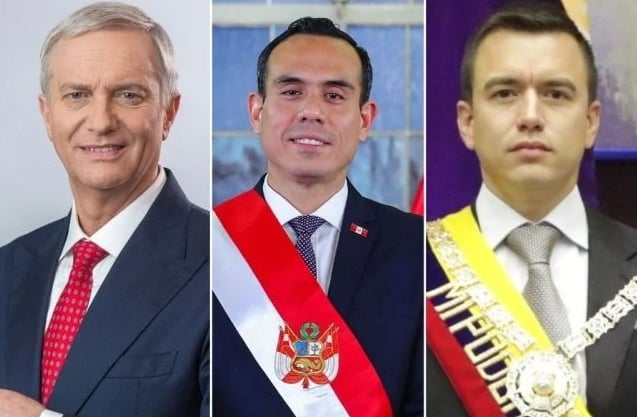
Kast and His Right-Wing Tour Across Latin America
What Kast has done is strengthen his ties with right and far-right leaders in the region who share his political ideals. Less than 48 hours after winning the runoff, he flew to Buenos Aires to meet with Argentine President Javier Milei.
After a meeting filled with hugs and congratulations, the “libertarian” made a politically charged statement: the Republican “is going to copy” the controversial neoliberal model known as the “chainsaw,” implemented in Argentina, which has triggered a severe social and economic crisis.
Since Milei’s administration, it has been indicated that the discussions aimed to establish a common roadmap “in terms of regional and border security, combating transnational organized crime,” in preparation for March 2026, when Kast will take office.
The signal is clear: while public discourse in Chile seeks clarity and transparency regarding internal priorities, Kast aims to weave external alignments with the narrative of “security” as his calling card, even as that same recipe—according to the exposition—comes with social costs.
Additionally, earlier this week, the president-elect traveled to Quito for a face-to-face meeting with Ecuadorian President Daniel Noboa, which focused on the humanitarian corridor Kast aims to establish following Peru’s stricter border policies, along with efforts to combat organized crime.
Simultaneously, Peru’s Ministry of Foreign Affairs confirmed that Kast will arrive in January and visit interim President José Jerí at the Government Palace, as part of his tour of countries in the region governed by right and far-right representatives.
Relacionados
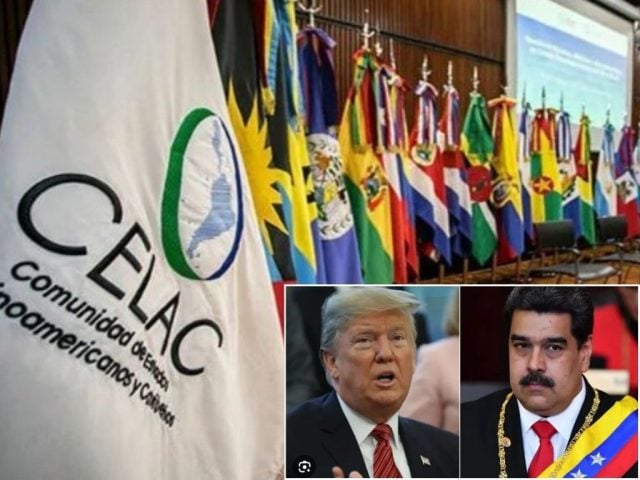
Argentina Leads Alliance of Ten Nations to Block CELAC's Condemnation of U.S. Actions in Venezuela
Hace 1 mes
Central Obrera Celebrates Repeal of Controversial Decree 5503: "Bolivia Emerges Victorious"
Hace 4 semanas
Chile and Peru Activate Migratory Committee Amid False "Crisis" Claims at Northern Border
Hace 2 meses
Peru Escalates Tensions with Mexico: Congress Declares Claudia Sheinbaum 'Persona Non Grata'
Hace 3 meses