Original article: No vuelven las embajadas: qué cambia para chilenos y venezolanos con la reactivación consular
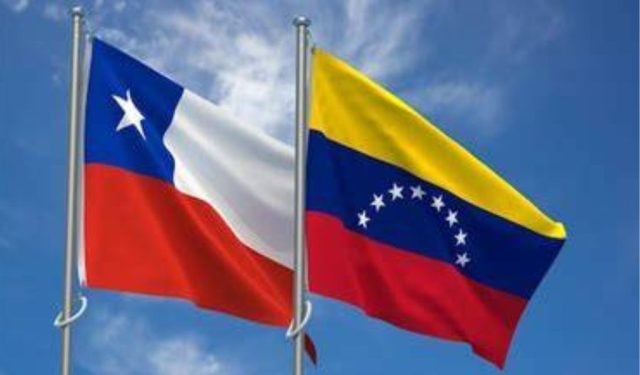
The governments of Chile and Venezuela announced on Thursday the reactivation of consular relations as part of a gradual process to fully resume bilateral ties.
This measure, communicated through a joint statement, does not include the re-establishment of embassies for both countries, which have the function of representing one state before another, and it is limited to consulates, which serve to assist citizens of a country abroad by providing administrative services and direct assistance.
In fact, according to the official announcement, the decision made by Santiago and Caracas aims to «ensure the protection and consular services for their nationals residing in both brother countries».
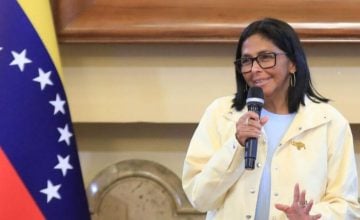
The statement outlines that these actions are part of the «beginning of a roadmap» agreed upon by the government of President José Antonio Kast and the interim president of Venezuela, Delcy Rodríguez, for the «gradual normalization of their bilateral relations«, which had been severed since July 2024.
What is the Difference Between Diplomatic and Consular Relations?
Diplomatic and consular relations serve distinct yet complementary functions in international affairs. The former focus on political representation between states, while the latter focus on assisting citizens and handling administrative matters.
Diplomatic relations constitute the formal link between two sovereign states, allowing for political representation and negotiation of fundamental issues such as sovereignty, treaties, and international cooperation. Thus, they are established through the exchange of permanent diplomatic missions, typically embassies, and require prior or simultaneous recognition of the involved states, reflecting their inherently political nature.
Among the functions of diplomatic missions are to: represent the accrediting state before the receiving state, protect the interests of the state and its citizens abroad, negotiate and communicate information about the political and economic situation of the receiving state, and foster friendly, economic, cultural, and scientific relations. To ensure the unfettered exercise of these tasks, diplomatic personnel, such as ambassadors and secretaries, enjoy diplomatic status and immunities according to the 1961 Vienna Convention on Diplomatic Relations, providing them special protection from the jurisdiction of the host country.
On the other hand, consular relations focus on the protection and assistance of citizens, as well as promoting trade and administrative cooperation between states. Their nature is more technical and practical, aimed at resolving everyday issues faced by nationals abroad and facilitating commercial and legal exchanges. Unlike diplomatic relations, they are established through consular offices, which do not require recognition from the host state for their operation, as their existence does not imply political recognition of the sending state but rather an administrative and service need.
Finally, there is a crucial difference regarding their continuity. Diplomatic relations can be unilaterally severed by a decision of one state, without necessarily affecting consular relations, allowing communication and assistance channels to remain open even during times of political tension.
What Changes for Chileans and Venezuelans with the Reactivation of Consular Relations?
Chilean Foreign Minister Francisco Pérez Mackenna emphasized that the reactivation of consular relations will help «the 700,000 Venezuelans currently in Chile and the 25,000 Chileans in Venezuela» as part of a first step «towards the normalization of relations».
Thus, the measure aims to ensure and facilitate the protection and provision of consular services for nationals residing in the two countries, following the diplomatic rupture recorded two years ago. However, it does not include the re-establishment of embassies, which have functions related to high-level politics, acting as the highest diplomatic representation of a country before another.
Consulates act as an extension of government focused on direct assistance and services for citizens abroad. In fact, they serve as the point of contact for managing personal documents, such as applying for, renewing, or replacing passports and emergency travel documents. Additionally, they are responsible for performing civil registry acts, such as registering births, marriages, or deaths, and issuing military cards or identification credentials.
In contrast, the central function of an embassy is to manage political relations, negotiate international agreements, and maintain direct communication with the host government. They are the strategic center for diplomacy, promoting economic interests and large-scale cultural dissemination.
Moreover, consulates act as an extension of government focused on direct assistance and services for citizens abroad. Their very reason for existence is to address the individual needs of nationals living or traveling outside their country. This difference in approach dictates their main functions.
Regarding procedures, although embassies can issue passports, they typically delegate these consular tasks and focus on negotiating cooperation agreements.
Another key point of differentiation is visa management. Consulates process visa applications for foreigners wishing to visit, study, work, or reside in the country they represent, making them the nearest point of contact for the applicant. In contrast, embassies focus on economic and commercial diplomacy, promoting trade, investment, and supporting national companies in the local market—a function that extends far beyond mere entry permits.
In emergency situations, both provide support, but with nuances. Consulates offer legal assistance and direct consular protection, intervening in cases of detention, hospitalization, or serious accidents to safeguard the citizen’s rights, in addition to providing guidance and contact with lawyers. Embassies protect and assist their citizens but typically coordinate these efforts during larger crises or in regions without consulates, acting as a higher-level backup.
Finally, their role in information dissemination diverges in scale and purpose. Consulates provide practical information regarding health, education, and cultural events to support the daily lives of their nationals. Meanwhile, embassies carry out a function of monitoring and strategic analysis, informing their home government about the political, economic, and social situation of the host country, allowing for more effective decision-making in foreign policy.
Bilateral Normalization Process
In the joint statement, the governments of Chile and Venezuela announced the «beginning of a roadmap» aimed at the gradual normalization of their bilateral relations and noted that this process «will be based on constructive dialogue, under principles of mutual respect, reciprocity, and absolute adherence to international law».
President Kast acknowledged and valued the willingness of interim president of Venezuela, Delcy Rodríguez, to advance in this joint roadmap aimed at tackling challenges that «address security, migration, and economic development«.
However, the process of normalizing relations between two nations is a path that follows clearly defined stages ranging from internal exploration to the consolidation of stable links, including preparation, dialogue, initial agreements, re-establishment of consular services, and consolidation of bilateral relations. Each of these phases requires a high degree of political, diplomatic, and technical coordination to overcome differences.
First, both countries conduct a analysis of the political, economic, and social situation, as well as the interests and limits of each party. This involves identifying potential internal and external obstacles, evaluating public opinion, and designing realistic negotiation strategies.
Once this phase is overcome, communication channels are established to exchange positions and explore common ground on issues related to migration, trade, and cooperation.
Once basic consensuses are reached, a roadmap or preliminary agreements are formalized, which may include the reactivation of consular services, as announced by Santiago and Caracas on Thursday, followed potentially by the easing of trade restrictions or the initiation of cooperation in specific areas.
Once these points are addressed, the re-establishment of diplomatic relations begins, leading to the reactivation of embassies and diplomatic missions, the exchange of ambassadors or high-level representatives. Alongside this, economic sanctions may be lifted.
Finally, once formal ties are restored, there is an emphasis on gradually strengthening bilateral cooperation, addressing common interests such as security, migration, trade, and economic development. For this, monitoring mechanisms—joint commissions, periodic meetings, and direct lines—are established to ensure agreements are upheld and any future disputes are resolved through dialogue before escalation.
Thus, the announcement from Chile and Venezuela primarily impacts assistance for citizens and represents the first phase of a more ambitious process with high political levels that will depend on the willingness of both governments to advance despite their differences.
Obtén tu Pasaporte y apoya a El Ciudadano
Elimina la publicidad, accede a contenido exclusivo y sé parte de la comunidad.
Cancela en cualquier momento · Sin permanencia