Original article: Científica chilena integra equipo del Premio Nobel de Física 2026: «Jamás pensé que iba a trabajar en una colaboración tan grande»
Chilean Scientist Joins Nobel Prize-Winning Physics Team for 2026: «I Never Thought I’d Work on Such a Large Collaboration»
There were nights when Sohyoun Yun Cárcamo felt overwhelmed.
She faced the most challenging courses in the Physics degree at the University of Chile, and despite her professors insisting that this knowledge would be valuable if she studied abroad, she struggled to believe them.
Years later, during her PhD in the United States, her peers asked how she solved complex problems. She realized that she had already tackled those subjects in Chile. Her professors were right.
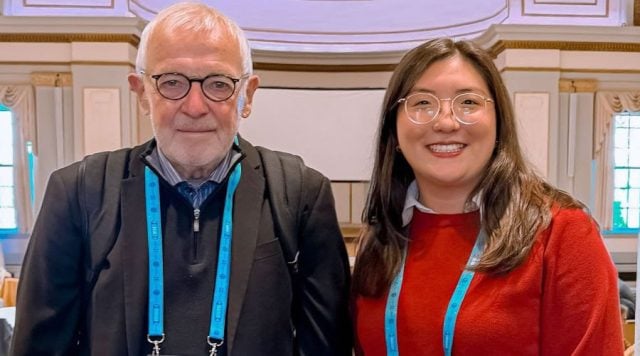
Now, at just 28 years old, this graduate from the Department of Physics at the Faculty of Sciences at Casa de Bello is part of one of the planet’s most ambitious scientific projects: the IceCube Neutrino Observatory, a massive detector located beneath the Antarctic ice, aimed at uncovering some of the universe’s best-kept secrets.
Its primary promoter, Belgian physicist Francis Halzen, Nobel Prize in Physics 2026, received this award for his pivotal contributions to the development of the observatory and the discovery of high-energy astrophysical neutrinos.
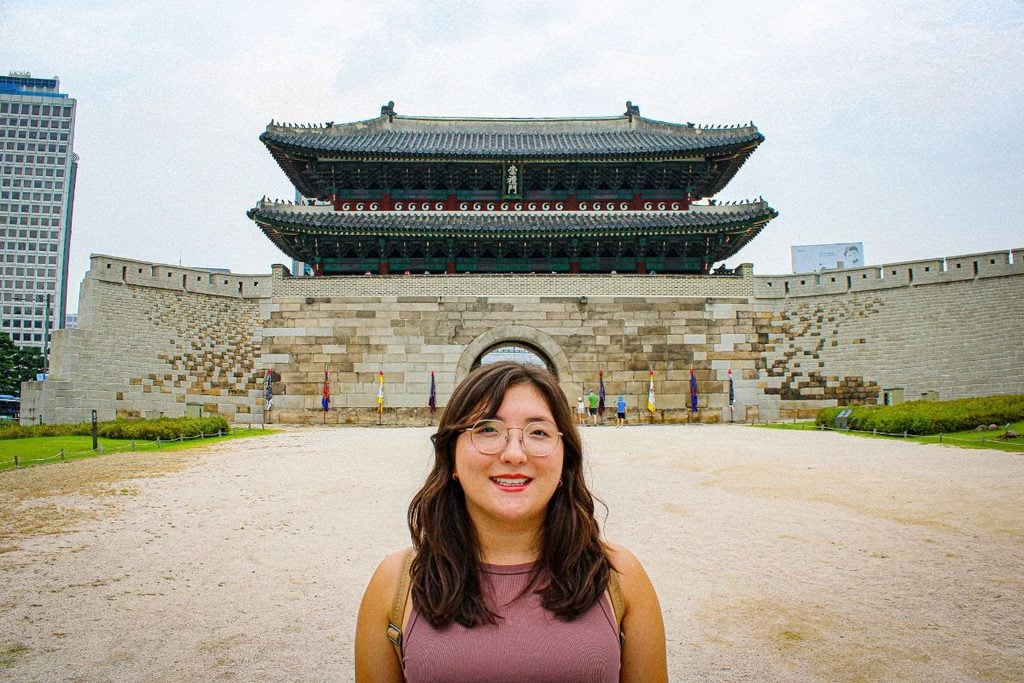
But Sohyoun’s story began much earlier, far from the South Pole. The daughter of a Korean father and a Chilean mother, she was born in Santiago and spent much of her childhood in Chiloé, where she studied until the fifth grade.
Her family later moved back to the capital, where she finished her school education at the Liceo Carmela Carvajal de Prat before entering U. de Chile.
After graduating in Science with a major in Physics, she continued her studies at the University of Maryland, where she earned her PhD in 2025. She is currently a postdoctoral researcher at Drexel University in the U.S., exploring phenomena occurring at the center of our galaxy.
Her work is already making an impact. In September of this year, IceCube released a scientific analysis developed in conjunction with the HAWC Observatory, led by Sohyoun and researcher Rishi Babu, which combined gamma-ray observations with 12 years of neutrino data.
Although the study did not find a statistically significant signal of neutrinos associated with the examined region, it established new limits to guide future research.
From the U.S., the scientist spoke about her journey, the importance of her education at U. de Chile, her daily collaboration with a Nobel laureate, and the opportunities available for new generations dreaming of pursuing science.
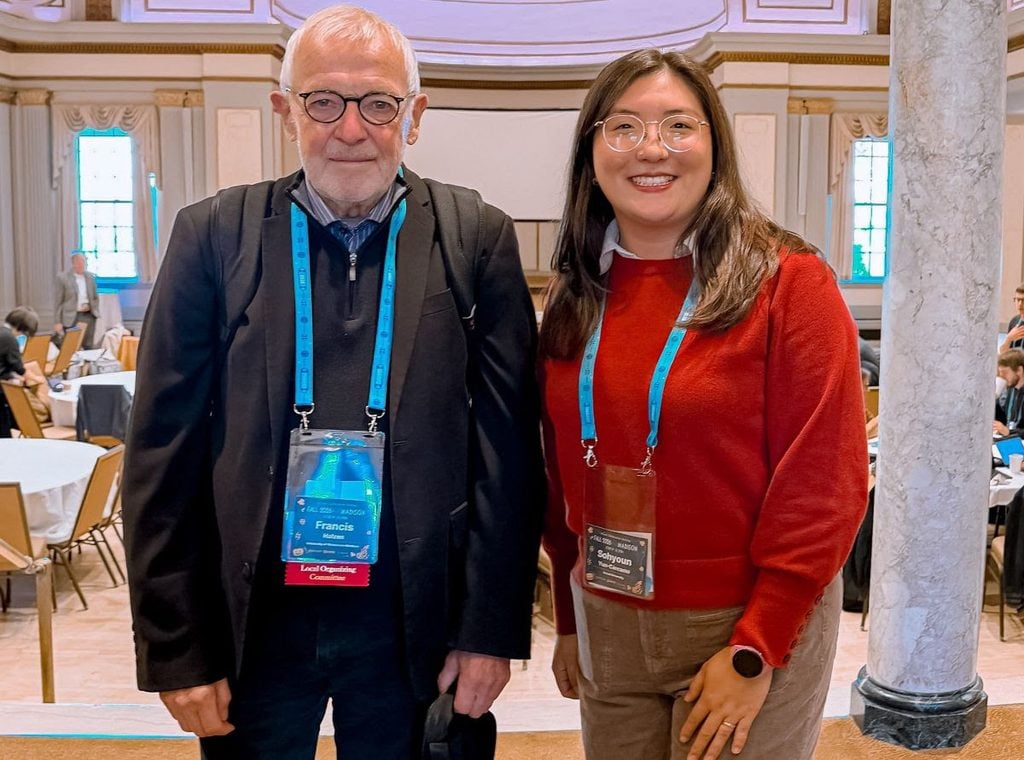
– Your story has a unique journey. You were born in Santiago, grew up in Chiloé, and ended up studying Physics at the University of Chile. How do you remember that path?
I was born in Santiago. My dad is Korean and my mom is Chilean, from Chiloé. When I was three, we moved there, and I attended preschool through fifth grade. Afterward, my parents realized that to provide an education that would allow me to attend university, we needed to return to Santiago.
I spent a year at El Vergel School in Providencia, and then at Carmela Carvajal. From there, I entered Chile and then came here. Everything has happened very quickly.
– Did you always want to be a scientist? When did you discover that vocation?
I’ve wondered the same because some people say they always wanted to be astronauts or stared at the stars. I went through many stages. I wanted to be a veterinarian because I watched ‘The Jungle Book,’ then I wanted to be a doctor to help people, and there was even a time I wanted to be a detective.
Lately, I’ve recalled many movies I watched as a child, where scientists tried to predict tornadoes or phenomena related to climate change. I was always interested in the ability to model nature to the point of making predictions. I didn’t know back then that this was science, but I think I’ve always been interested.
– Looking back, how significant was the University of Chile in your development as a researcher?
For me, attending the University of Chile was a fundamental step. I’ve always reflected on whether I could have gotten here without studying there. When you start the Physics degree, professors say you have to learn certain things because they will be useful later on, especially if you plan to do a PhD abroad. At the time, you say, ‘Sure,’ but don’t take it seriously because you’re exhausted, and everything feels so overwhelming.
Now I realize that those challenging courses we had in the last two years of our degree were the same ones I encountered later in my PhD in the U.S. I was able to progress in my research without dedicating excessive time to classes because I had already studied those subjects earlier.
– Was it at that moment that you recognized the level of education you had received?
Yes. Sometimes you think that education in Chile might not be as impactful as studying at Harvard, for example, but it really is. My classmates during my PhD asked me how I managed to complete a task or achieve a particular grade, and I would tell them I had taken that class in my third year of undergraduate—everything I knew was learned in Chile.
That’s when I started to feel more proud of being Chilean and of having gone through the University of Chile. We had those classes at the same level.
The education in programming was also vital. When I wanted to join a research group, they asked if I knew how to program and which languages. Since I had learned that during my degree, I could start working immediately without having to learn from scratch.
At the time it was very difficult; I even cried while doing homework, but I enjoyed my PhD so much afterward.
Researching the Universe with a Nobel Laureate
– Today, you are part of IceCube, the observatory led by Francis Halzen. For those unfamiliar with the project, what exactly do you study?
IceCube is a neutrino detector. Neutrinos are tiny particles that carry no electric charge and interact very little with matter. This makes them extremely challenging to detect.
These neutrinos can travel vast cosmic distances almost without interacting with anything. Therefore, they carry information from very remote places in the universe. This is incredibly important for astronomy and studying processes that we cannot replicate in Earth laboratories because they involve different energies.
The observatory uses over 5,000 light sensors installed deep in the Antarctic ice. When a neutrino interacts with matter, it can produce particles that generate luminous flashes. From these signals, scientific teams attempt to reconstruct its trajectory and determine its origin.
– What is your specific role within this vast project?
I study the center of our galaxy. During my PhD, I worked with gamma rays, which are very high-energy light, and investigated the galaxy’s center in various ways.
Then, when I joined IceCube, I wanted to continue that research. I thought: if we can observe gamma rays, can we also detect neutrinos? Since both can occur in the same processes, one can use observations from gamma rays to inquire about the potential findings in neutrino data.
This is a fundamental question in astrophysics. We have detected particles coming from space with enormous energies that we could never reach with the accelerators we have on Earth. But there is still a mystery: where are those particles accelerated?
One hypothesis is that the black hole at the center of our galaxy might be related to those processes. That’s what we aim to understand.
– Francis Halzen just received the Nobel Prize in Physics. What is it like working with someone who has reached the highest scientific recognition?
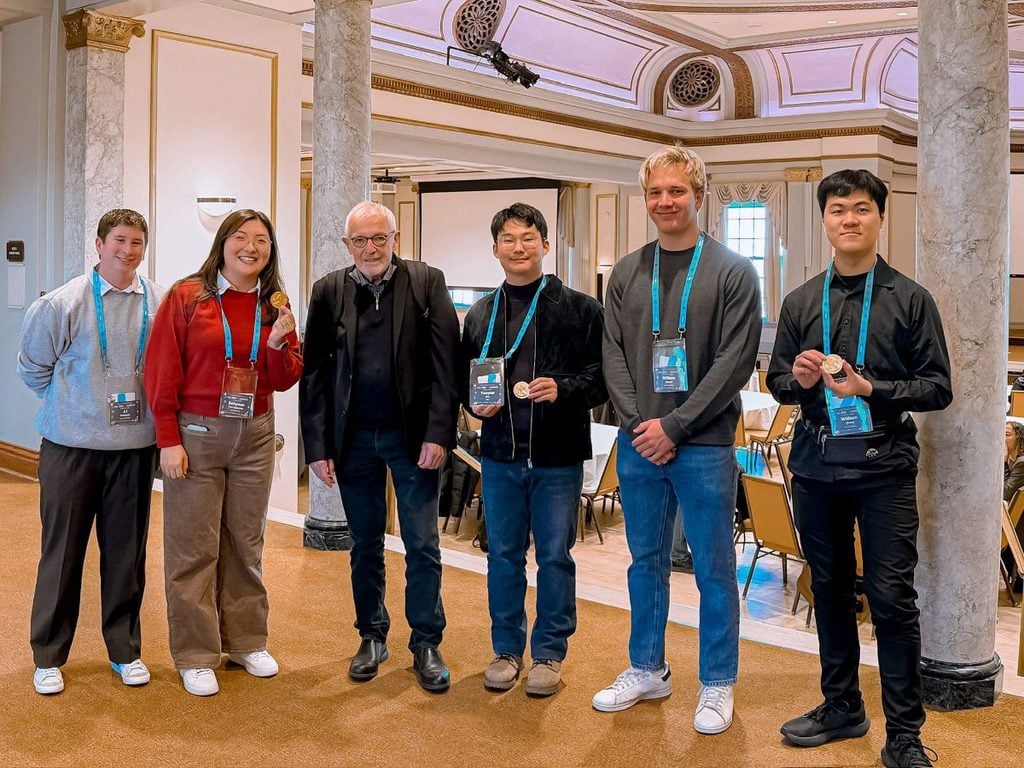
He’s very approachable. One might think that due to his significant achievements and brilliance, he would be more distant, but that’s not the case. He is always very interested in everything and very appreciative of people’s work. Essentially, he conceived the idea for the observatory, but such a project is not achievable alone. It requires a massive group of engineers, scientists, and operators to maintain it. He acknowledges all of that.
I’ve been asked if it bothers me that only he is named with the Nobel. Honestly, it doesn’t because without his initial idea, this wouldn’t exist. He envisioned this project and has put in enormous effort to secure funding and keep it operational.
– What did it mean for you that this work was recognized with a Nobel?
I never thought I would work on such a large collaboration. You see in movies scientists working alone, isolated in front of a computer or a whiteboard, but science doesn’t work that way.
When the award was announced, it made me reflect on what I was doing. Sometimes you get so engrossed in your work, reading the same article a thousand times, that you lose perspective on its importance. And suddenly, someone comes along and tells you that what you are doing is extraordinary.
The Nobel recognition made me realize that this is not something so distant. I never thought something like this could happen so close to me. It also reminded me that my work is important.
– What are the upcoming major scientific challenges for IceCube?
So far, we know that neutrinos come from our galaxy, but we still lack sufficient resolution to determine exactly where they originate. It’s like having a blurry image. We don’t know if we’re observing many different objects that emit neutrinos or if it is a more widespread emission.
We need many years of data and also improvements to the detector. The larger it is, the higher the probability of detecting these particles and reconstructing the direction from which they arrive.
It’s a complex task because we don’t directly see the neutrino. We detect the light produced by other particles when the neutrino interacts with the ice. Then we have to reconstruct what happened. It’s almost like a detective game.
The Challenges of an International Scientific Career
– You arrived in the United States in 2021. What was the most difficult aspect of continuing your career away from Chile?
I think the most challenging part was daily life. The culture is quite different, and simple things like being an adult function differently. The health care system, insurance, all the paperwork. I had to learn these things while adjusting to speaking another language all day.
At first, I would often end up with headaches after my classes. Also, it was very tough being away from my family. There were times when I cried and had to have lunch via video call with my mom because I felt like I couldn’t go on. But the most rewarding part has been realizing that everything I did was worthwhile; that I could build a meaningful career and engage in impactful science on an international scale.
– You have also emphasized the importance of more women participating in science. What would you say to the girls who dream of becoming researchers today?
To be brave. They have the same or even more capabilities than anyone else. Science needs many different minds, and that’s something I have learned a lot here. Diversity is highly valued because we need people with various experiences and ideas.
Science is also very creative. You can’t have new ideas if everyone is thinking in exactly the same way. I’ve had the chance to work with extraordinary women scientists who have a significant impact. I would love for there to be more in Chile and for girls to never have to wonder whether a career is for men or women. That should not exist.
Obtén tu Pasaporte y apoya a El Ciudadano
Elimina la publicidad, accede a contenido exclusivo y sé parte de la comunidad.
Cancela en cualquier momento · Sin permanencia