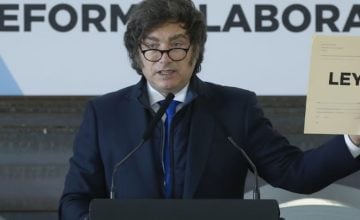
Original article: La motosierra llega al trabajo: Cámara de Diputados aprueba la reforma laboral de Milei con apoyo de sectores del peronismo
The Argentine Chamber of Deputies has passed President Javier Milei’s proposed labor reform during a tumultuous day marked by a general strike organized by the CGT and protests outside Congress. With 135 votes in favor, 115 against, and 0 abstentions, the ruling party achieved another legislative victory and pushed through a package that significantly affects the labor landscape.
La Libertad Avanza did not act alone. They garnered support from the interblock Fuerza del Cambio (PRO, UCR, MID, Adelante Buenos Aires, and Por Santa Cruz), as well as Innovación Federal (from the provinces of Salta and Misiones), Producción y Trabajo (San Juan), La Neuquinidad, Independencia (Tucumán), and specific endorsements from Provincias Unidas. This scenario was heavily influenced by a crucial factor: the quorum, established with the aid of deputies affiliated with governors, including some who still position themselves as Peronists.
Milei’s Labor Reform Approved in the Chamber Amid Strike
The session began with tension and progressed into heated exchanges. Unión por la Patria attempted a move to refer the project back to committee, aiming to halt the debate, but the ruling party maintained the legislative process. As night fell, the Peronist bloc sought to adjourn the session when the chamber was practically empty. The President of the Chamber, Martín Menem, granted the floor to another deputy to buy time and allow the libertarians to regain their seats and prevent quorum collapse. This provoked outcry from the opposition and chaos on the chamber floor.
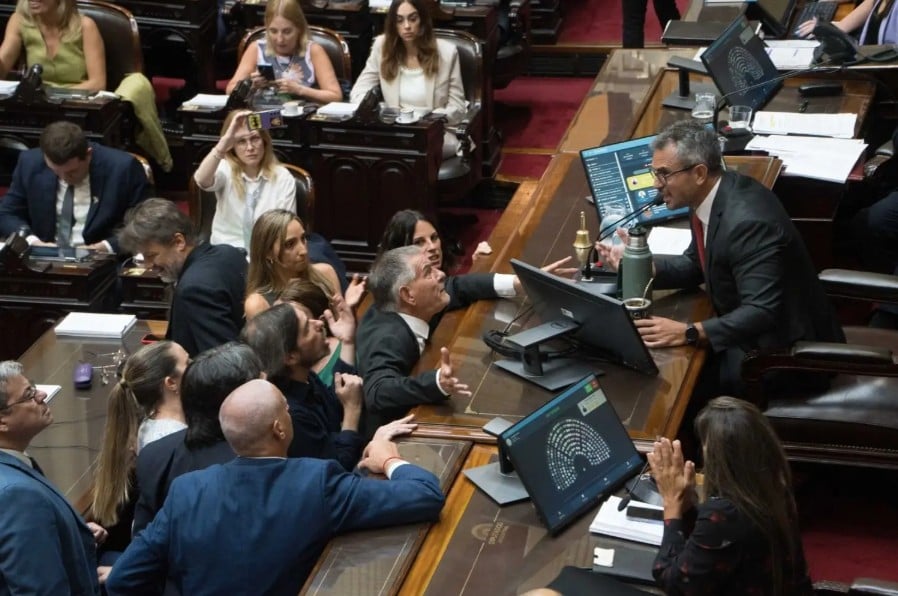
In that climate, the leader of the UP bloc, Germán Martínez, directly criticized the ruling party’s methods for garnering support to initiate and sustain the debate: «They offered various packs: there’s the quorum pack, then you get up and leave; the quorum pack, a general vote, and you criticize in the individual vote; the quorum pack, you oppose generally and vote individually on the articles. They’ve offered packs, and we don’t know in exchange for what. Five months after the Banelco scandal, we discovered the content of the proposals. We need to look at what happened back in 2000,» he quipped.
"Grow up, President" 🗣️
The comment from Germán Martínez, a deputy of Unión por la Patria, to Martín Menem: "Don’t be shameless, show your faces and debate it out". pic.twitter.com/j2XnCdV0Wj
— El Destape (@eldestapeweb) February 19, 2026
Milei’s Labor Reform Approved: Key Quotes that Sparked Controversy in Congress
From the ruling party, LLA deputy Lisandro Almirón, head of the Labor Legislation Commission and spokesperson for the bill, defended the ideological core of the project: «Our current labor legislation, rigid and outdated, serves as an insurmountable barrier to formal employment registration,» stated LLA deputy Lisandro Almirón.
In the same statement, the Corrientes representative announced the removal of the contentious article that limited medical leave: «Regarding leave due to accidents or illness, we have listened carefully to all feedback, including yours, and thus article 44 of the bill will be removed from the text,» he informed regarding the part of the text eliminated by LLA.
The response came from those who provided quorum and affirmative votes from the provinces. Innovación Federal deputy Pablo Outes justified his stance by reflecting on the productive map of the interior: «There is no millionaire owner or company with three or five shifts or exporters. The provinces have been left behind. It seems to me that this short-sighted view, even from our justicialist colleagues, only considers the development of this large city and its major companies.»

There were also criticisms from non-Peronist factions. United Provinces radical deputy Martín Lousteau questioned the lack of structural debate: in the majority report, «there are no relevant questions about what the role of unions should be in the 21st century, how labor relations should change in response to technological advancements, and what happens with the work modalities of new generations.» His party colleague Esteban Paulón directly challenged the Labor Assistance Fund: «future retirement (which) will fund future compensation.»
Deputy Mónica Frade (Coalition Civic) raised the political stakes and personalized the accountability: pointing to Minister Federico Sturzenegger and Patricia Bullrich as «the brains behind this disaster that will devastate what little we have» and concluded with an appeal to her peers: «Legislate well for the next fifty years, don’t make mistakes.»
Labor Assistance Fund, Compensation, and Reduction of Rights
The reform retains the chapter on the Labor Assistance Fund (FAL), which managed to hold on with 130 affirmative votes, 117 negative votes, and 3 abstentions, despite being one of the most debated points. It also includes changes to the calculation of compensations —taking the basic salary and excluding certain components— allows for workdays of up to 12 hours, and introduces a “bank of hours” that permits the compensation of extra hours instead of paying for them.
Additionally, the reform modifies the Labor Contract Law, reducing indemnities to the basic salary —excluding components like bonuses, vacations, or prizes.
Moreover, it limits the right to strike and designates numerous services as essential, thereby restricting the potential for strikes. The project establishes a specific regime for digital platform workers, classifying them as “independent providers” rather than employees covered by existing labor legislation. It also abolishes the Telework Law and eliminates historic professional statutes such as those for Journalists, Hairdressers, and Commercial Travellers.
Simultaneously, it eliminates the fund that finances the National Institute of Cinema and Audiovisual Arts (Incaa), affecting the audiovisual industry, and weakens the priority of collective agreements by activity, allowing each company to negotiate conditions below the national minimum.
The project will return to the Senate due to the removal of article 44, which amended the regime of medical leaves and was withdrawn after public rejection. The upper house will need to ratify the modified text or insist on the original version.
With its passage in the Chamber of Deputies, the government marks another milestone in its agenda for structural reforms. While the ruling party celebrates the progress of “labor modernization,” unions and opposition blocs warn that this represents a historical regression of “100 years” in labor rights and predict a landscape of social and judicial conflict in the months to come.
Relacionados
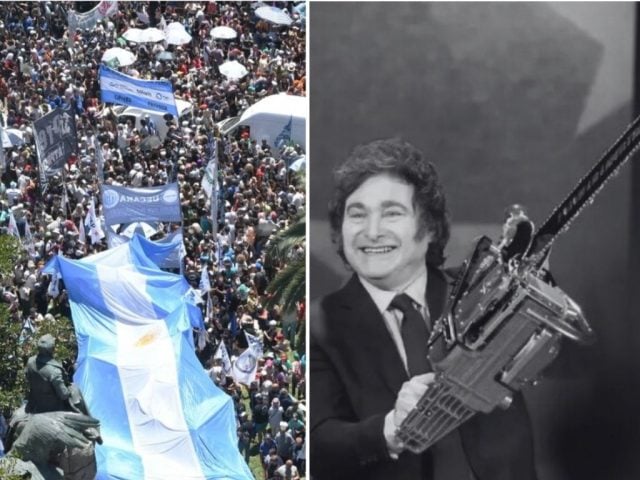
National Strike in Argentina: Major Labor Union Calls to Halt the Country Over Milei's Labor Reform
Hace 3 días
Argentine State Workers Call for National Strike Against Milei's Labor Reform: "They Want to Mess with Us"
Hace 3 meses
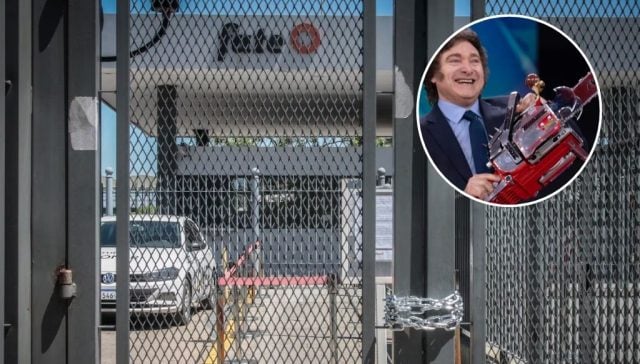
Fate Tire Factory Closes After 85 Years, Laying Off 925 Employees Amid Milei's Controversial Labor Reform
Hace 19 horas
Will Chile Follow Suit? Milei's Labor Reform Aims to Reverse Over a Century of Progress in Argentina
Hace 2 meses