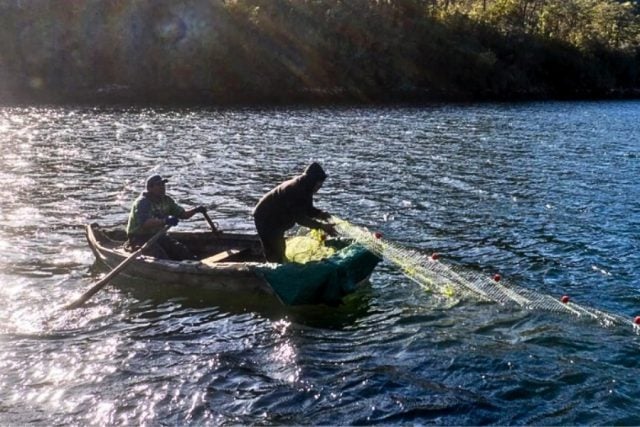
Original article: Nueva Ley de Pesca avanza en el Congreso: Partió votación de régimen general de acceso para pescadores artesanales
Congress Advances New Fishing Law: Voting Begins on General Access Regime for Artisanal Fishermen
Following the Fishery Splitting Law, the Fishing Commission of the Chamber of Deputies continued to make progress on the new Fishing Law, with reports indicating that nearly 85% of the chapters have been voted on, covering about three-quarters of the entire legal framework.
According to the Chamber’s bulletin, the parliamentary group is currently reviewing and voting on regulations concerning the artisanal fishing sector.
«More specifically, in the last two sessions, the ‘General Access Regime for Artisanal Fishing’ was discussed. This regime is defined as ‘freedom to fish.’ However, it is stipulated that to engage in extractive fishing activities, artisanal fishermen and their vessels must first register in the appropriate registry, fulfilling legal and regulatory requirements,» the publication states.
Furthermore, the Commission also established a reserve area for artisanal fishing in the new Fishing Law, which will extend for a strip of territorial sea measuring 5 nautical miles from baseline points. This will start from the northern limit of the Republic and extend to the parallel of 43° 25′ 42″ south latitude, including surrounding oceanic islands.
Similarly, it reserves for artisanal fishing the practice of extractive fishing activities along the shoreline, in the internal waters of the country, and for fishing grounds beyond the first 5 miles.
«The commission also approved an indication stating that artisanal fishing will not be allowed to carry out extractive activities in the country’s terrestrial waters. Terrestrial waters do not include maritime waters located inland of the territorial sea baseline, such as bays, channels, estuaries, or fjords, among others,» the Chamber bulletin notes.
Valparaíso Bans Dragnet Fishing
Additionally, the Fishing Commission determined that the entire extractive fishing activities in the Valparaíso region will be reserved for the artisanal sector, including the oceanic islands that are part of its administration.
Deputy Jorge Brito (Frente Amplio) highlighted the approval of this regulation, which he advocated for, as a measure against dragnet fishing and its negative impacts on resources: «All those boats seen in Caleta Portales, Membrillo, Higuerillas, San Pedro de Concón, San Antonio, and Quintero will benefit from this, and with this, we will contribute to the recovery of the seas of Chile,» emphasized the recently re-elected legislator.
In this regard, a provision was approved, but did not receive unanimous support, establishing some exceptions to the country’s exclusion zones. Specifically, it pertains to fisheries for nylon shrimp, yellow prawns, red prawns, and/or shrimp.
It was defined that extractive operations will be allowed for vessels under resolutions from the Undersecretary of Fisheries, but such decisions will require a prior technical report from the respective Regional Fishing Council.
The new Fishing Law will also include further improvements for the artisanal sector, which were approved in previous sessions. One of these is the establishment of a social platform. This way, should accidents occur, fishermen will have the opportunity to receive care at the IST. Moreover, they will be entitled to pension contributions.
This platform will be funded by payments made by the fishing industry to the treasury for fishing authorizations granted.
On another front, the commission agreed to send two official letters to the Executive Branch requesting information about economic assistance promised to the artisanal sector in the Atacama region. This measure is based on the difficult situation caused by the lack of anchovy catches over the last three years, as well as the drop in prices of the algae they sell.

El Ciudadano
