Original article: Cerimedo, bots y La Moneda: oposición impulsa comisión para aclarar redes, pagos y manipulación digital en procesos electorales
Controversy Surrounds Fernando Cerimedo: Opposition Pushes for Investigation into Digital Manipulation and Payments in Elections
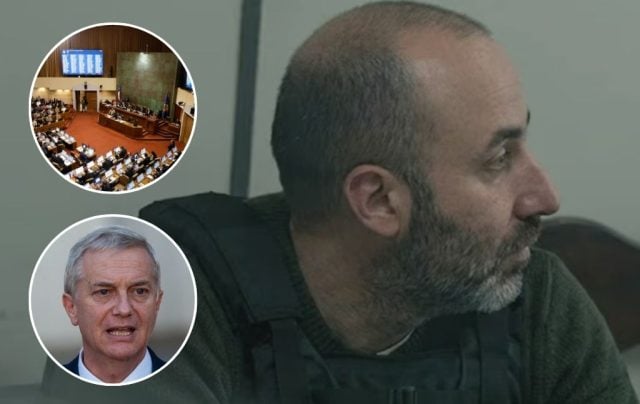
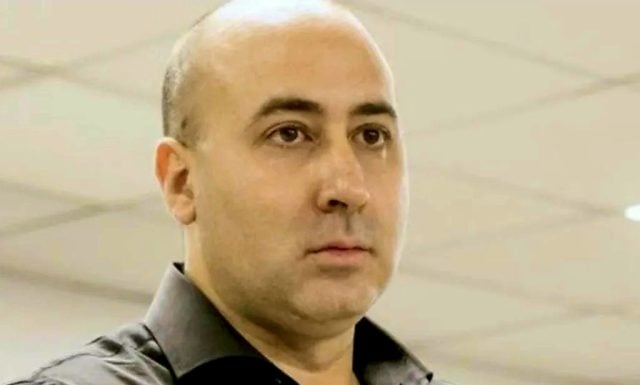
The arrest of political operator from the regional far-right, Fernando Cerimedo, who is facing charges related to attempted femicide against his ex-partner Nadia Beller, has sparked debate regarding his influence in Chile and the use of fake accounts and trolls to manipulate algorithms and shape public opinion.
In light of this situation, a group of opposition lawmakers is advocating for the establishment of an investigative commission in Congress to clarify the web of connections involving the Argentine consultant in our country; whether through his company Numen he received payments for Chilean campaigns, and even his potential link to the inner circle of La Moneda.
Known as «the king of trolls» for his controversial engagement in electoral processes across Latin America utilizing fake accounts, bots, and misinformation, Cerimedo has built a career advising right-wing and far-right leaders throughout the region. His client list features Argentine President Javier Milei, former Brazilian President Jair Bolsonaro, as well as leaders from Bolivia, Rodrigo Paz, and Honduras, Nasry Asfura.
In the case of Chile, Cerimedo’s footprint is considerably concerning. The consultant himself claimed to have worked on Sebastián Sichel’s presidential campaign and subsequently supported Franco Parisi’s presidential bid. However, beyond these advisory roles, his time in our country is marked by a particularly controversial episode: during the entry plebiscite, his consultancy Numen projected a win for the rejection side with figures that were entirely contrary to reality, where the approval side triumphed with 78%. Later, through Numen, he was involved in the campaign for the rejection of a new Constitution proposed by the Constitutional Convention.
The controversy heightened when it was discovered that he had ties to the tight circle surrounding President José Antonio Kast, particularly with officials in the «second floor» of La Moneda.
Media outlets like El Mostrador have reported that Alejandro Irarrázaval, the current head of advisers to the second floor of La Moneda, alongside Felipe Costabal, the current head of the Communications Secretariat (Secom), known as «Yeti,» were part of Casa Común, a command linked to the rejection campaign with which Cerimedo collaborated and was contracted to conduct a series of questionable-methodology polls.
Irarrázaval and Costabal Must Clarify Their Ties to Cerimedo
The seriousness of the matter has prompted Representative Jaime Araya (Ind-PPD) to label the situation as extremely delicate, calling for the creation of a Special Investigative Commission in Congress and demanding answers from officials in Kast’s administration who may have had connections with the political operator.
“Cerimedo operates like an international criminal, employing the tactics and methods of transnational crime. He attempted to murder his wife to silence the dark corruption dealings he may have in Bolivia and Argentina,” the lawmaker stated, emphasizing that “it is extremely serious for the chief adviser to the President of the Republic to associate with such individuals.”
In comments gathered by Diario U. de Chile, Araya suggested that both Irarrázaval and Costabal “must disclose what connections they have with this terrible person,” and whether such relationships are ongoing, asserting that “it is unacceptable that we have links to this criminal in the heart of La Moneda.”
“We expect responses and for them to appear before the Commission on Science and Technology, as Cerimedo has misused technological innovations in communications to severely damage democracy in Latin America and degrade political discourse in our country,” he asserted.
For the lawmakers, the formation of the investigative commission is crucial in light of the threat that digital manipulation poses to democracy.
Representative José Montalva (PPD) remarked that “bot farms, fake news, deepfakes, and this ecosystem of digital manipulation can poison our democratic processes.”
In this context, he indicated that the parliamentary body will allow for clarification on “how state organizations acted, if they identified who is behind these operations and their potential financing, what failed in their detection, and whether we have the necessary tools to protect our democracy.”
“Protecting our democracy from digital manipulation must take precedence over political differences,” Montalva concluded, urging various parties to gather the 62 signatures needed to establish this investigative body.
In a similar vein, Representative Juan Santana (PS) indicated that he will inquire with Servel to clarify whether Fernando Cerimedo received payments for Chilean campaigns through his company Numen.
What Connection Did Kast Have with Cerimedo?
Meanwhile, Representative Daniel Manouchehri (PS) announced that he will request La Moneda to disclose the political operator’s ties to political campaigns, as well as his connections with President Kast and his entourage.
“Did he have links with Kast? In what campaigns did he participate? Who hired him? Who financed him? Were there Republican leaders involved?” he questioned, adding that “Chile deserves to know.”
The legislator suggested that since the far-right leader condemned digital harassment, La Moneda must clarify what relationship Kast’s team had with Cerimedo, “in what campaigns he worked and who financed his services.”
“Disinformation is not an internet game. It is a machine. It has operators and financiers. Chile deserves to know who they are,” he stated in a message shared on his X account.
Obtén tu Pasaporte y apoya a El Ciudadano
Elimina la publicidad, accede a contenido exclusivo y sé parte de la comunidad.
Cancela en cualquier momento · Sin permanencia