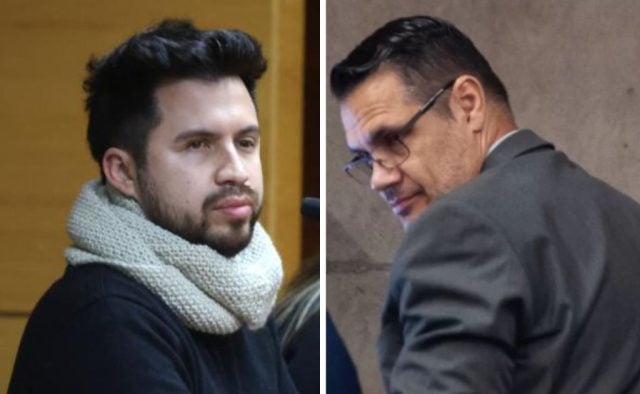
Original article: Corte confirma la absolución de Claudio Crespo pese a que el fallo acreditó que su disparo dejó ciego a Gustavo Gatica
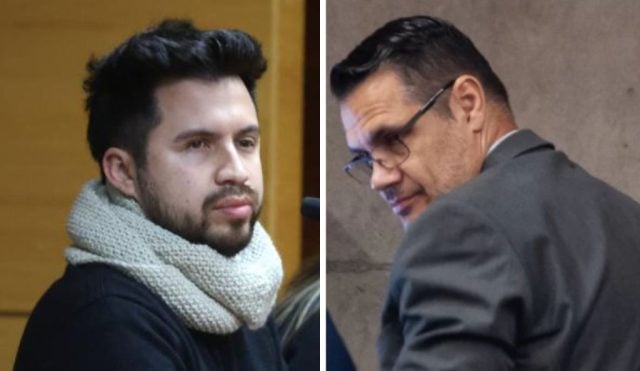
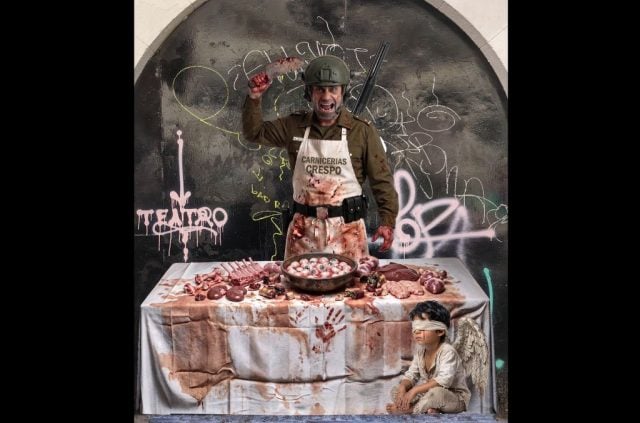
The Santiago Court of Appeals unanimously confirmed on Monday the acquittal of former police officer Claudio Crespo, even though evidence proved that his gunfire caused Gustavo Gatica to lose his sight during the social unrest in 2019.
With this ruling, the decision made in January by the Fourth Oral Criminal Court of Santiago became final after the annulment request aimed at overturning the trial and initiating a new one was denied.
The annulment request, filed in mid-June by the Prosecutor’s Office and three plaintiffs — the National Institute of Human Rights, the Public Prosecutor’s Office, and lawyer Carlos Gajardo — argued that the trial court made serious errors in evaluating the evidence presented, claiming that at least 22 pieces of evidence were not adequately considered, with some not even mentioned in the final ruling.
The challenge questioned the assessment of the evidence, including the statement of the accused, who admitted that there were directives not to shoot at the upper torso. Furthermore, the validity of self-defense as a reason for exclusion of criminal responsibility was contested, as reported by Diario U. de Chile.
The Naín Retamal Law and the Acquittal of Claudio Crespo
It is important to note that the sentence from the court ratified by the Court of Appeals caused controversy by establishing a judicial paradox: on one hand, the judges were conclusive in indicating that Crespo was the sole author of the pellet shots that hit Gatica’s face on November 8, 2019, at the intersection of Vicuña Mackenna and Carabineros de Chile, while retroactively invoking the Naín-Retamal Law to determine that the then-lieutenant colonel acted in self-defense, a situation modified by this new legal norm.
Moreover, Crespo used a riot shotgun in accordance with institutional regulations and responded proportionately to the attacks suffered by his unit that day. It was also noted that the evidence provided by the Prosecutor’s Office did not clarify whether the angle of fire from the officer was intended to hit Gatica’s face or that of another protester.
In their ruling, judges Cristina Cabello, René Bonnemaison, and Carolina Herrera acknowledged that the evidence presented by the prosecution allowed them to affirm that Crespo was the one who fired shots that severely injured Gatica.
Indeed, Judge Cristina Cabello, president of the tribunal, stated that «the audiovisual evidence is overwhelming… it is necessary to determine that the only possible author of those shots is the accused.” However, the same ruling protected the former police officer under the Naín Retamal law and justified his actions in the face of an “illegitimate, current, and potentially lethal aggression.”
«The evidence shows that Carabineros personnel used force gradually throughout the day, systematically exhausting less harmful means before resorting to the shotgun. This contrasts with the offensive, aggressive, and increasingly violent behavior of the protesters,” Cabello explained.
A key reasoning from the magistrate to support the claim of self-defense was that Gustavo Gatica could be seen in two videos “throwing blunt objects at the officers just moments before his injury,” and that “at the moment he was wounded, he was holding a stone in his right hand that was reasonably intended to be thrown.”
The controversial Naín Retamal Law, enacted in 2024, tightened the parameters of self-defense for law enforcement, and in this specific case, according to the judges, there were no explicit instructions regarding the area of the body to be aimed at, a regulatory gap that worked in Crespo’s favor. Had this law not been in place, the former police officer would have faced a conviction for unlawful use of force, as originally requested by the Prosecutor’s Office.
Prosecutor Chong on the Court’s Ruling: «Does Not Meet Expectations»
Following the rejection of the annulment request, prosecutor Ximena Chong expressed her dissatisfaction with the ruling. «Clearly, it is a decision that does not meet the expectations of the Prosecutor’s Office. We filed the annulment request because we believed that the sentence was flawed,” she stated, although she emphasized that the prosecuting entity respects the decision of the superior court.
Chong also highlighted that the verdict dismissed the central axis of Crespo’s defense strategy. «The resolution of the Fourth Oral Criminal Court rejected the main thesis of the defense, which claimed that he was not the author of the shot that caused the injuries and the consequent loss of vision of Mr. Gustavo Gatica,» the prosecutor noted in statements reported by Diario U. de Chile.
With this judicial avenue exhausted in Chile, the lawyers of the parliamentarian are considering turning to international human rights protection bodies.
Obtén tu Pasaporte y apoya a El Ciudadano
Elimina la publicidad, accede a contenido exclusivo y sé parte de la comunidad.
Cancela en cualquier momento · Sin permanencia