Original article: Ni con un día hábil más repunta la actividad económica: Imacec cae 1% en agosto
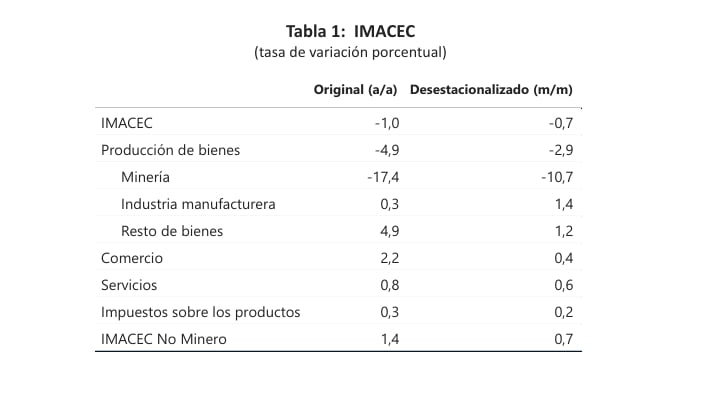
Chile’s economic activity showed no signs of recovery in August 2026, despite having an additional working day compared to August 2025. According to the Central Bank, the Monthly Index of Economic Activity (Imacec) fell 1.0% year-on-year.
In a press release, the central bank indicated, based on preliminary data, that the seasonally adjusted series decreased by 0.7% compared to the previous month and 2.1% year-on-year.
With this outcome, during José Antonio Kast’s administration, the economy has experienced two consecutive months of year-on-year declines, following a 1.5% drop in July, which recorded the worst result for productive performance in over three years. Additionally, from January to August, there have been six months of contractions.
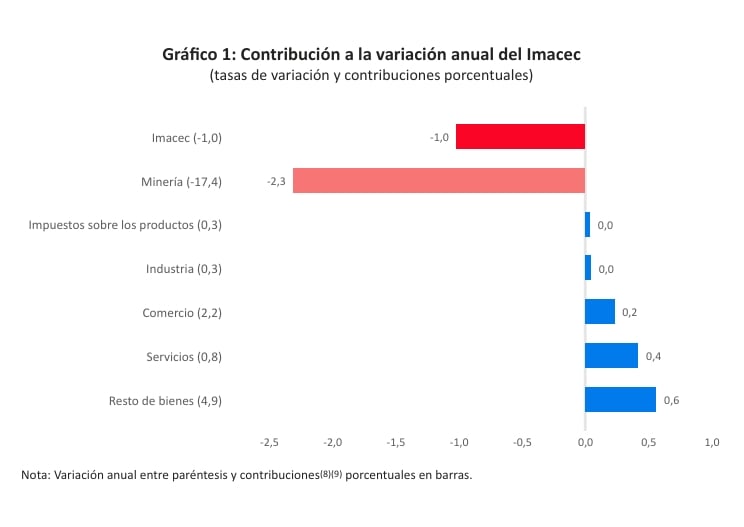
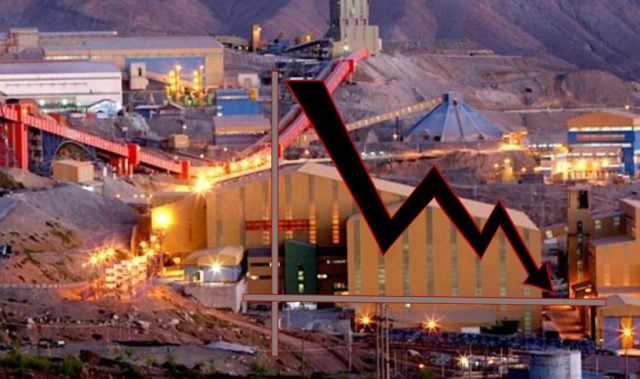
This decline was observed in both the «original series» and the seasonally adjusted series—comparing one month to the next—and was primarily driven by the performance of mining, with activity falling by 17.4% in one year, particularly due to copper extraction.
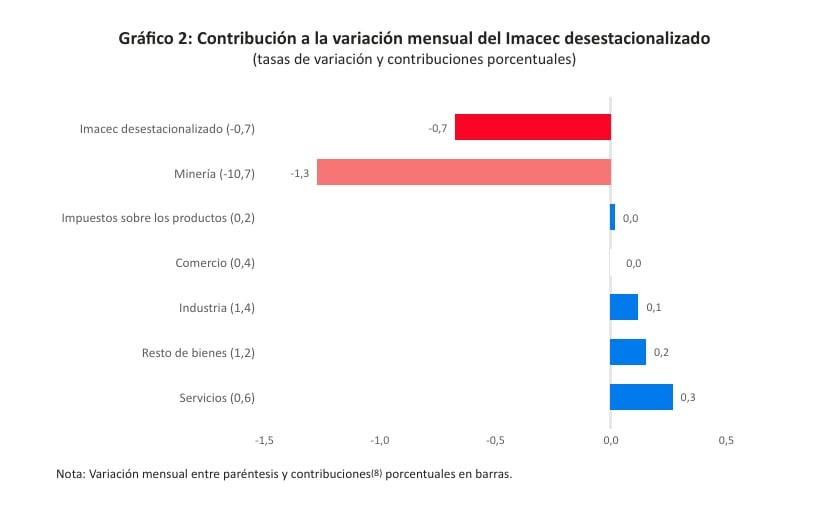
The central bank explained that «this decline was influenced by lower ore grades, maintenance, and adverse weather conditions.»
Production of Goods Falls by 4.9% Year-On-Year
On the other hand, goods production decreased by 4.9% annually, and in seasonally adjusted terms, it dropped 2.9% compared to the previous month, attributed to mining. Meanwhile, product taxes varied by 0.3%.
However, not all news was negative. The rest of the goods category grew by 4.9% annually, spurred by an increase in value-added electrical generation, thanks to a «greater availability of water.»
The manufacturing industry reported a variation of 0.3%, resulting from the balance between increased production of chemical and fish products and a decline in the production of pulp and paper products. These sectors helped mitigate the negative impact from mining.
On the commerce front, a year-on-year growth of 2.2% was recorded, driven by automotive and retail sales. The former saw higher vehicle sales, while the latter recorded increased sales in grocery stores, specialized clothing stores, and via «online sales platforms.»
Wholesale commerce showed no variation, as the increase in sales of food products was offset by lower sales of fuels and construction materials. Seasonally adjusted figures indicated a monthly increase of 0.4%, influenced by automotive commerce and, to a lesser extent, retail; wholesale commerce, however, declined.
Services increased by 0.8% annually, driven by personal services, particularly in healthcare, although activity in restaurants and hotels saw a slowdown. Seasonally adjusted data showed a 0.6% increase compared to the previous month, determined by personal services.
Non-Mining Imacec and a Fragile Economic Landscape
According to the report from the Central Bank, during August, the non-mining Imacec showed an annual growth of 1.4%, while in seasonally adjusted terms, it increased by 0.7% compared to July and by 0.2% over twelve months.
However, these advances were not sufficient to offset the substantial negative impact from mining and prevent the overall economic activity from ending August with a negative result.
The central bank, through this preliminary information, indicates a scenario of fragility where production, commerce, and services continue to face mixed signals. While mining plummets by 17.4%, dragging the Imacec down, it serves as a key indicator summarizing the activity of various sectors of the economy and providing an approximation of GDP evolution.
Obtén tu Pasaporte y apoya a El Ciudadano
Elimina la publicidad, accede a contenido exclusivo y sé parte de la comunidad.
Cancela en cualquier momento · Sin permanencia