Original article: Fin del financiamiento al CR2 abre interrogantes sobre capacidad de Chile para enfrentar desafíos del cambio climático
The recent announcement regarding the results of the National Interest Centers competition has raised significant alarm within the scientific community in Chile, particularly as it denies funding to the Climate and Resilience Science Center (CR2).
This globally recognized institution is at the forefront of climate change studies and resilience in Chile, engaging in communication and outreach efforts to inform and prepare the public about the risks and impacts associated with this phenomenon.
Following the news, academics and CR2 professionals express that the outcome of this competition has left a crucial center of excellence without resources to confront the challenges posed by climate change in the country.
«We are astonished,» remarked CR2’s deputy director and full professor in the Geophysics Department at the University of Chile, René Garreaud.
«Over its 13 years of operation, CR2 has been recognized as an outstanding center, not only for its prolific generation of knowledge and training of a new generation of researchers, but also for its active role in public policy cycles,» the researcher stated.
«This has been reflected, among other things, in the technical and scientific support it provided to the Framework Law on Climate Change, the availability of multiple climate service platforms, and the generation of new databases utilized and acknowledged by both public and private sectors,» added Professor Garreaud.
Complex Climate Scenario
This news arrives at a particularly challenging time, as the country faces extreme heat waves and a high risk of wildfires, phenomena for which CR2 has generated robust scientific evidence over its 13 years of existence.
The proposal submitted for the National Research Centers competition received an outstanding evaluation from the international panel, composed of renowned scientists and specialists.
Conversely, the assessment from the national panel, made up of experienced professionals from Chile, differs significantly from the ratings provided by their international counterparts. «The gap between the two evaluations is not clearly understood based on the feedback provided to us by ANID,» remarks Pilar Moraga, director of CR2.
Beyond the termination of funding for a specific institution, CR2 is concerned about the continuity of scientific evidence generation for adaptation and resilience against climate change, as none of the centers awarded by ANID address this theme directly.
This is particularly grave given Chile’s high vulnerability to the effects of climate change. Researchers warn that it will be a challenge to work with reduced government support in a race against time to confront the greatest challenge in the country’s history.
«The researchers at CR2 are strongly committed to the development of scientific research as a public good for the country. While we will continue to contribute as much as we can without state support, it will be a struggle,» adds Pilar Moraga.
CR2: Statistics and Projects
The CR2 emphasizes that at the beginning of President Gabriel Boric’s administration, the Framework Law on Climate Change was enacted, wherein the center played a fundamental role in its formulation and implementation, requiring that state decisions be based on the «best available scientific evidence.» However, it argues that the end of funding for CR2 contradicts this legal mandate.
«As President Boric’s administration comes to an end, a center of excellence is being shut down without existing institutions capable of replacing its contributions,» states Pilar Moraga, who also is a full professor at the Faculty of Law at the University of Chile.
Throughout its operation, CR2 developed 15 climate services and their associated databases, four advanced observation systems, seven country reports, and an eighth report set to be published in January 2026 concerning carbon neutrality. It also boasts over 1,000 ISI publications, 48 policy briefs, 127 analyses, and 4,486 media appearances.
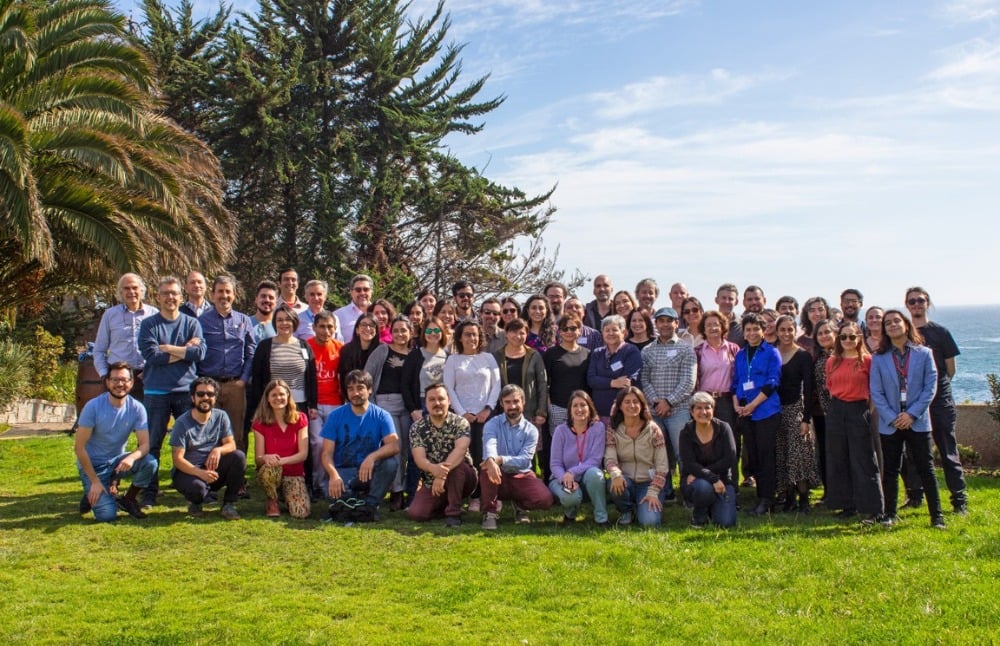
Regarding outreach projects, the Climate and Resilience Science Center (CR2) maintains an active portfolio of collaboration projects, reflecting its commitment to national and international cooperation.
In light of the current situation, the team of professionals and researchers at CR2 announced they would make every effort to keep their climate services and associated databases operational, as well as informational websites such as the Climate Change Framework Law Observatory, but for now there is no certainty that this can be sustained beyond March 2026.
The Citizen
Relacionados
Catastrophe Due to Wildfires in Chile: The Industrial Forestry Model Under Scrutiny Again
Hace 4 semanas
Chile's Pavilion at COP30 Faces Backlash Over Corporate Funding and Climate Policy 'Capture' by Companies
Hace 3 meses