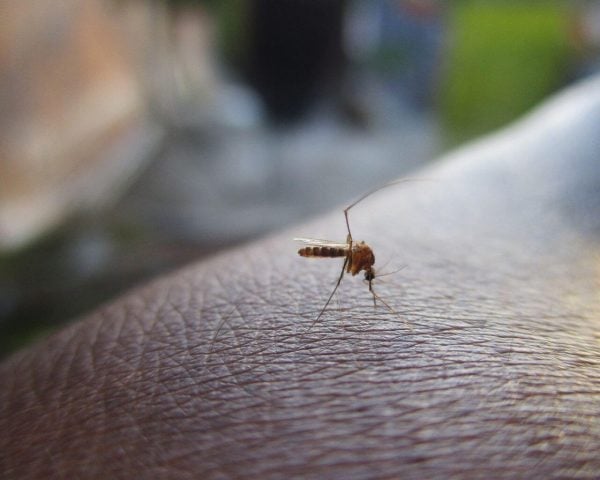
For several months now, there have been reports of active Aedes aegypti mosquito populations in the urban area of Antofagasta, located in northern Chile. This mosquito is known to transmit diseases such as dengue and zika.
In this context, Sergio Werhinger, an academic from the Faculty of Health Sciences at the University of Talca, has called for calm among the population, clarifying that the presence of this insect «does not automatically imply local transmission of these diseases».
The expert explained that, for a transmission chain to occur, the mosquito must establish a population and additionally find a human carrier of the disease—specifically, it needs to bite an infected person coming from areas where these viruses circulate. This would create the conditions necessary for starting local transmission.
Moreover, since this mosquito relies on water for larval development, Professor Werhinger emphasized that one of the primary community prevention measures is to prevent the accumulation of stagnant water in containers, gutters, pots, animal waterers, and discarded tires left outdoors.
«Additionally, clean water storage must be adequately covered and regularly sanitized,» noted the researcher from the University of Talca.
Symptoms
In light of the circulating information concerning this issue in the country, the academic from Maule considers it essential for the public to be aware of the symptoms of dengue and zika.
Dengue typically leads to fever, headaches, muscle and joint pain, and notably, pain behind the eyes.
«Many infections may be mild, but in a portion of patients, it can progress to severe dengue, resulting in coagulation disorders, hemorrhages, organ impairment, or shock, hence it should not be regarded as a trivial illness,» the expert clarified.
On the other hand, zika often results in «asymptomatic infections or relatively mild cases featuring fever, rash, conjunctivitis, and joint or muscle pain. Its greatest health concern is related to pregnancy, as the infection can transmit to the fetus, causing severe developmental issues, including microcephaly and other congenital malformations.»
Zika has also been linked to neurological complications such as Guillain-Barré syndrome, «where the body’s immune system mistakenly attacks part of the peripheral nervous system. Furthermore, unlike dengue, the Zika virus can also be transmitted sexually,» concluded the professor from the Faculty of Health Sciences at the University of Talca.
We will continue to provide updates.
Obtén tu Pasaporte y apoya a El Ciudadano
Elimina la publicidad, accede a contenido exclusivo y sé parte de la comunidad.
Cancela en cualquier momento · Sin permanencia