Original article: «Las medidas no se tomaron en este gobierno»: exsuperintendente de Pensiones contradice versión del Gobierno de Kast
Former Pension Superintendent Challenges Government’s Claims on Financial Measures
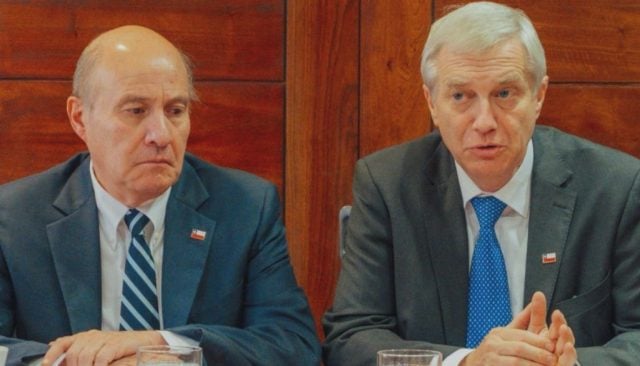
Former Pension Superintendent Osvaldo Macías asserted that the measures to mitigate risk and prevent further pension losses «were not enacted by this government», contradicting the narrative put forth by José Antonio Kast’s administration.
The pension funds reported losses of US$7.7 billion due to bets on U.S. interest rates, resulting in an estimated impact exceeding US$11 billion on pension savings. The E Fund, deemed the most conservative within the system and catering to nearly 770,000 affiliates, recorded a real decline of 10.4% from January to September 2026, marking the second-worst performance on record.
In response to this situation, La Moneda’s initial reaction was to link the crisis to decisions inherited from former President Gabriel Boric’s government.
“These measures were adopted by the previous administration and were adjusted when this government took office; had we not done so, the impact would have been much worse,” asserted the Minister of Economy and Mining, Daniel Mas, last Thursday.
The minister later emphasized that the measures implemented following Kast’s administration and their team entering La Moneda helped avert greater losses and that they could have been applied sooner.
“Upon taking office, we changed those limits which mitigated the damage (…) the decision we made when we arrived could have been made earlier, without a doubt,” he stated in comments to Emol.
Meanwhile, Finance Minister Jorge Quiroz opted for a shift in narrative and blamed the AFPs for the losses. He even expressed support for the sanctions procedures initiated by the Superintendence of Pensions against the seven administrators to investigate potential violations of Article 147 of Decree Law 3,500 and General Standard No. 340, issued in July 2025.
“We fully support the decision taken by the Superintendent to conduct an investigation into sanctioning all the AFPs in the system, to determine whether there was a lack of diligence on the part of the directors of these institutions,” he indicated from Congress.
However, the head of the treasury, Quiroz, asserted that Kast’s government “was concerned about this early on” and that after assuming his position in March, the Superintendent of Pensions, Joaquín Cortez, limited the swaps for administrators—contracts linked to U.S. interest rates—and halted their growth.
“Thanks to this de-escalation, a larger loss was prevented,” he noted.
“Unfortunately, for years prior, this had been observed without any significant measures being taken. It was unregulated when this government began; regulations were established, limits were set, and the growth curve was curtailed,” the minister insisted.
Former Superintendent Macías: «The Measures Were Not Taken by This Government»
In response to these statements, former Superintendent Macías denied that the current government was responsible for implementing the measures to reduce risk and prevent greater losses.
“There is an error by both ministers if they stated that. The measures were not taken by this government; they were enacted during the previous administration. The measures announced on April 9 are the same ones finalized on March 10,” he stressed, according to statements reported by Bio Bío Chile.
Regarding the timelines, he explained that it is required for the regulation to undergo several review stages.
“This regulation goes through various stages. It must be presented to the Technical Investment Council and the Ministry of Finance. Three presentations were made by the Superintendency to the Technical Council regarding the regulation, and it was finally approved on March 10, sanctioned by all authorities,” he elaborated.
He indicated that the current Superintendent of Pensions, Joaquín Cortez, enacted it on April 9, “correctly and exercising his powers.”
Macías criticized the AFPs and pointed out their responsibility for the substantial losses “due to their investment strategies and the manner in which they failed to divest.”
“What we need now is for the boards and general managers of the administrators to come forward and provide explanations. I have not heard them give any such clarification,” he added, expressing his willingness to provide evidence before the judiciary or Congress.
Obtén tu Pasaporte y apoya a El Ciudadano
Elimina la publicidad, accede a contenido exclusivo y sé parte de la comunidad.
Cancela en cualquier momento · Sin permanencia