Original article: De 31 años como parlamentario UDI a timonel salmonero: el caso Patricio Melero y la hiperideologización de la industria acuícola
After 31 Years in Congress and Serving as a Minister, Patricio Melero Takes the Helm of SalmonChile: Is Hyperideologization, Lobbying, and Polarization Behind His Appointment?
THE APPOINTMENT OF A VETERAN UDI POLITICIAN IN A CONTROVERSIAL INDUSTRY

Agricultural engineer and former congressman Patricio Melero will take over as president of SalmonChile, the country’s leading salmon industry association, on March 1. According to SalmonExpert,
Melero, who served as a congressman for 31 years (from March 11, 1990, to April 7, 2021, across eight consecutive terms) and as Minister of Labor during Sebastián Piñera’s second administration, has been deeply involved in fisheries politics for decades. He is particularly noted for his role in the Fisheries Committee and for approving the first Fisheries and Aquaculture Law in 1991, according to the outlet.
«The salmon industry has enormous potential to continue growing and expanding its markets,» declared the new leader, who promised to advance the sector under a framework of «environmental sustainability, technological innovation, and public-private collaboration,» as mentioned by the same source.
The salmon industry publication highlighted that the 74-year-old Melero possesses not only a long parliamentary career but also «extensive experience in grassroots work and community engagement, which is highly relevant for SalmonChile.» The association emphasized that his expertise in regulatory matters will be beneficial for the industry, which seeks «greater certainty» for its development. Melero succeeds Arturo Clément, who had a more technical background, amid intensified debate about the future of aquaculture in Chile.
It is important to note that Patricio Melero was also one of the parliamentarians who approved the controversial Longueira Law on fishing, which has been accused of granting the ocean’s resources for free and in perpetuity to seven industrial families. Additionally, the law was allegedly driven by bribery and corruption, with illegal payments made to secure its approval.
Historical Questions from the Human Rights Perspective
Nevertheless, Melero’s trajectory has faced severe criticism from human rights and labor organizations. In April 2021, when he took office as Minister of Labor, a coalition of groups—including the Association of Families of Executed Political Detainees and ANEF—demanded his resignation through a letter submitted to La Moneda, as reported by Diario UChile.
The organizations accused Melero of «downplaying the state crimes committed during the dictatorship» and harboring a «denialist attitude,» labeling him as «an active participant among those civilians who were authors and accomplices of State Terrorism.»
Opposition to his figure was widespread. The signing organizations, which also included human rights committees from various political parties of the so-called democratic socialism, announced at the time that they would take their complaints to the UN and the International Labour Organization (ILO). They argued, as cited by the mentioned outlet, that his appointment «violates and offends the memory of the victims» and represents «a clear danger» to social and labor rights due to his historical defense of the AFP pension system and its implications for workers’ rights.
An Industry Under Scrutiny: Environmental Impacts and Overproduction
The industry that Melero will lead is facing serious environmental scrutiny. Journalistic reports and official data reveal that 42% of salmon farming concessions operate within or adjacent to protected areas, according to the Austral University of Chile and Sernapesca. Cases like Australis Mar, which admitted to producing 80,000 tons in excess of authorized limits, or Nova Austral, embroiled in legal processes, exemplify a pattern of sanctioned overproduction. Experts warn of severe damage to seabed ecosystems, hypoxia, and pollution, exacerbated by massive mortality events, like the 5,000 tons of dead fish in the Comau fjord in 2021.
The conflict transcends environmental concerns. A report by Interferencia-Terram revealed that 587 concessions (about 40%) are mortgaged to banks, complicating their revocation. Additionally, over 5.4 million escaped salmon in the last decade—an exotic species that threatens biodiversity—have been reported. Coastal and indigenous communities have denounced misinformation campaigns against the Coastal Marine Spaces of Indigenous Peoples (ECMPO). The human toll is also significant: the Ecoceanos report indicates the deaths of 90 workers in the past 12 years. From 2023 to 2024 alone, over 70 sanctioning processes have been initiated, underlining a deepening crisis.
Relacionados

De 31 años como parlamentario UDI a timonel salmonero: el caso Patricio Melero y la hiperideologización de la industria acuícola
Hace 2 minutos
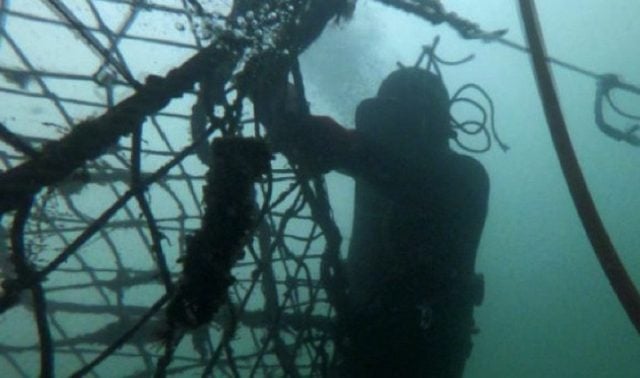
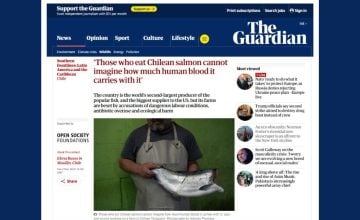
The Human Cost of Chilean Salmon: A Guardian Investigation Reveals Worker Deaths and Community Harm
Hace 2 meses